


New satellite imagery has revealed extensive damage across several Iranian military bases following coordinated U.S. and Israeli strikes, offering one of the clearest visual records of the ongoing conflict. The images show destroyed facilities, damaged naval assets, and burning infrastructure across multiple strategic locations.
According to Daljoog News analysis, the satellite evidence highlights how the strikes targeted Iran’s military command centers, naval bases, airfields, and drone facilities in a broad campaign designed to weaken key operational capabilities.
The imagery also captures the aftermath of Iran’s retaliation across the region, indicating that the confrontation has expanded beyond Iran’s borders and now involves several strategic locations across the Middle East.
What Happened?
Satellite images taken by commercial imaging companies have provided a detailed look at damage inside Iran following recent military strikes. The images show multiple military installations, airfields, and naval facilities suffering visible destruction.
One of the most significant sites impacted was the Konarak military base in southern Iran. Satellite photos show damaged infrastructure and vessels, with several ships reportedly burning following the strikes.
Another heavily affected site appears to be Iran’s naval headquarters in Bandar Abbas, located along the Persian Gulf. Imagery indicates extensive structural damage within the compound, reflecting the scale of the attacks on Iran’s maritime command facilities.
Additional imagery from Bushehr port shows damage to vessels and port infrastructure. Satellite photos also captured the aftermath of a strike on a bunker located at Bushehr air base, where a large crater and destroyed surrounding buildings are visible.
Military drone infrastructure was also targeted. Images show damage at the Choqa Balk drone facility in western Iran, suggesting the strikes aimed to weaken Iran’s unmanned aerial capabilities.
Further east, radar installations at Zahedan air base near the borders with Pakistan and Afghanistan were also reportedly hit. The wide geographic distance between these sites — roughly 800 to 900 miles — indicates a highly coordinated operation targeting multiple strategic zones simultaneously.
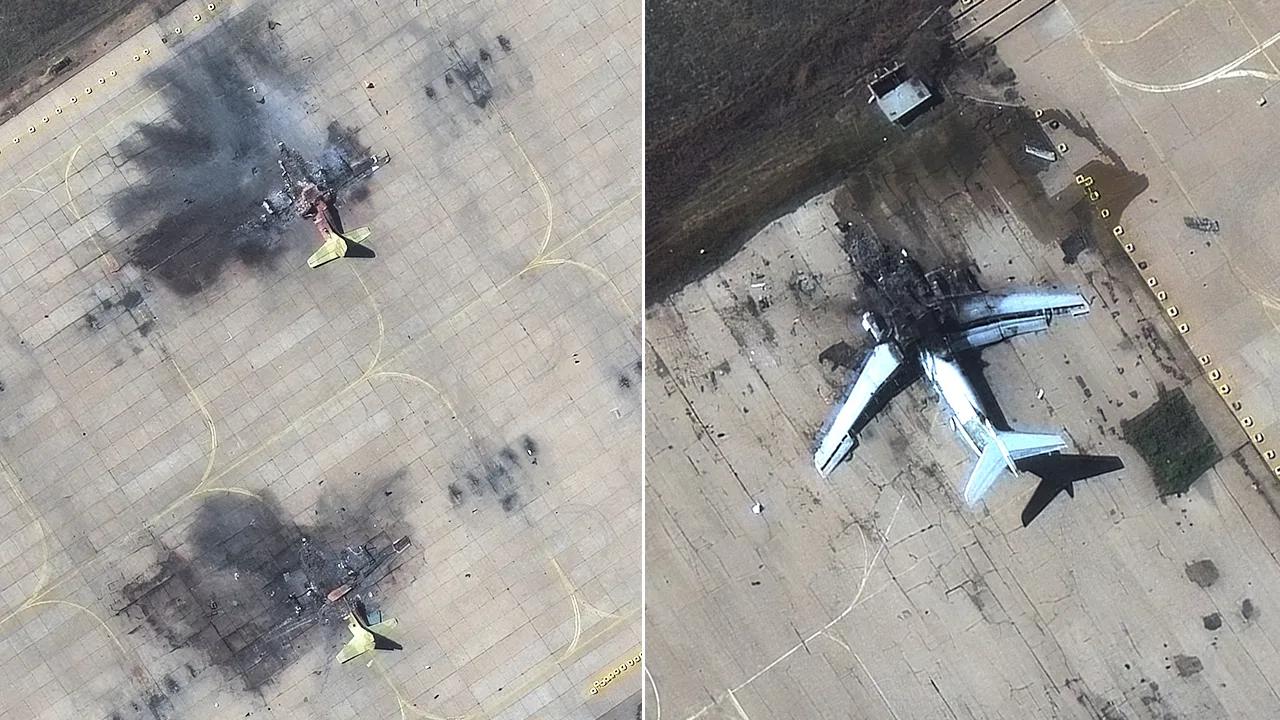
Satellite imagery also revealed damage at Shiraz air base in southern Iran. Aircraft parked on the runway appear surrounded by scorch marks and debris, suggesting that several planes may have been damaged or destroyed during the strikes.
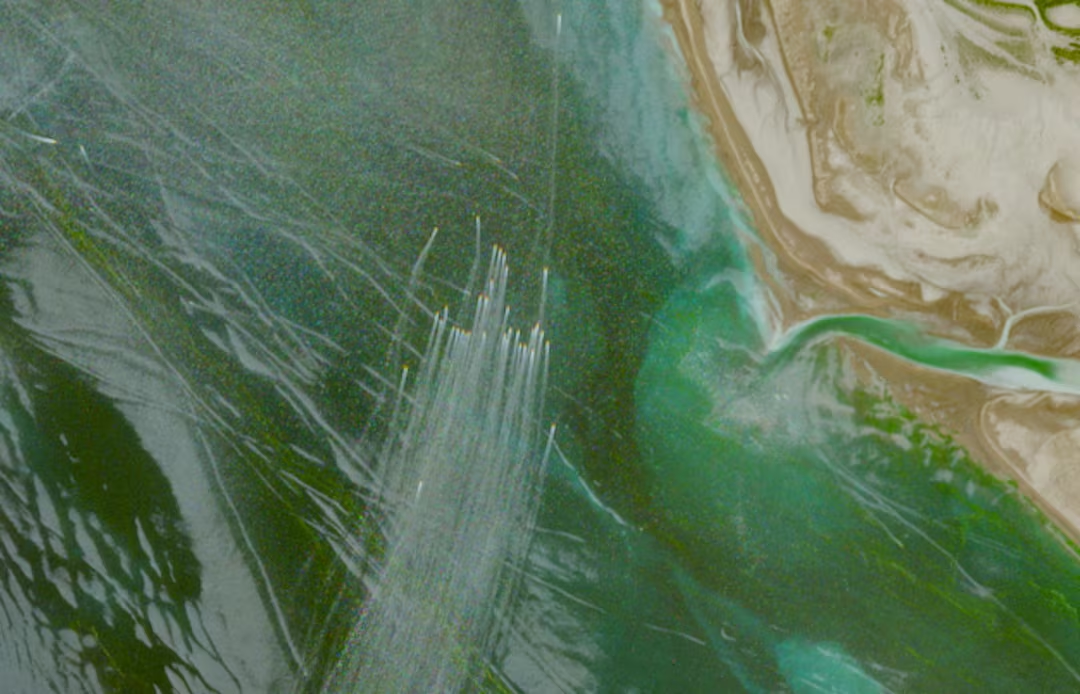
Over Tehran, satellite images captured large plumes of smoke rising from multiple locations. The smoke suggests explosions and fires within or near the Iranian capital, indicating that the attacks reached deep into the country’s political center.
Why This Matters
Satellite imagery has become one of the most important tools for verifying events in modern warfare. Unlike official statements from governments, these images provide independent visual confirmation of damage and strike locations.
The breadth of destruction revealed in the images suggests the operation was designed to degrade several layers of Iran’s military infrastructure simultaneously.
Naval bases, airfields, radar stations, and drone facilities all play critical roles in military operations. Disrupting these assets can limit surveillance capabilities, reduce response times, and weaken logistical coordination.
The fact that sites hundreds of miles apart were hit during the same period also demonstrates the reach and precision of the strikes.
At the same time, the images show that Iran’s response has affected infrastructure beyond its borders. Satellite photos indicate damage in Sharjah in the United Arab Emirates, highlighting how the conflict is spreading across the Gulf region.
Images also reveal the impact at Jebel Ali Port, one of the largest maritime hubs in the Middle East. Damage to such locations underscores how retaliation is expanding beyond strictly military targets.
What Analysts or Officials Are Saying
Military analysts reviewing the satellite images say the strikes appear carefully planned to hit operational centers rather than symbolic targets.
By damaging naval headquarters, airfields, and drone facilities, the operation appears aimed at weakening Iran’s ability to coordinate military responses across different branches.
Observers also note that satellite imagery offers a clearer understanding of the real scale of the conflict. Government statements often understate damage, but independent images provide evidence that can reshape public and diplomatic assessments.
Political reactions have also intensified. U.S. President Donald Trump warned that Iran’s newly installed leadership could struggle to remain in power without American approval.
The comments followed the killing of Iran’s supreme leader, Ayatollah Ali Khamenei and several senior officials during earlier phases of the operation, which triggered a leadership transition inside the country.
Daljoog News Analysis
The satellite imagery marks a turning point in how the world is observing this conflict. Unlike previous wars where information came mainly from governments or journalists on the ground, high-resolution satellite images now provide near real-time evidence.
This transparency increases international scrutiny. Governments can no longer easily control the narrative around military operations when independent imagery shows what has been destroyed.
The images also reveal the strategic logic behind the strikes. Targeting naval headquarters, airfields, radar stations, and drone facilities suggests a coordinated attempt to weaken Iran’s ability to monitor and respond across its territory.
However, such operations rarely end conflicts quickly. Military infrastructure can often be rebuilt, and damaged assets replaced. What cannot easily be repaired is the political instability created by leadership losses and sustained military pressure.
If retaliation continues to spread across the Gulf, key economic infrastructure — particularly ports and shipping hubs — could become increasingly vulnerable.
That risk matters not only for regional security but also for global energy markets and international trade.
What Happens Next
The next phase of the conflict will likely focus on damage assessment and military repositioning.
Iran will evaluate the operational impact of the strikes and determine how quickly damaged facilities can be restored or replaced.
At the same time, regional governments are strengthening air defenses and monitoring maritime routes in the Gulf.
Satellite monitoring will continue to play a central role in documenting developments. New imagery could reveal further strikes, repairs to damaged facilities, or military build-ups in response to the attacks.
Diplomatic efforts are also expected to intensify as global powers seek to prevent the conflict from expanding further across the Middle East.
For now, the satellite images offer a stark visual reminder that the confrontation has already moved far beyond isolated incidents and into a sustained regional crisis.