

Iran World Cup 2026 participation has been officially confirmed by FIFA President Gianni Infantino, who stated that the national team will compete despite rising geopolitical tensions. The announcement comes as uncertainty has grown over Iran’s status following recent developments in the region.
According to Daljoog News analysis, the confirmation signals FIFA’s intent to protect sporting integrity while carefully navigating political realities that could disrupt global tournaments.
The timing is critical, as the 2026 World Cup approaches with expanded participation and heightened global attention. Iran’s involvement had become a key question amid broader regional instability.
What Happened?
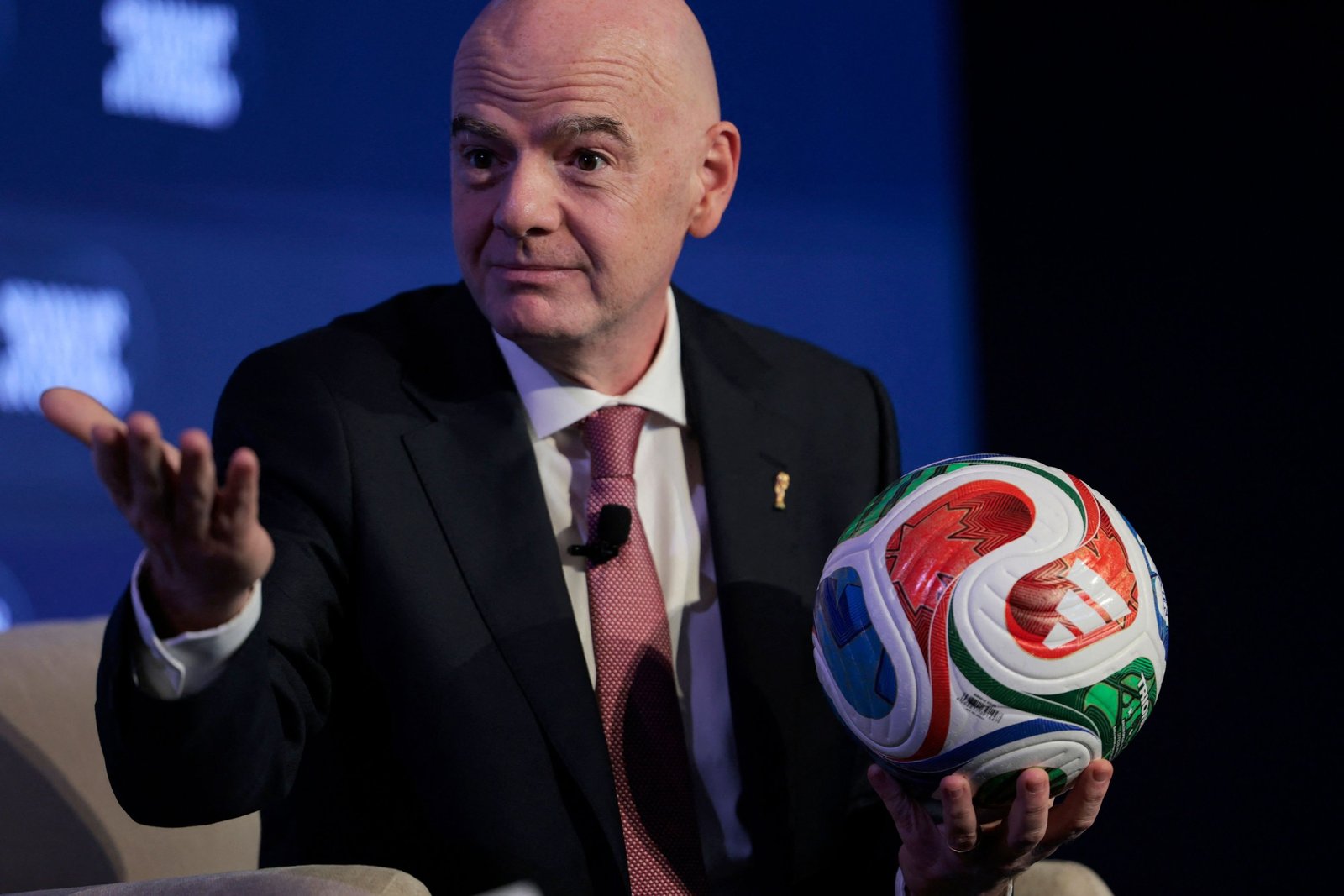
Iran World Cup 2026 participation was reaffirmed by FIFA President Gianni Infantino during the CNBC Invest America forum in Washington. He made clear that Iran has earned its place through qualification and will be part of the tournament.
Infantino stressed that football should remain separate from politics, while also acknowledging that real-world conditions cannot be ignored. He indicated that FIFA is working to ensure all qualified teams can compete without disruption.
The FIFA president also shared that he recently met Iran’s national team in Antalya, Turkey. The players, he noted, are determined to take part and represent their country on the global stage.
The 2026 World Cup is set to begin on June 11, with Iran scheduled to play its opening match against New Zealand on June 15 in California. The tournament will include 48 teams, marking the largest edition in its history.
Why This Matters
Iran World Cup 2026 participation carries both sporting and political significance. It reinforces the principle that qualification should remain the deciding factor for participation in global competitions.
At the same time, it highlights the ongoing challenge of separating sports from international politics. Major tournaments often reflect broader global tensions, even when governing bodies aim to stay neutral.
Economically, the World Cup is expected to generate massive activity. Estimates suggest around $80 billion in total financial transactions, with FIFA projected to earn about $11 billion. Much of that revenue will be redistributed to its 211 member associations.
The tournament is also expected to create around 200,000 permanent jobs, along with hundreds of thousands of temporary roles tied to event operations.
What Analysts or Officials Are Saying
Experts say Iran World Cup 2026 participation demonstrates FIFA’s commitment to neutrality and inclusivity. However, they also warn that maintaining this position could become more difficult if geopolitical tensions escalate further.
Analysts note that FIFA often acts as a bridge between nations, using football as a platform for engagement. This approach aims to reduce divisions rather than deepen them.
Observers also emphasize that allowing all qualified teams to compete strengthens trust in the tournament system. Interference could damage the credibility of international football.
At the same time, officials acknowledge that complete separation between sports and politics remains challenging in practice.
Daljoog News Analysis
Iran World Cup 2026 participation reflects FIFA’s balancing act between principle and reality. The organization is standing by its rules while recognizing the complex environment in which global sports operate.
Infantino’s position suggests that FIFA is willing to defend sporting merit even under pressure. However, it also places responsibility on host nations and organizers to ensure security and stability.
There is also a broader implication. Global sporting events are increasingly influenced by political developments, making neutrality harder to maintain. FIFA’s role is evolving from organizer to mediator in many respects.
If tensions remain contained, this decision could strengthen confidence in the tournament. But if the situation escalates, it may test FIFA’s ability to uphold its commitments.
What Happens Next
Iran World Cup 2026 participation will now move from confirmation to implementation, as preparations for the tournament continue. Security planning and diplomatic coordination will be key in the coming weeks.
FIFA and host countries are expected to monitor the situation closely to ensure smooth participation for all teams. Any major shift in regional dynamics could still impact logistics.
Attention will also turn to Iran’s performance on the field, where the team will aim to justify its place among the world’s best.
As the June 11 kickoff approaches, the focus will remain on whether the tournament can proceed without disruption, maintaining both competitive fairness and global stability.