

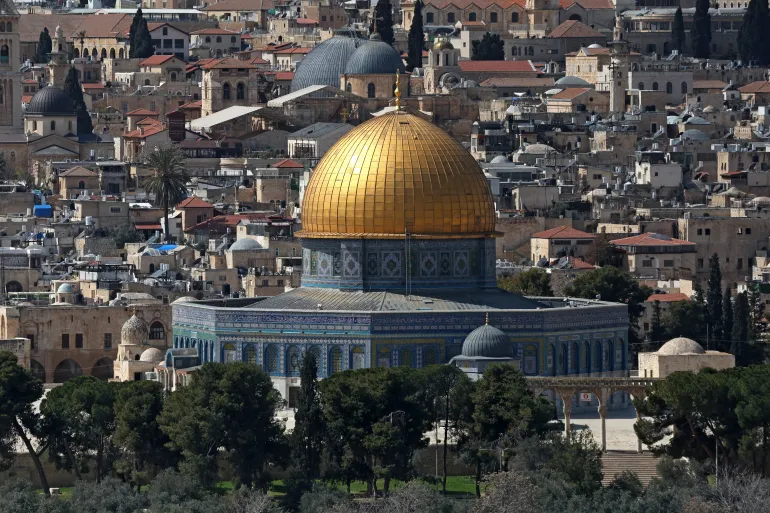
The Arab League has sharply criticized Israel for restricting Muslim access to the Al-Aqsa Mosque during the holy month of Ramadan. The regional organization says preventing worshippers from performing prayers at one of Islam’s holiest sites violates fundamental religious rights.
According to Daljoog News analysis, the dispute reflects rising diplomatic pressure over religious freedoms in contested areas of Jerusalem. The issue has quickly evolved from a security measure into a wider political dispute involving international law and regional stability.
The restrictions come amid heightened tensions in the Middle East following the outbreak of a broader conflict involving the United States, Israel, and Iran earlier this year. With the site closed since late February, the situation has drawn strong reactions from governments and religious authorities across the Arab world.
What Happened?
In a statement released Sunday, the Arab League condemned the decision to restrict Muslim prayer access at the Al-Aqsa Mosque during Ramadan.
The organization argued that Israel does not have the authority to block worshippers from entering the mosque for prayers. Officials described the move as a serious violation of international legal principles that protect religious freedom at sacred sites.
The mosque, located within the compound known as Al-Haram al-Sharif in occupied East Jerusalem, holds deep religious significance for Muslims worldwide.
According to regional reports, the restrictions began after the conflict involving the United States, Israel, and Iran escalated on February 28. Since then, access to the mosque compound has reportedly been heavily restricted or suspended.
Arab League officials warned that such actions could heighten tensions not only in Jerusalem but across the broader Middle East.
Why This Matters
The status of the Al-Aqsa Mosque has long been one of the most sensitive issues in the Israeli-Palestinian conflict.
The mosque is considered the third-holiest site in Islam and serves as a focal point of religious and political identity for Palestinians. Any restrictions on access—especially during Ramadan—tend to spark strong reactions across the Muslim world.
Diplomatically, the dispute places additional pressure on relations between Israel and several Arab states. Even countries that have normalized relations with Israel have historically voiced concern over restrictions affecting Islamic holy sites in Jerusalem.
From a legal perspective, critics argue that international conventions governing occupied territories require authorities to protect freedom of worship and preserve access to religious sites.
If the situation continues, it could trigger wider diplomatic campaigns or calls for intervention from international institutions.
What Analysts or Officials Are Saying
Regional officials and policy analysts say the current dispute is likely to deepen political divisions surrounding Jerusalem’s governance.
Officials from the Arab League stressed that denying worshippers access to the mosque undermines commitments to religious freedom and could destabilize already fragile regional relations.
Security analysts note that Israel often imposes temporary restrictions in Jerusalem during periods of heightened conflict. Authorities typically justify these measures as necessary to prevent violence or security threats.
However, critics argue that such restrictions—especially during major religious events—carry significant political consequences and risk inflaming public sentiment across Muslim-majority countries.
Several diplomats have also urged the broader international community to encourage steps that protect access to holy sites while maintaining stability in the city.
Daljoog News Analysis
The dispute over access to the Al-Aqsa Mosque illustrates how religious issues remain deeply intertwined with geopolitics in the Middle East.
For decades, control of Jerusalem’s holy sites has been more than a matter of faith. It represents sovereignty, identity, and political legitimacy for multiple communities.
The timing of the restrictions during Ramadan amplifies their impact. Ramadan draws large numbers of worshippers to the mosque each year, turning the site into both a spiritual center and a powerful symbol of unity for Muslims worldwide.
When access is limited during this period, the reaction often extends far beyond local politics.
From a strategic perspective, the situation also reveals how regional conflicts—such as the escalating tensions involving Iran and Israel—can quickly affect religious and political dynamics in Jerusalem.
Managing such crises requires careful balancing between security concerns and the protection of religious rights. Failure to do so risks transforming a localized dispute into a broader regional flashpoint.
What Happens Next
The Arab League has called on the international community to increase diplomatic pressure to ensure that Muslims can freely pray at the Al-Aqsa Mosque.
Several governments are expected to raise the issue in international forums and diplomatic discussions in the coming weeks.
Observers say the next steps will largely depend on whether access restrictions remain in place during the remainder of Ramadan.
If the mosque reopens to large numbers of worshippers, tensions could ease somewhat. However, continued limitations may prompt stronger political reactions from Arab states and international organizations.
As the situation evolves, the status of Jerusalem’s holy sites will remain a key indicator of the broader political climate in the Middle East.