



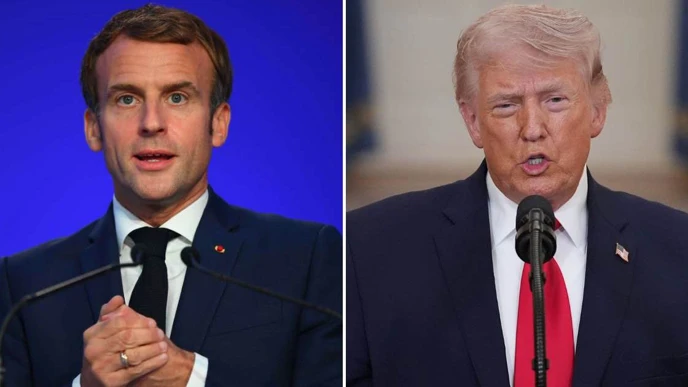
U.S. President Donald Trump has drawn international attention with provocative remarks about French President Emmanuel Macron and his wife, Brigitte Macron, during a private dinner event. The comments were briefly posted on the White House YouTube channel before being removed.
According to Daljoog News analysis, Trump’s remarks highlight ongoing tensions in transatlantic relations and raise questions about diplomatic decorum at high-level interactions. His statements mix personal criticism with broader geopolitical commentary.
The controversy arrives amid ongoing debates over NATO’s role in the Iran conflict and broader U.S.-European strategic coordination, making the timing of these comments particularly sensitive.
What Happened?
During a private dinner, Trump reportedly mocked President Macron and his spouse, claiming that Brigitte Macron had treated him poorly during a phone call. He referenced an incident from May 2025 during Macron’s Vietnam visit, suggesting that a video showed Brigitte Macron appearing to push her husband’s face.
Trump joked about whether President Macron had fully recovered from the alleged incident, implying personal and political awkwardness. French officials have dismissed these claims as false and described them as a misrepresentation of a minor personal interaction. At the time, Macron characterized the incident as a private marital matter, unrelated to official affairs.
In addition to the personal remarks, Trump criticized NATO allies, questioning their effectiveness and hinting at shortcomings in coalition support during the Iran conflict.
Why This Matters
The comments have sparked discussions in diplomatic circles, as mocking a foreign head of state publicly—even in a private setting—can strain bilateral relations. Analysts note that such remarks can influence public perception, complicate negotiations, and affect alliance cohesion.
Trump’s criticism of NATO underscores ongoing debates about burden-sharing and the role of European allies in U.S.-led military operations, particularly amid escalating tensions in the Middle East.
What Analysts or Officials Are Saying
Experts suggest that Trump’s approach blends personal theatrics with strategic messaging. While the Macron-related jokes may be dismissed as minor, they risk overshadowing substantive discussions about NATO readiness and regional security commitments.
French officials reaffirm that the alleged Vietnam incident was a private matter and emphasized that it does not reflect France’s professional diplomatic stance. Analysts note that even casual disparagement of allies can complicate U.S.-European cooperation on security and economic initiatives.
Daljoog News Analysis
Trump’s remarks reflect his broader pattern of blending personal narratives with international policy critiques. While the humor may appeal to some domestic audiences, it creates friction in diplomatic circles and shifts attention from policy issues to interpersonal conflicts.
Daljoog News analysis indicates that such commentary can affect perceptions of NATO cohesion and U.S. leadership credibility. By publicly questioning allies’ roles, Trump signals both dissatisfaction and a desire to influence alliance dynamics, even at the expense of formal diplomacy.
What Happens Next
Diplomatic monitoring is expected as French and other European officials assess the implications of Trump’s remarks. While the Macron family has downplayed the personal comments, ongoing scrutiny may influence public messaging, media coverage, and strategic communication between Washington and Paris.
Observers predict that U.S.-European dialogue on NATO and Middle East security may include renewed attention to alliance expectations, operational contributions, and maintaining cohesion amid rising regional tensions.