


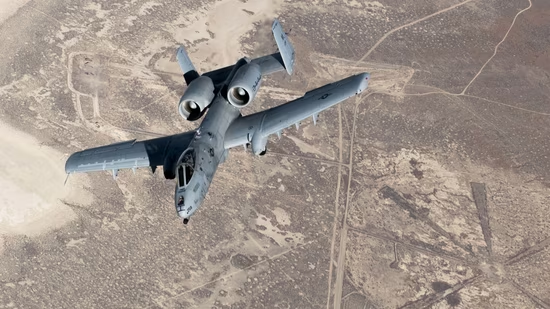
Iran has struck back against the United States, reportedly downing two American warplanes in rapid succession. Reports indicate that at least one pilot from an A-10 Thunderbolt has been recovered, though details of their condition and location remain unclear.
According to Daljoog News analysis, these losses underscore the growing intensity of hostilities in the region. The exact circumstances of the strikes highlight both Iran’s increasing military capabilities and the challenges facing U.S. forces operating near sensitive waterways.
The incidents occurred amid broader Middle East tensions, with the Strait of Hormuz emerging as a flashpoint. The downing of advanced aircraft like the F-35 and A-10 marks a significant escalation with potential strategic and political consequences.
What Happened?
On Friday night local time, reports emerged that an American A-10 warplane was downed near the Strait of Hormuz. Earlier, Tehran announced it had shot down an F-35 fighter jet. The attacks reportedly targeted multiple U.S. aircraft operating in the region, with Iran using air defense systems to strike from its territory.
Washington has confirmed the recovery of one pilot but has not disclosed whether the individual survived the engagement or the specifics of the rescue operation. The status of the second crew member remains uncertain, with reports suggesting a U.S. special forces team entered Iranian territory overnight in search of the missing personnel.
Iran, meanwhile, has not officially commented on the presence of foreign rescue teams or the outcome of the latest strikes. The unfolding situation adds uncertainty to the operational safety of U.S. forces in the Gulf region.
Why This Matters
The loss of multiple U.S. warplanes to Iranian defenses is a rare and serious escalation. It highlights vulnerabilities in U.S. operations within contested airspace and demonstrates Iran’s ability to challenge technologically advanced military aircraft.
Strategically, these events could shift regional power dynamics and raise tensions among U.S. allies in the Middle East. Any further losses may affect the United States’ operational planning and its diplomatic posture in ongoing conflicts.
Beyond military implications, the incidents carry political weight. The U.S. government must navigate public perception, pilot safety concerns, and potential international fallout, all while maintaining readiness in a volatile region.
What Analysts or Officials Are Saying
Defense analysts note that Iran’s ability to bring down advanced warplanes like the F-35 and A-10 signals a significant capability in air defense. Experts caution that continued U.S. flights in the region without enhanced protective measures could result in further losses.
Officials have expressed concern over the missing crew member, emphasizing the importance of search and rescue operations. Analysts suggest that Iran’s silence on the situation may be a strategic move to maintain leverage in ongoing military and diplomatic negotiations.
The situation also raises questions about U.S. intelligence and surveillance effectiveness in contested airspace, highlighting the challenges of operating near Iranian-controlled territory.
Daljoog News Analysis
The recent strikes on U.S. warplanes reflect both tactical proficiency and political signaling by Iran. By demonstrating the ability to engage and neutralize high-value aircraft, Tehran sends a clear message of deterrence while testing U.S. response protocols.
This escalation could influence future American operations in the Middle East, forcing a reassessment of risk, deployment, and engagement strategies. It also illustrates the broader unpredictability of military conflicts in the Gulf, where technological superiority does not guarantee immunity from losses.
Daljoog News analysis suggests that this episode will likely fuel heightened caution in the region and reinforce the importance of robust contingency planning for U.S. forces.
What Happens Next
Immediate concerns include the safe recovery of the missing U.S. pilot and assessment of the downed aircraft. Continued air operations may be temporarily limited until enhanced security measures are implemented.
Diplomatic channels are expected to engage swiftly to prevent further escalation, but the events could influence broader U.S.-Iran relations for months to come. Regional allies are also monitoring the situation closely, aware that disruptions in the Strait of Hormuz could impact global energy and trade flows.