



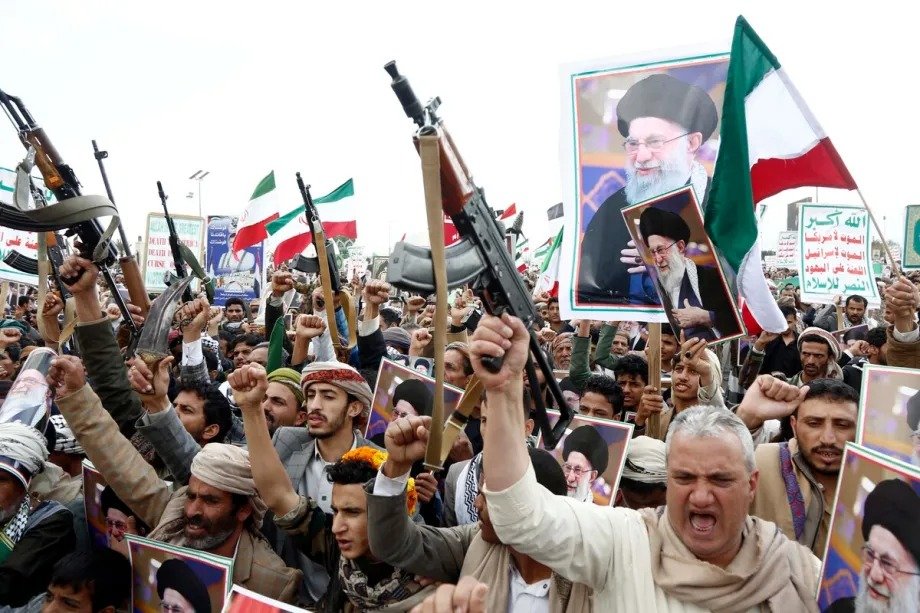
Yemen’s internationally recognized government announced that Yemens government bans Iranian goods and products entirely, prohibiting both entry and circulation of Iranian origin items throughout territory under its control, marking a significant escalation against Tehran’s regional influence.
This decision comes as Iran backed Houthi rebels have made significant territorial gains in recent days, capturing Perim Island and the city of Dhubab in western Yemen, effectively seizing control of the strategically vital Bab el-Mandeb Strait connecting the Red Sea to broader international shipping routes.
The internationally recognized government’s ban represents a direct response to growing frustration with continued Iranian support for Houthi forces, which have sustained a prolonged rebellion against the legitimate Yemeni government throughout years of civil conflict within the country.
This trade prohibition adds economic pressure to the broader political and military confrontation between the internationally recognized government and Houthi forces, reflecting an attempt to further isolate Iran’s economic influence within areas still under legitimate government control.
Yemen’s prolonged civil conflict has created a complex multi sided struggle, with the internationally recognized government, Houthi rebels, and various other factions competing for control across different regions, complicated further by significant international involvement from various regional and global powers.
The practical enforcement of this comprehensive trade ban faces significant challenges, given the complex and often informal trade networks that have historically operated across various conflict lines within Yemen’s fragmented territorial control throughout the extended civil war.
International observers note that this ban reflects broader regional tensions connected to Iran’s extensive support network for various allied groups throughout the Middle East, with Yemen representing one significant theater within this broader pattern of Iranian regional influence and confrontation.
Economic analysts suggest this ban could create additional hardship for Yemeni civilians already suffering from years of conflict related economic disruption, potentially limiting access to certain goods that had previously flowed through various trade channels despite the ongoing civil conflict.
The timing of this announcement, coinciding with Houthi forces’ significant strategic territorial gains, suggests the internationally recognized government views economic pressure as an increasingly important tool given apparent limitations in purely military responses to continued Houthi advances.
Regional allies supporting the internationally recognized Yemeni government have generally supported increased pressure against Iranian influence throughout the region, viewing continued Houthi military success as a significant strategic concern extending well beyond Yemen’s specific internal conflict dynamics.
As this ban takes effect amid continuing military escalation, the broader Yemen conflict shows few signs of near term resolution. This latest economic measure adds another dimension to an already complex multi sided struggle with significant implications for regional stability and global shipping security.