

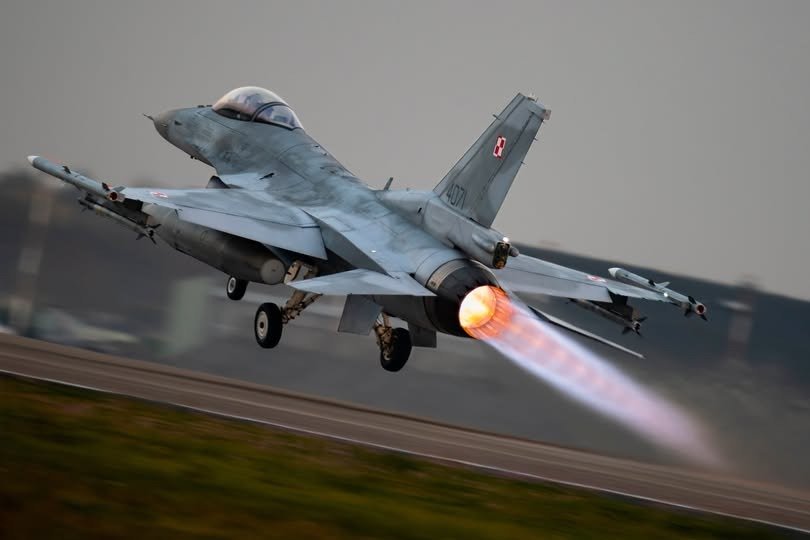
Poland’s air force scrambled fighter jets this week after a Russian drone attack on western Ukraine set off a powerful explosion close to the Polish border. The incident has added fresh urgency to concerns among NATO members about the risk of the war in Ukraine spilling beyond its borders.
Poland’s prime minister confirmed that military aircraft were sent up as a precaution once the threat was detected. Officials said the move followed standard protocol used whenever activity near the border raises safety concerns, reflecting how seriously Warsaw now treats even indirect threats tied to the ongoing war next door.
This is not the first time Russian drones have drifted into or near Polish airspace during the conflict. Similar incidents earlier this year prompted Poland and its NATO allies to review air defense readiness along the alliance’s eastern flank. Each new episode reignites debate over how the alliance should respond if a drone or missile were to cross fully into Polish territory.
Poland has significantly increased its defense spending in recent years, citing the war in neighboring Ukraine as a direct security concern. The country has become one of the most vocal advocates within NATO for stronger support to Kyiv, arguing that a Russian victory in Ukraine would pose a direct threat to the wider region, including Poland itself.
The latest incident comes as Russia has intensified its aerial campaign against Ukraine, launching thousands of drones and missiles in recent weeks. While most of these attacks target Ukrainian cities and infrastructure, the sheer scale of the campaign has increased the odds of stray weapons or debris crossing into neighboring countries.
NATO officials have repeatedly stressed that any deliberate attack on alliance territory would trigger a serious response, though incidents involving drones straying accidentally across borders present a murkier situation. Officials must weigh how to respond firmly without escalating tensions into a wider confrontation with Russia.
European leaders have used recent incidents to push for faster development of shared air defense systems along the eastern border. Discussions have included proposals for a coordinated shield capable of detecting and intercepting drones before they reach populated areas, though funding and logistics remain significant hurdles.
Russia has denied deliberately targeting Polish territory in these episodes, framing them as unintended consequences of its operations against Ukraine. Polish officials have expressed skepticism about that explanation, particularly given the recurring nature of these incidents over recent months.
The political fallout extends beyond immediate security concerns. Polish officials have used each incident to press allies for faster delivery of promised military equipment, including additional air defense systems. Some lawmakers have also called for a stronger, more unified European response to repeated violations near the alliance’s border.
As the war in Ukraine continues without a clear end in sight, incidents like this week’s drone scare are likely to keep recurring, keeping Poland and its NATO allies on heightened alert. For now, officials say close monitoring and rapid response remain the best available tools to manage a risk that shows little sign of disappearing soon.
ARTICLE 12 — BUSINESS
News Title: EU And China Race To Ease Trade Fight Primary Keyword: EU China trade talks News Category: Business Meta Description: The EU and China are pushing for progress in trade talks ahead of a key deadline. See what is at stake for both sides.
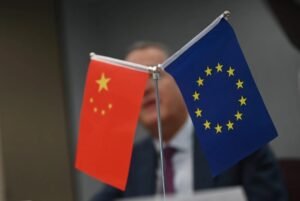
European and Chinese officials are working to ease a growing trade dispute, as both sides push toward an October deadline set by Brussels for what it calls “tangible progress” in the relationship. The talks reflect deepening concern in Europe over China’s expanding trade surplus and its effect on European industries.
Over the past several years, the European Union’s goods trade deficit with China has ballooned to hundreds of billions of euros. At the same time, European exports and investment into the Chinese market have struggled to keep pace, leaving officials in Brussels increasingly frustrated with what they view as an unbalanced relationship.
A second round of trade and investment consultations between the two sides is set to take place in Beijing this fall, following an earlier round launched over the summer. European officials, including the bloc’s trade commissioner, are expected to travel to China as part of the ongoing negotiations, alongside a series of lower level meetings scheduled in the coming weeks.
Neither side expects the talks to fundamentally reshape China’s manufacturing focused economic model. Instead, officials on both sides appear to be aiming for smaller, more achievable outcomes that could ease immediate tensions without resolving the deeper structural imbalance driving the dispute.
Among the ideas under discussion, China is reported to have signaled willingness to increase purchases of European goods through government procurement or state trading channels. However, the scale and details of any such commitment remain unclear, and European officials have stressed they need concrete results rather than vague promises.
The European Commission has also committed to rolling out new economic security tools by the end of the year, giving it more power to respond to concerns about unfair trade practices. These tools are seen as part of a broader shift in Brussels toward a firmer stance on trade, following growing pressure from member states worried about their domestic industries.
Tensions have already spilled into specific sectors. The EU’s investigation into Chinese electric vehicle subsidies remains a sore point, with additional tariffs already in place on some Chinese-made vehicles. China, in turn, has pursued its own investigations into European exports, including agricultural products, in moves widely seen as retaliatory.
The backdrop to these talks includes a complicated three-way dynamic involving the United States as well. Ongoing trade tension between Washington and Brussels has added pressure on European officials to avoid being squeezed from both sides, even as some voices in Europe have floated closer alignment with China to counterbalance pressure from Washington.
Business groups across Europe remain divided on the best path forward. Exporters hoping to grow their presence in the Chinese market favor a more conciliatory approach, while manufacturers facing direct competition from Chinese imports have pushed for tougher measures to protect domestic industries.
As the October deadline approaches, officials on both sides face pressure to show progress without appearing to cave to the other’s demands. How the talks unfold could shape the broader direction of EU-China economic relations for years to come, with ripple effects likely to reach global supply chains far beyond Europe and China alone.