


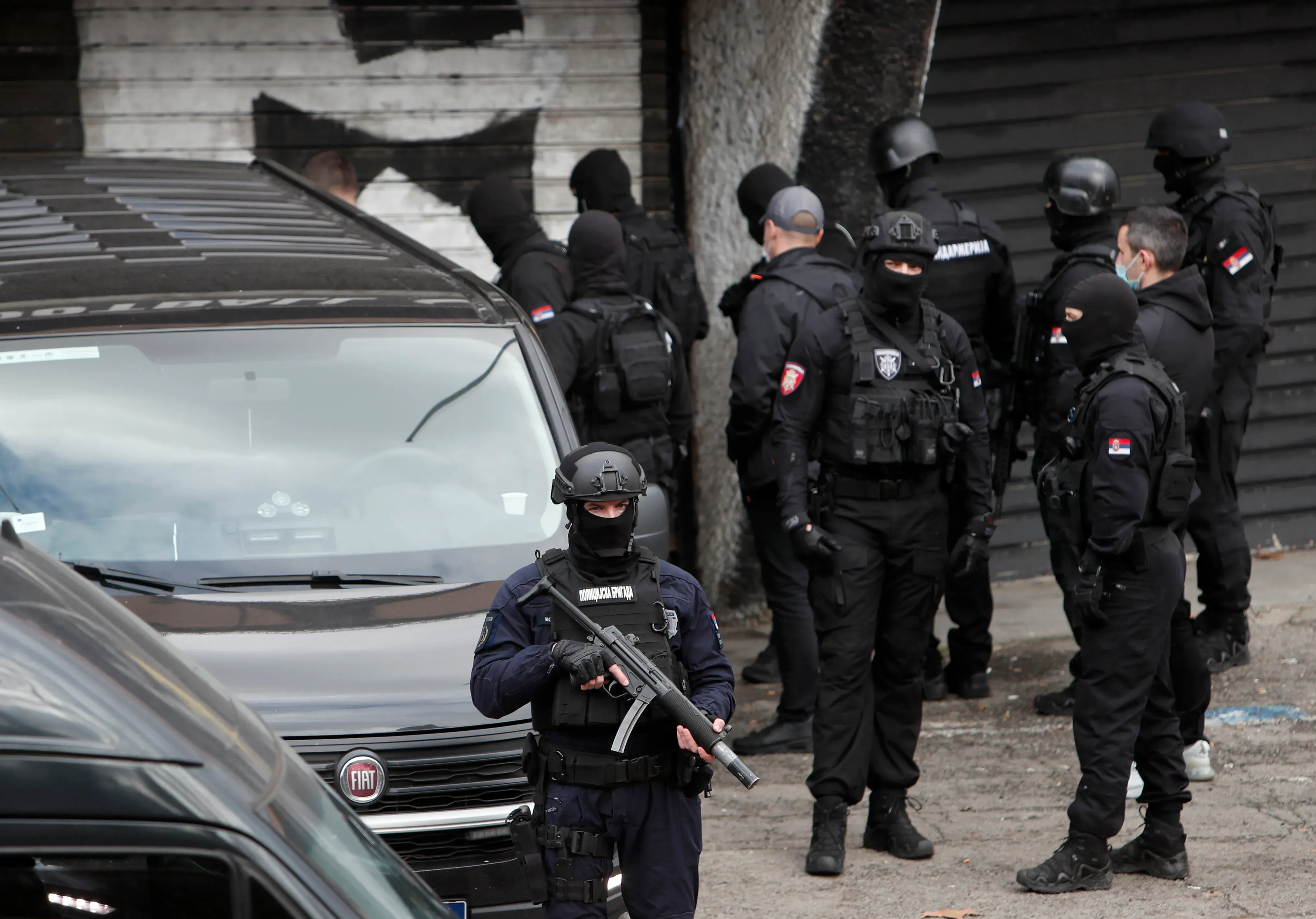
Serbian authorities have detained nine serving police officers and one former officer over allegations of violence against people held during anti-corruption protests in Belgrade. The country’s Interior Ministry said the officers were suspected of using excessive force, threats and intimidation against detainees. The arrests mark a major development in a case linked to public demonstrations that have challenged the country’s political leadership.
The alleged abuse took place in August 2025 at a garage inside a government compound in central Belgrade. According to the ministry, the officers used force against several people who had been detained during the protests. Authorities said the suspects belonged to an elite police unit and were accused of trying to obtain information through threats and physical pressure.
The protests began after 16 people died when a concrete canopy collapsed at a renovated railway station in the city of Novi Sad in November 2024. The disaster raised public questions about construction standards, government oversight and possible corruption. Demonstrations later spread across Serbia, with students, activists and opposition groups demanding accountability and changes in the country’s political system.
Police used tear gas, stun grenades and crowd-control vehicles during some of the demonstrations. Students and activists said they had suffered injuries and psychological harm during clashes with security forces. The latest arrests are the first major action against officers accused of mistreating protesters in connection with the movement.
The political situation has also changed since the demonstrations began. The ruling Serbian Progressive Party lost a snap parliamentary election in October 2026 to the Student List, a political group linked to the protest movement. The result followed months of public anger over the government’s response to the railway disaster and wider concerns about corruption and the use of state power.
The Interior Ministry has released only the initials of the detained officers. The investigation will now need to establish what happened, who was involved and whether the allegations can be supported by evidence. The officers are entitled to due process, and the claims have not yet been proven in court.
The case is being watched by students, rights groups and European officials. Serbia is a candidate for European Union membership, and its record on democratic standards and police conduct remains an important issue. The investigation could become a test of whether authorities are willing to hold members of the security forces accountable for alleged abuses.