

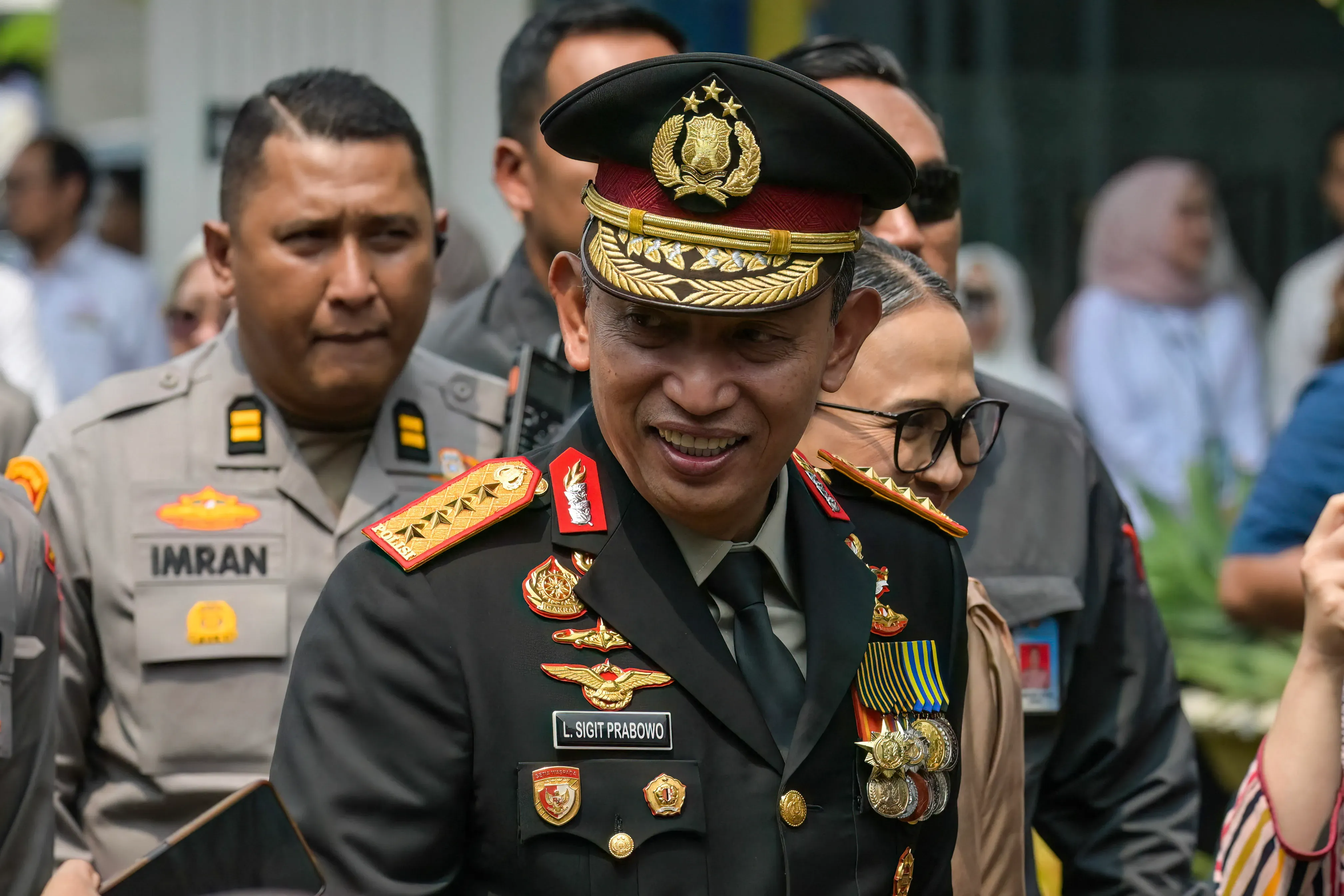
Indonesia’s President Prabowo Subianto has dismissed his chief of staff after police arrested him over allegations of illegal phone surveillance. Listyo Sigit Prabowo is accused of taking part in a wiretapping operation involving the phones of senior officials, including the president and members of his cabinet. Two other serving police officers have also been arrested in connection with the case.
The dismissal came one day after authorities announced the arrests. Government officials said the alleged actions could amount to treason because the surveillance may have placed national leadership and state interests at risk. Presidential spokesperson Prasetyo Hadi said the government viewed the matter as a serious threat, although investigators have not yet established the full motive.
Listyo previously served as Indonesia’s national police chief for five years before becoming the president’s chief of staff last month. Authorities said the alleged wiretapping took place during the period when he was leading the police force. The case therefore raises questions about the use of police powers and the protection of private communications at the highest levels of government.
The two other officers arrested include Ahrie Sonta Nasution, who was reported to have led the legal division of the national police. Investigators allege that the suspects tried to hide their actions by ordering the deletion of files containing intercepted communications. Officials have not yet provided a full account of what information may have been collected or who may have received it.
Indonesia’s senior minister for legal affairs said the motive remains unclear. The police investigation is expected to examine whether the surveillance was authorised, how it was carried out and whether other people were involved. The suspects have not been convicted, and the allegations will need to be tested through the country’s legal process.
The arrests have also drawn attention to security arrangements in the capital. More than 20,000 soldiers were deployed in Jakarta on Wednesday, although the military said the movement was part of normal procedures to maintain national security. Officials did not confirm that the deployment was directly linked to the wiretapping case.
The investigation could have major consequences for Indonesia’s police leadership and the government’s approach to national security. It may also lead to wider questions about oversight, privacy and the limits of official power. Authorities will now face pressure to present clear evidence and explain how such an operation could have taken place.