


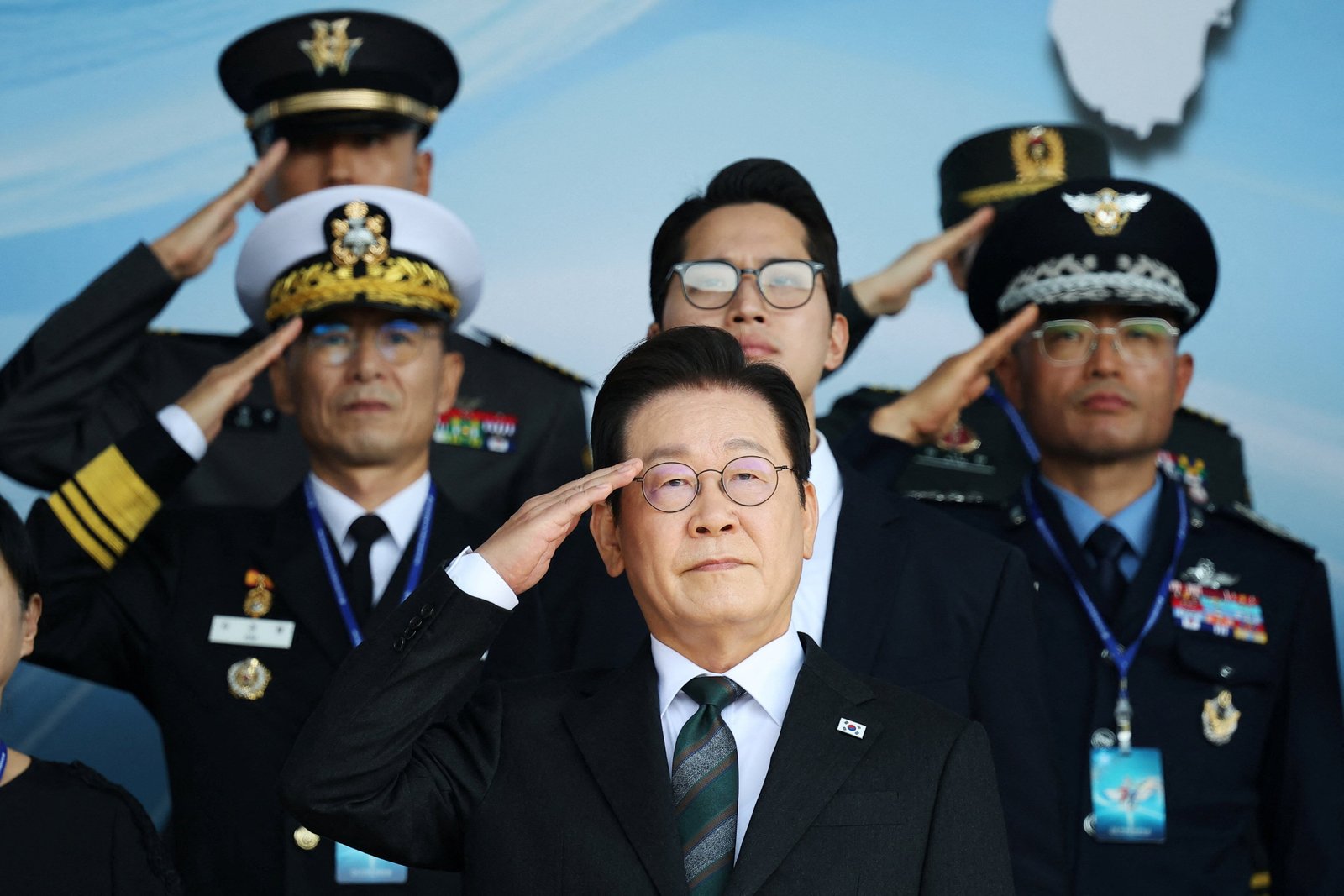
South Korean President Lee Jae Myung announced a significant increase to his country’s defense budget this week, raising planned 2026 spending by more than eight percent to approximately sixty-six trillion won, equivalent to roughly forty-seven billion dollars, in a move that comes amid heightened regional tensions following North Korea’s firm declaration at the United Nations that its nuclear weapon status remains permanently irreversible. The substantial budget increase reflects growing South Korean emphasis on developing self-reliant defense capabilities even while maintaining its longstanding security alliance with the United States.
Lee specifically highlighted that the increased funding will support development of next-generation weapons systems, including autonomous drone technology and artificial intelligence-powered combat capabilities, reflecting a broader global trend among advanced militaries toward incorporating cutting-edge technology into their defense modernization strategies. This emphasis on emerging technology suggests South Korea aims to develop defense capabilities that can provide meaningful strategic advantages even against a numerically larger or more established conventional military threat from North Korea.
In announcing the increase, Lee offered a notable characterization of the ongoing alliance relationship with Washington, describing it as a key pillar of South Korean security while simultaneously emphasizing that his government cannot afford to entrust the country’s fate entirely to others. This carefully balanced framing acknowledges the continued fundamental importance of the American security relationship while also signaling a genuine commitment to developing more independent and self-reliant defense capabilities that would reduce South Korea’s degree of dependence on American military support in any potential future conflict scenario.
The timing of this defense budget announcement, arriving just as North Korea used its own UN platform to reaffirm the permanent and non-negotiable nature of its nuclear arsenal, illustrates the direct connection between North Korean nuclear developments and South Korean defense policy decisions. This pattern of North Korean nuclear advancement prompting corresponding South Korean defense investment has become an increasingly established dynamic in recent years, reflecting the genuine security dilemma facing South Korean policymakers as they navigate an increasingly nuclear-armed and assertive northern neighbor.
Regional security analysts note that South Korea’s continued interest in developing nuclear-powered submarines, a capability specifically criticized by North Korea’s Vice Foreign Minister during her recent UN address, represents another dimension of this broader defense modernization effort extending beyond simply the budget increase itself. This pursuit of advanced conventional military capabilities, even while South Korea maintains its longstanding position as a non-nuclear weapons state, reflects the country’s broader strategy of developing sufficiently advanced deterrent capabilities without pursuing nuclear weapons development itself.
The broader regional security dynamic continues evolving amid this pattern of North Korean nuclear assertiveness and corresponding South Korean defense investment, with Japan and other regional allies similarly navigating their own defense policy responses to the persistent North Korean nuclear challenge. This regional dynamic illustrates how North Korea’s nuclear program continues generating ripple effects throughout broader East Asian security planning, even as direct denuclearization negotiations remain effectively stalled given North Korea’s consistently firm public position rejecting any prospect of abandoning its nuclear arsenal.
As South Korea moves forward with implementing this significant defense budget increase, the broader trajectory of regional security dynamics on the Korean Peninsula remains genuinely uncertain, shaped by the ongoing tension between North Korea’s firm nuclear posture and South Korea’s efforts to develop sufficiently robust defense capabilities to maintain security and deterrence. Whether this pattern of escalating defense investment eventually contributes to a more stable if tense regional equilibrium, or potentially fuels further competitive military buildup throughout the region, will likely become clearer only as these various defense modernization efforts continue developing in the months and years ahead.