


A new report has challenged the idea that the growing visibility of Christian symbols in British public life reflects a broad return to regular church attendance. The research suggests that some people who identify strongly with Christian national values rarely attend church services. The findings have added to debate over religion, national identity, and the influence of far-right political groups in Britain.
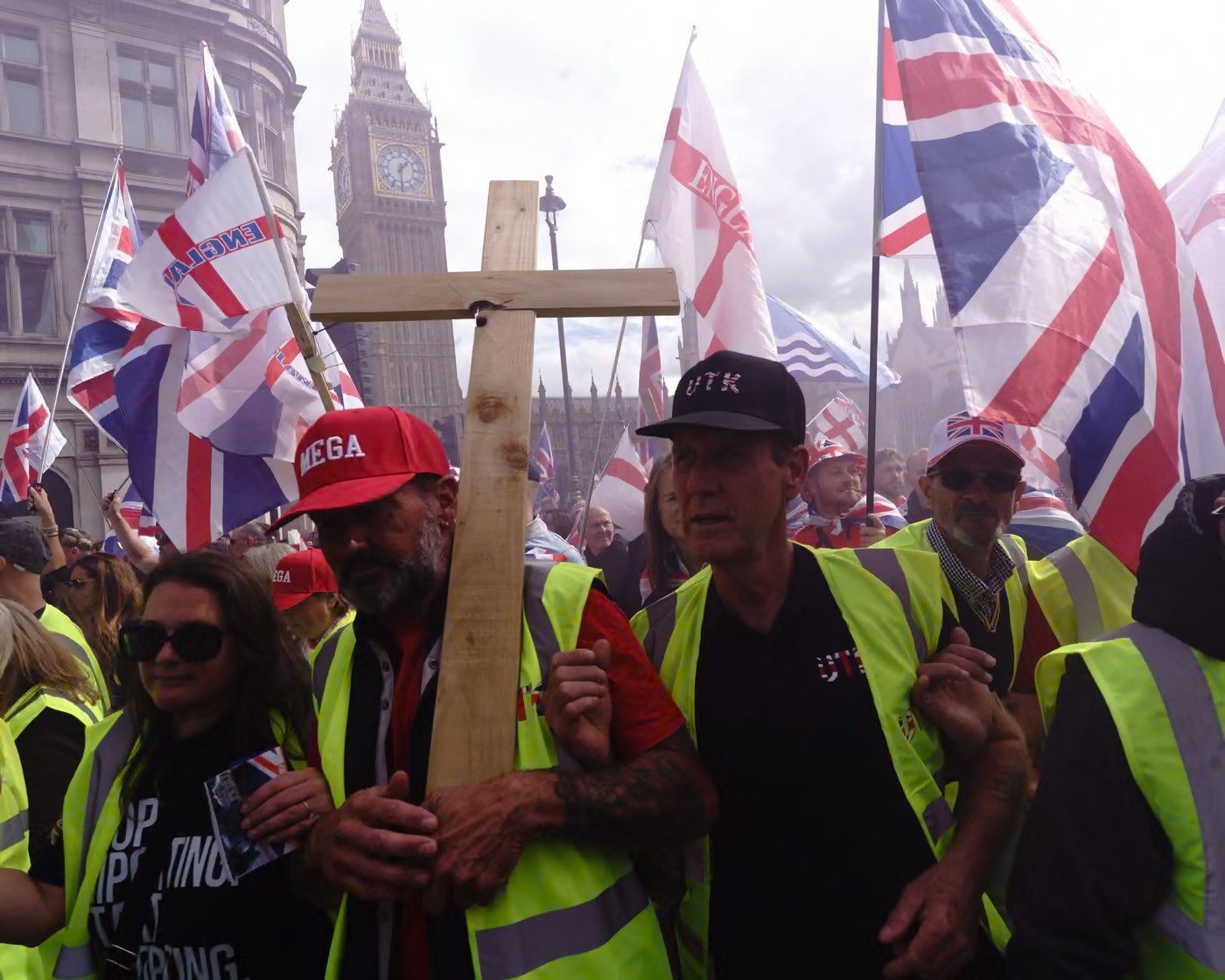
Christian nationalism links ideas about the nation with a particular view of Christianity. Supporters may argue that Christian traditions should have a stronger place in public life, schools, and national culture. Critics warn that the movement can exclude people who follow other religions or no religion at all. The debate has become more visible as political groups use religious symbols in campaigns about immigration, identity, and social change.
The report questions whether the display of crosses, flags, and other religious symbols always signals a growing religious revival. Some people may use Christian identity mainly as a marker of national belonging rather than as a reflection of regular worship or personal faith. This distinction matters because religious belief, cultural identity, and political affiliation do not always mean the same thing.
Britain has a long history of links between Christianity and public institutions. Yet church attendance has fallen over several decades, and many people now describe themselves as having no religion. The rise of public displays of Christian identity therefore presents a complex picture. It may reflect political mobilisation, a reaction to social change, or a desire to express a sense of national continuity.
Researchers say it is important to understand who is drawn to these movements and why. Economic insecurity, concern about immigration, and distrust of political institutions can all shape people’s views. However, these factors do not mean that everyone who values Christian heritage supports far-right politics. Many religious groups in Britain oppose exclusion and argue that faith should encourage care for people from different backgrounds.
The findings may influence how politicians and community leaders discuss religion in public life. If Christian symbols are being used mainly as political signals, leaders will need to consider what those symbols mean to different groups. The debate also raises questions about how national identity can be discussed without treating minorities as outsiders.
The report does not suggest that all forms of Christian identity are political or extreme. Instead, it highlights the need to separate regular religious practice from the use of religion as a marker of national belonging. As debate continues, the challenge will be to understand the different motivations behind these movements and protect freedom of belief for everyone.