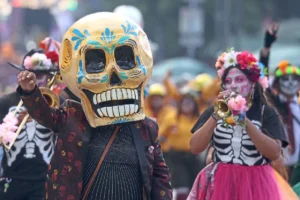

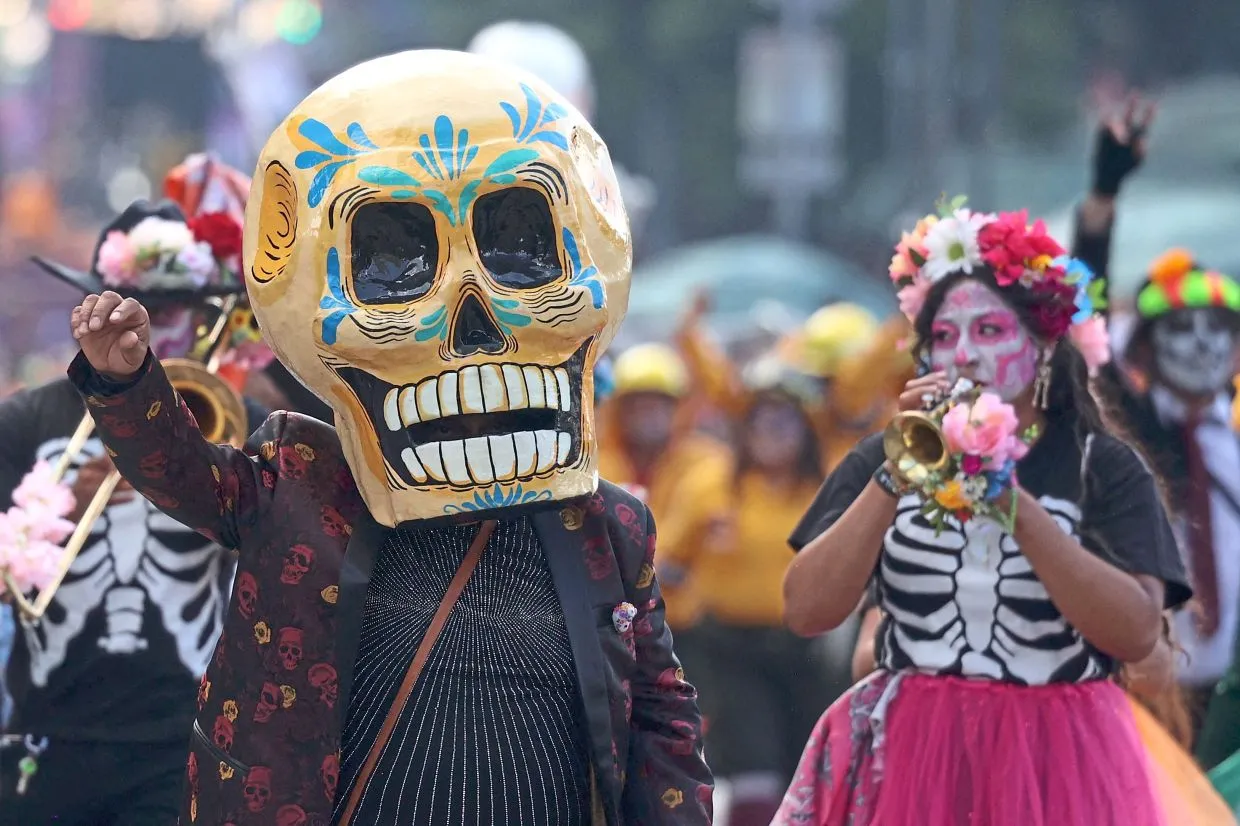
Colourful costumes, lively music and large public gatherings have brought streets across the Americas to life as communities celebrate the Day of the Dead. The annual tradition, widely known by its Spanish name Día de Muertos, honours people who have died while celebrating the memories and relationships they left behind. Mexico remains at the centre of many of the best-known celebrations, but events have also taken place in other countries and in communities across the United States. This year’s festivities have once again turned public spaces into colourful displays of art, music and cultural identity.
In Mexico City, participants have taken part in parades featuring elaborate costumes, skull makeup and traditional symbols associated with the celebration. One of the most recognisable figures is La Catrina, an elegant female skeleton often shown wearing a wide-brimmed hat and decorative clothing. The character has become a major symbol of the festival and appears in costumes, artwork and large public displays. A sculpture more than 30 metres tall was also displayed in the city’s Zócalo square, offering visitors a striking example of how traditional imagery continues to influence modern celebrations.
The festivities have also been visible in other Mexican cities. In Monterrey, participants dressed as skeletons and skull figures joined public processions ahead of the main celebration. In Mérida, the Paseo de las Ánimas, or Walk of the Souls, brought people together in a parade inspired by the idea of remembering those who have passed away. Participants wore skull makeup and costumes while moving through public streets. These events show how communities use shared traditions to connect local history with the present, giving younger generations opportunities to take part in cultural activities.
The celebration has also reached beyond Mexico. In Guatemala City, people joined the Paseo de las Catrinas festival, where participants dressed as the well-known skeletal character. In the United States, celebrations took place at locations including Pike Place Market in Seattle and Hollywood Forever Cemetery in Los Angeles. These events reflect the influence of Mexican culture across North America, particularly in communities with strong family and cultural connections to Mexico. Public gatherings allow people to share music, dance, food and traditional symbols with neighbours and visitors.
The Day of the Dead is not simply a Halloween event, even though the two celebrations take place close together on the calendar and sometimes share visual elements such as costumes and skeleton decorations. The Mexican tradition has its own history and meaning, centred on remembrance and the continuing importance of family relationships. Families often prepare offerings, known as ofrendas, with photographs, flowers, candles and favourite foods associated with relatives who have died. These displays are intended to welcome and remember loved ones, making the occasion both personal and communal.
Marigold flowers, decorative skulls and colourful paper designs are among the familiar elements seen during the celebrations. Many families also visit cemeteries, clean graves and spend time remembering relatives. In public events, music and dancing create a festive atmosphere, while traditional clothing and face painting help participants express their connection to the occasion. The mixture of remembrance and celebration gives the festival a distinctive character. It allows people to acknowledge loss while also recognising the lives, stories and traditions that continue to shape their families.
The celebration has become increasingly visible internationally through films, photography, travel and social media. Images of elaborate Catrina costumes and large parades have introduced the tradition to audiences who may not be familiar with its deeper meaning. Tourism has also helped bring visitors to Mexico during the festival period, creating opportunities for local businesses, artists and event organisers. At the same time, communities continue to emphasise the importance of respecting the cultural significance of the occasion rather than treating it only as a colourful attraction.
This year’s events show how a long-standing cultural tradition can remain meaningful while adapting to modern public celebrations. From Mexico City to Guatemala City and from Seattle to Los Angeles, people have used art, music and shared activities to remember those who came before them. The costumes and parades provide striking public scenes, but the central purpose remains personal: keeping memories alive and recognising the lasting place of family and community in everyday life.