

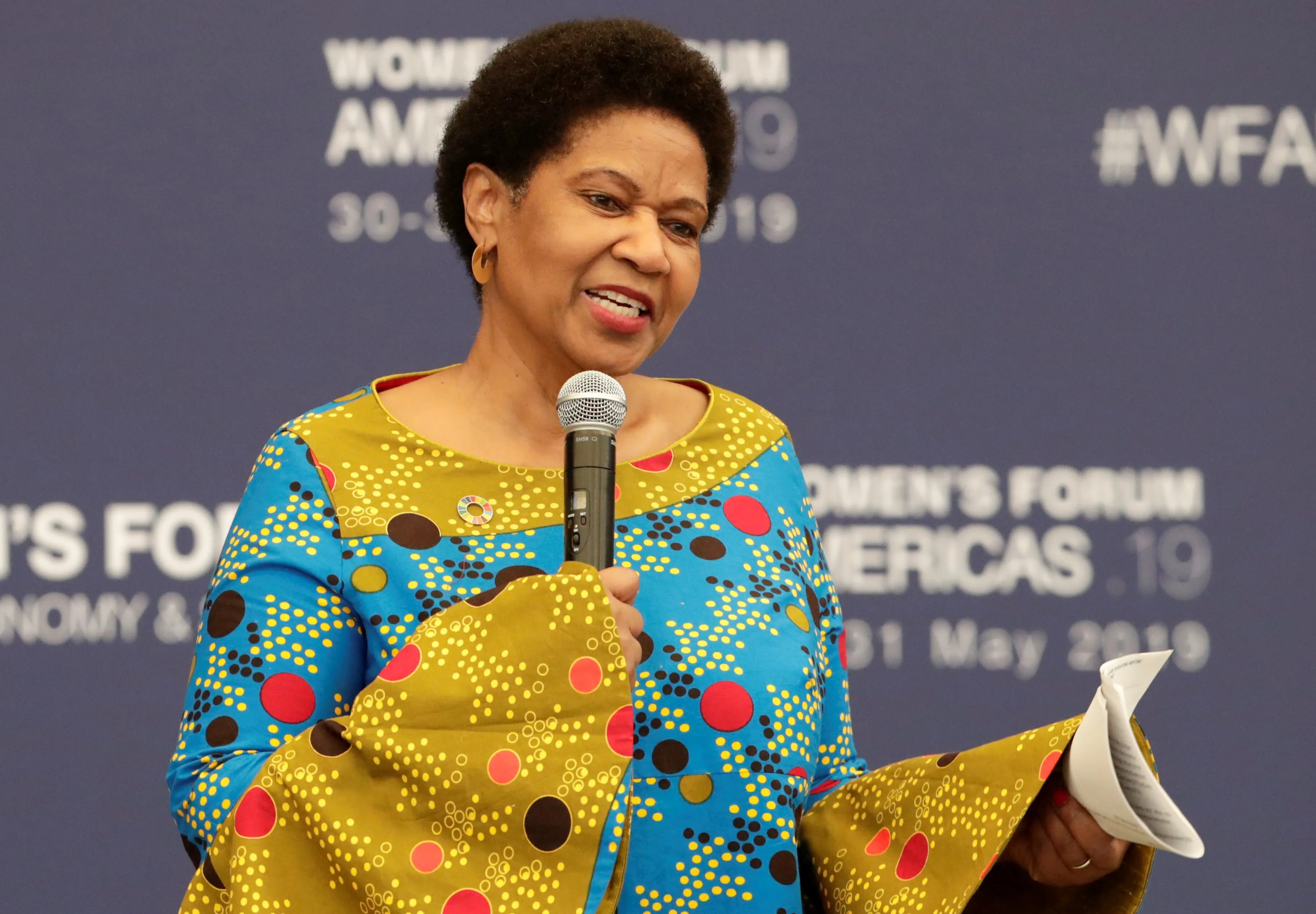
Phumzile Mlambo-Ngcuka, South Africa’s first female deputy president and a former senior United Nations official, has died at the age of 71. The South African presidency announced her death late on Friday, prompting tributes to a political figure who played an important role in the country’s democratic development and international efforts to advance women’s rights. Her career included senior government positions, work on economic development and leadership within the United Nations.
Mlambo-Ngcuka entered parliament in 1994, the year South Africa held its first democratic elections after the end of apartheid. She later served as deputy president from 2005 to 2008, becoming the first woman to hold the position. During her time in government, she oversaw initiatives aimed at reducing poverty, with particular attention to improving opportunities for women. Before becoming deputy president, she also served as minister of minerals and energy and held a deputy ministerial position in the Department of Trade and Industry.
Her work later extended to the international stage. In August 2013, she became executive director of UN Women, the United Nations organisation responsible for promoting gender equality and women’s empowerment. She served two terms in the role, working with governments and international organisations on issues including women’s participation in public life, economic opportunity and protection from discrimination. Her appointment placed a South African political leader at the centre of one of the United Nations’ most important equality-focused institutions.
Mlambo-Ngcuka’s career reflected the changes that took place in South Africa after the end of apartheid, when a new generation of leaders entered public service and helped shape the country’s democratic institutions. Her work in government and the United Nations connected domestic development priorities with international campaigns for equality. Her death marks the loss of a prominent figure in South African political history, particularly for women who viewed her rise to senior leadership as an important milestone. Tributes are expected to focus on her public service and the influence she had on efforts to improve women’s representation and opportunities.