



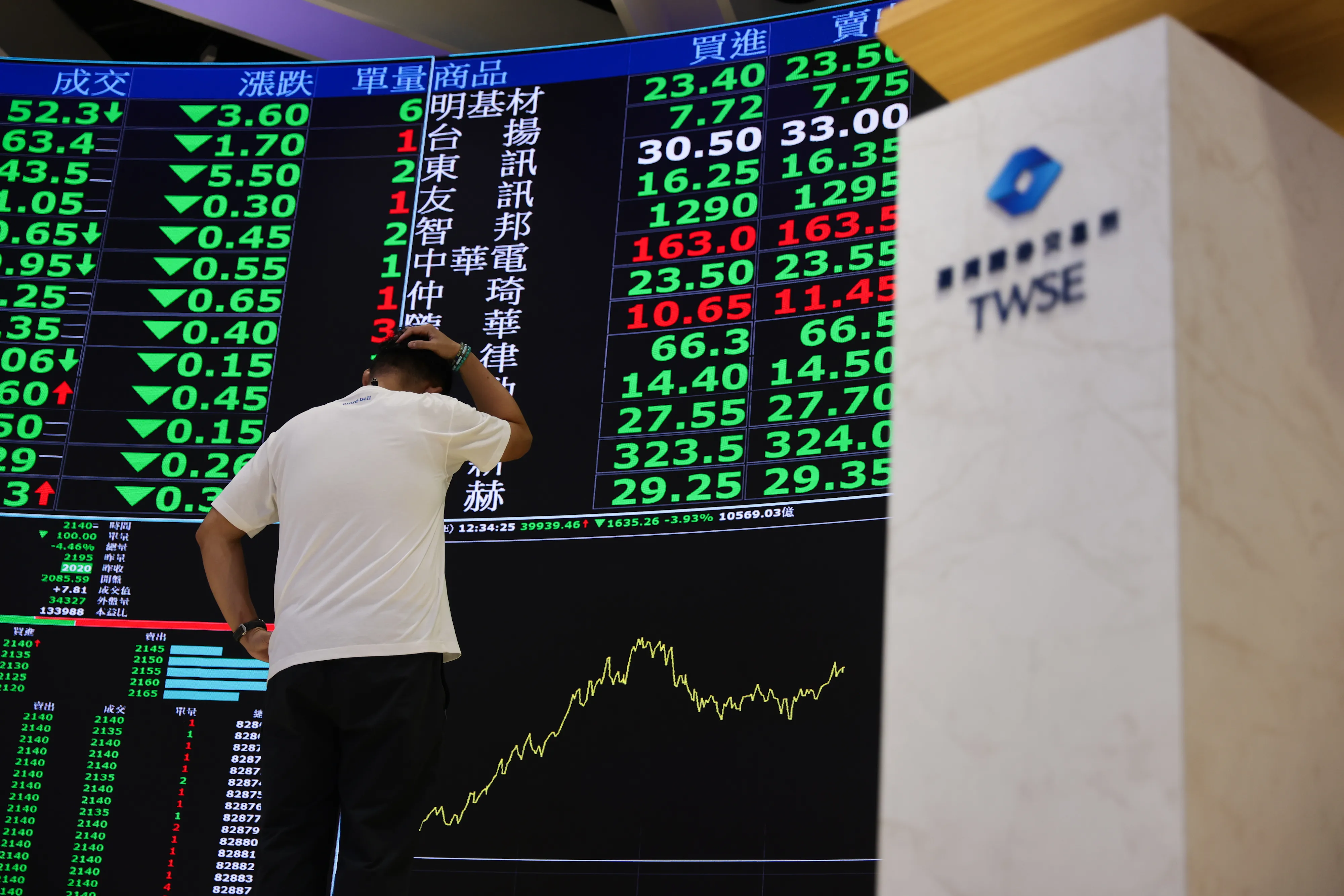
Global financial markets have suffered a major decline after investors reacted to the possibility of stricter artificial intelligence regulations in the United States. A sharp fall in technology shares erased trillions of dollars from stock market values, affecting companies across the United States, Japan, Taiwan and South Korea. The sell-off followed the Democratic Party’s victory in the US midterm elections, which gave the party control of both chambers of Congress.
The Nasdaq Composite recorded one of its largest daily declines in recent years, falling 5.52% during Thursday’s trading session. The S&P 500 dropped 4.36%, while the Dow Jones Industrial Average declined 3.44%. Technology companies were among the hardest hit because investors believe a Democratic-controlled Congress may increase scrutiny of AI infrastructure and data-centre construction.
The market reaction was especially strong in Asia. Taiwan’s stock market suffered a major decline as investors reduced their exposure to semiconductor companies. South Korea’s KOSPI also fell sharply, with major technology firms losing value. Japanese shares experienced heavy selling pressure as chipmakers and companies connected to AI investment followed the losses on Wall Street.
The concern is that tighter regulation could slow the expansion of data centres, which have become a major source of investment for technology companies. These facilities require large amounts of electricity, cooling systems and advanced semiconductor equipment. Investors had expected demand for AI infrastructure to remain strong, but political uncertainty has raised questions about whether some planned projects will face delays or additional costs.
The decline also reflects wider concerns about the amount of money companies are spending on artificial intelligence. Technology firms have announced major investments in computing capacity, software and new data centres. However, investors are increasingly asking when these projects will generate enough revenue to justify their costs. Higher borrowing expenses have added to concerns about companies that rely on external financing.
Some markets showed signs of recovery on Friday as investors bought shares after the steep losses. However, the rebound did not remove uncertainty about the future of AI investment. Analysts will now watch how the incoming US Congress approaches data-centre development, energy policy and technology regulation.
The market reaction demonstrates how political decisions in one country can affect investment around the world. AI companies remain important to global economic growth, but investors are becoming more careful about the risks linked to rapid expansion. The next phase of the technology boom may depend on whether companies can maintain growth while responding to public concerns and new regulatory requirements.