


A series of bomb threats against passenger flights across Europe caused disruption at several airports on Tuesday, leading to aircraft searches, flight diversions and temporary operational restrictions. Authorities said at least seven flights were targeted, while an Israel-bound cruise ship also received a threat. All the affected aircraft landed safely, and searches found no explosives. The incidents prompted emergency security procedures in Poland, Italy, Spain and Bulgaria, while police and aviation officials continued investigating who was responsible for sending the warnings.
Ryanair was among the airlines most affected by the threats. A flight travelling from Dublin to Rome was escorted by Italian Eurofighter jets before landing at Rome’s Fiumicino Airport. Another Ryanair flight from Lisbon to Rome also underwent security checks after landing. Airport authorities said searches of passengers, luggage and aircraft found no suspicious devices. The procedures were carried out as a precaution, and the flights were able to complete their journeys without reports of injuries.
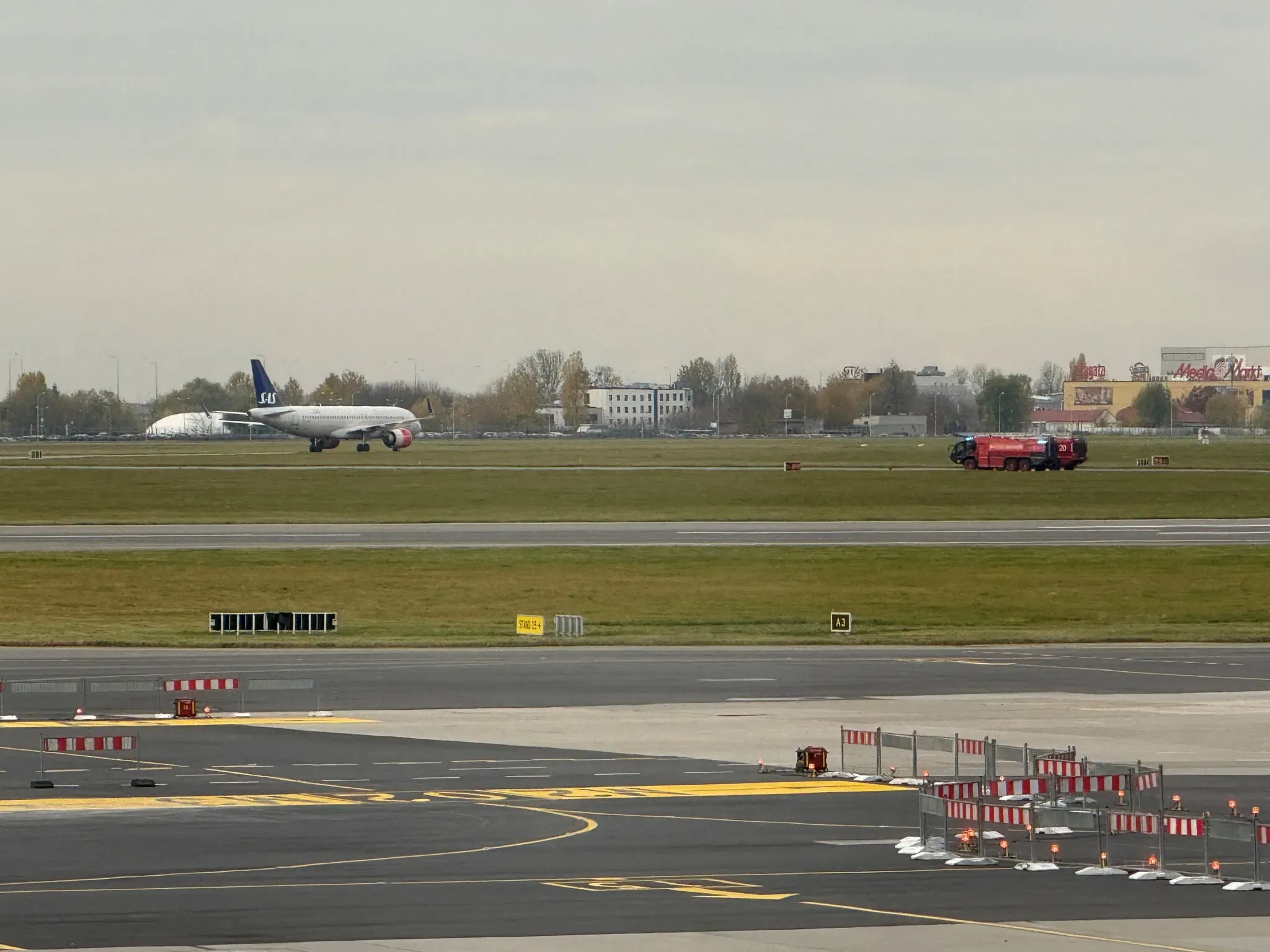
Poland also experienced disruption after two flights travelling towards Warsaw received threats. A Scandinavian Airlines flight from Copenhagen landed at Warsaw Chopin Airport, where a runway was temporarily closed while the aircraft was inspected. A LOT Polish Airlines flight from London’s Heathrow Airport was diverted to Warsaw Modlin Airport. Officials said no explosives were found, and normal operations later resumed. The diversion and searches caused inconvenience for passengers and airport staff, but authorities said the safety procedures had been completed.
In Spain, an emergency protocol was activated after a bomb warning was reported on a Ryanair flight travelling from Manchester to Murcia. The aircraft landed safely, and security teams searched the plane and its baggage. Bulgarian authorities also investigated warnings involving flights arriving in Sofia from Italy and Ireland. No explosive devices were found on those aircraft. The incidents followed a similar event on Monday, when a Wizz Air flight travelling from London to Sofia was diverted to Budapest after receiving a threat while in the air.
The threats also affected a cruise ship near the Greek island of Syros. The vessel, Crown Iris, was carrying around 1,500 passengers and crew and was travelling towards Haifa in Israel. Greek authorities ordered an evacuation while the ship was searched. Officials later reported that no suspicious device had been found during the initial checks. The incident added to the pressure on transport authorities, who were already dealing with multiple warnings involving aircraft across different countries.
Police in the United Kingdom also confirmed that they had received information about threats involving flights at Heathrow and Manchester airports. Officers carried out checks and said no security issues had been identified. Authorities did not immediately provide details about the source of the warnings or whether the messages were connected. Investigators are examining the incidents to determine whether they were made by one person, several groups or individuals copying earlier threats.
Aviation security experts said that several threats affecting different routes in a short period were unusual. Possible explanations include coordinated disruption, copycat messages or an attempt to create confusion across transport networks. Some experts also raised the possibility of wider hybrid activity, in which low-cost actions are used to disrupt public services without creating direct physical damage. However, officials have not attributed the incidents to any country or organisation, and no group has claimed responsibility.
The events highlight how even false threats can create serious disruption for passengers, airlines and airport operators. Security teams must treat each warning carefully because failing to respond could put lives at risk. At the same time, repeated hoaxes can consume resources and affect public confidence in transport services. Authorities are continuing their investigations while airlines and airports return to normal operations. For travellers, the incidents serve as a reminder that aviation security procedures may cause delays even when no actual device is found.