

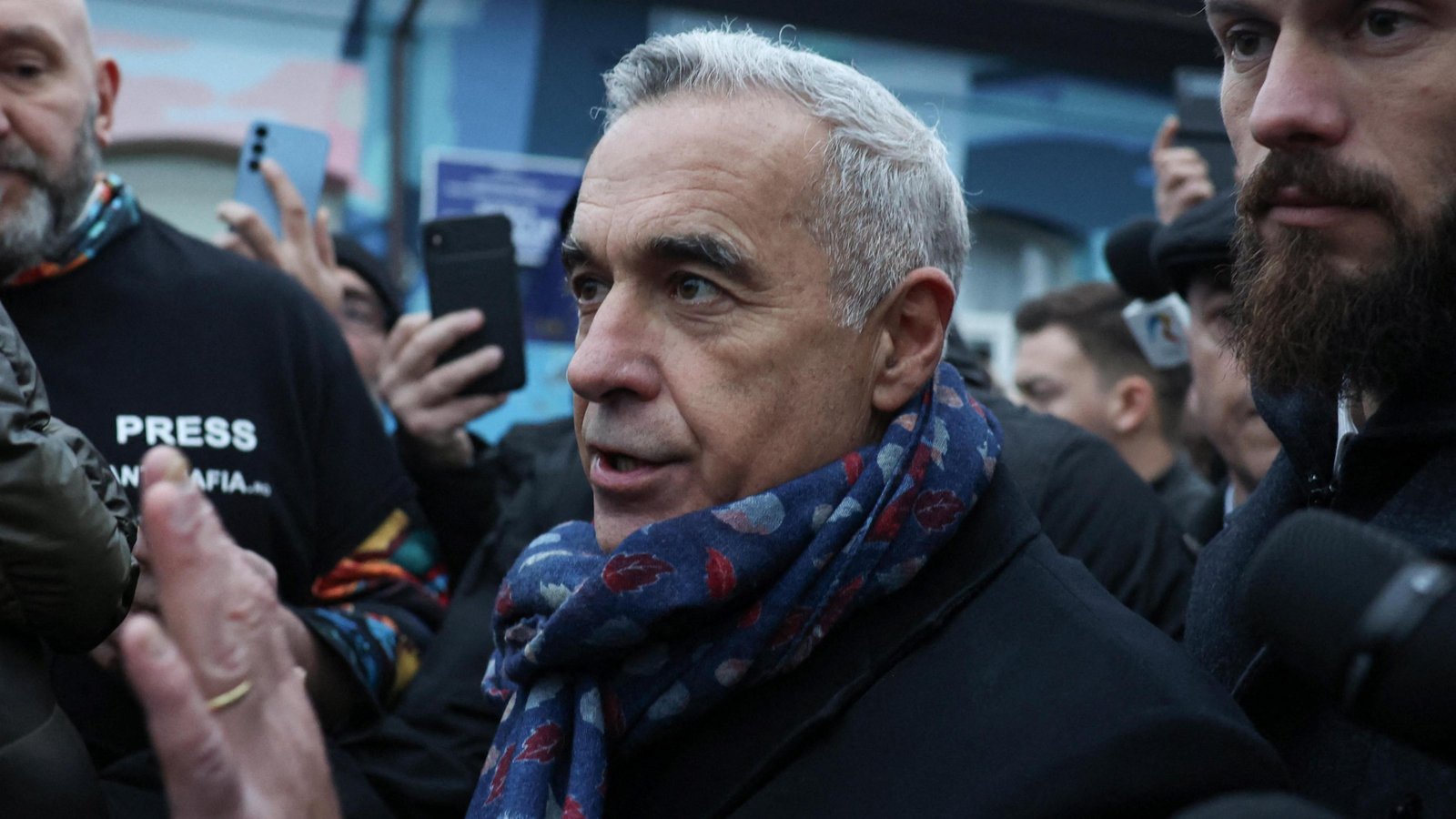
A Romanian court has ruled against prosecutors’ request to detain pro-Russian politician Călin Georgescu for thirty days, instead placing him under a more limited form of judicial control for a period of sixty days following his arrest earlier this week on serious fraud allegations. The Bucharest Tribunal’s decision represents a partial setback for prosecutors from the country’s organized crime and terrorism agency, who had sought stronger detention measures given the seriousness of the charges involving allegations that Georgescu formed a criminal organization to defraud victims out of substantial sums of money tied to funding allegedly connected to various Russian citizens.
Judicial control, the measure ultimately imposed by the court, allows Georgescu to remain free from formal detention while the investigation continues, though it comes with specific restrictions established by the court that limit certain activities and movements during the sixty-day period. This arrangement represents a middle ground between full pretrial detention and complete release without restrictions, reflecting a judicial determination that while the case warrants ongoing investigation and some limitations on the defendant’s activities, the specific circumstances did not meet the threshold required for the more restrictive detention measures that prosecutors had originally requested from the court.
According to reports detailing the specific allegations, one victim in the case reportedly lost more than one million euros after being promised access to a substantially larger loan that prosecutors allege was never genuinely intended to be provided. This specific allegation forms part of a broader pattern that investigators say involved Georgescu and associates defrauding multiple victims through similar schemes, with the total scope of the alleged fraud reportedly involving funding connections to various Russian citizens that have drawn particular scrutiny given Georgescu’s prior political prominence as a pro-Russian candidate in Romania’s recent presidential election cycle.
Prosecutors responded to today’s judicial control ruling by immediately contesting the decision, reportedly filing their objection to the court’s ruling while still present in the courtroom following the announcement of the decision. This swift response suggests prosecutors remain committed to pursuing stronger detention measures against Georgescu as the case continues to develop, setting up what could become an extended legal battle over the appropriate restrictions to place on the defendant while the broader fraud investigation proceeds through Romania’s judicial system in the coming weeks and months.
For his part, Georgescu has responded to the charges with open defiance, characterizing the prosecution as politically motivated rather than reflecting genuine criminal conduct on his part. This framing aligns with broader rhetoric he has employed throughout his political career, having previously positioned himself as an outsider candidate challenging what he describes as an entrenched political establishment, a narrative that gained him unexpected prominence during Romania’s recent presidential election despite significant international scrutiny regarding alleged foreign influence in his unexpectedly strong electoral performance.
The case has attracted significant attention beyond Romania’s borders, given broader European concerns about alleged foreign interference in democratic processes across multiple countries in recent years. Georgescu’s previous electoral success, followed by these serious fraud allegations involving purported Russian funding connections, has reinforced ongoing anxieties among European officials about various forms of alleged foreign influence operations targeting democratic institutions, even as legal experts caution that formal criminal proceedings must run their complete course before drawing firm conclusions about the specific nature and extent of any wrongdoing in this particular case.
As the legal process continues following today’s ruling, both prosecutors and Georgescu’s defense team are expected to continue actively contesting various aspects of how the case proceeds, including the specific restrictions imposed under the current judicial control arrangement. Legal analysts following the case note that fraud investigations involving allegations of international funding connections typically require extensive documentation and cross-border cooperation between different national authorities, suggesting that this particular case will likely continue developing over an extended timeline before reaching any final resolution regarding the serious allegations Georgescu currently faces.