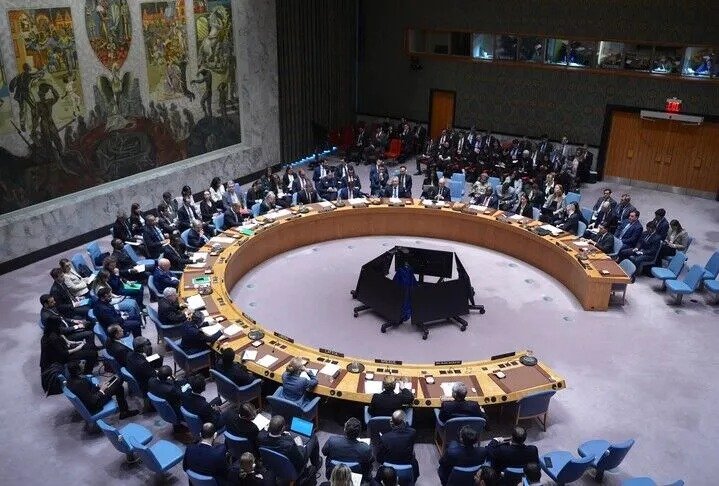


World leaders continued addressing the United Nations General Assembly today, using their allotted time before the international body to weigh in on an unusually crowded agenda that included the ongoing conflict in Gaza, the prolonged war between Russia and Ukraine, and growing global debate over how to regulate rapidly advancing artificial intelligence technology. The combination of these overlapping crises has made this year’s high-level week particularly consequential, with diplomats describing the current moment as one of the more complex periods for international relations in recent memory given the sheer number of simultaneous global flashpoints demanding attention.
French President Emmanuel Macron used his address to stake out several distinct positions, pushing back directly against President Trump’s earlier characterization of the International Court of Justice as “evil” and pledging continued French support for the international judicial body. Macron also called for what he described as a “double moratorium,” urging all parties involved in the Russia-Ukraine conflict to halt strikes on energy infrastructure as well as attacks on shipping traffic moving through the Black Sea, a proposal aimed at reducing civilian harm and economic disruption even as the broader conflict continues without a comprehensive ceasefire agreement currently in place between the warring parties.
Macron additionally addressed the ongoing situation in the occupied West Bank, condemning recent violence there, while also expressing continued concern about the absence of a lasting peace framework for Gaza despite an existing ceasefire arrangement that has faced repeated challenges and reported violations since it was first established. These remarks reflect broader international frustration with the fragility of current arrangements in the region, as multiple world leaders have used this week’s gathering to call for renewed diplomatic efforts aimed at establishing more durable and comprehensive solutions to conflicts that have persisted for extended periods despite periodic diplomatic breakthroughs and temporary agreements between the involved parties.
British Prime Minister Andy Burnham delivered his inaugural address to the General Assembly since assuming office earlier this year, notably choosing to emphasize artificial intelligence as a central theme of his remarks. Burnham praised AI’s potential to transform healthcare and education systems while describing the technology as “the key to economic growth,” even as he acknowledged mounting security concerns associated with rapid AI development. This relatively optimistic framing stood in some contrast to more cautious positions expressed by other world leaders during the same high-level week, illustrating the genuine international divide over how aggressively governments should regulate emerging AI technology.
The artificial intelligence debate playing out across various leaders’ speeches this week reflects a broader global tension between countries eager to capture economic benefits from rapid AI development and those expressing greater concern about potential risks associated with insufficiently regulated advancement of increasingly powerful AI systems. President Trump’s own remarks explicitly rejected calls for greater AI regulation, positioning the United States as favoring continued rapid development, while other nations represented at this week’s gathering have advocated for more cautious, coordinated international approaches to managing the technology’s continued advancement and potential societal impacts.
Beyond these headline issues, numerous other topics have featured across various leaders’ addresses throughout the week, including climate change, global economic inequality, and ongoing humanitarian crises in multiple regions around the world. This breadth of topics reflects the fundamentally comprehensive nature of the General Assembly’s annual high-level week, where representatives from nearly every country on earth use their allotted speaking time to highlight whatever combination of global and domestic priorities they consider most pressing for the international community’s collective attention during this particular moment in global affairs.
As the week’s speeches continue, diplomats and analysts alike are working to synthesize the various positions staked out by different world leaders, looking for potential areas of alignment that might support future diplomatic progress on the multiple overlapping crises currently commanding global attention. While formal speeches rarely produce immediate concrete outcomes on their own, they collectively help establish the broader diplomatic context within which the numerous private meetings and negotiations happening on the sidelines of this week’s gathering will ultimately unfold in the days and weeks ahead.