

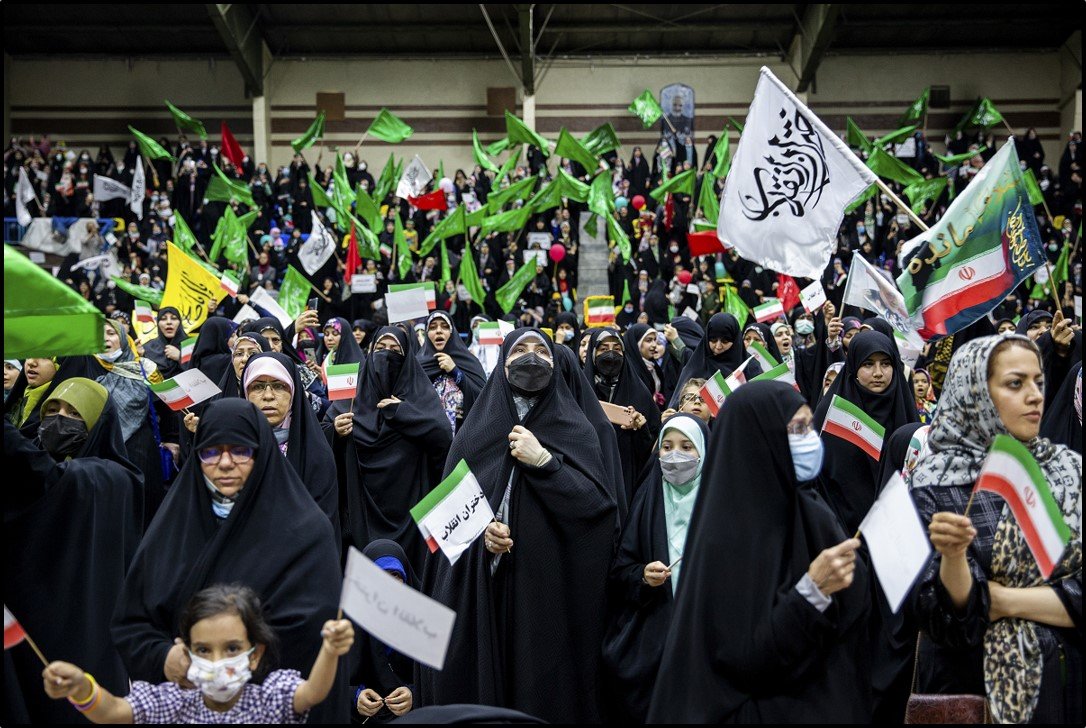
Iran women protest Tehran, drawing thousands of demonstrators into the capital’s main streets on April 17, as a large rally led by women rejected the idea of renewed negotiations with the United States.
According to Daljoog News analysis, the scale and tone of the protest suggest a deep-rooted mistrust of diplomatic engagement, with many participants framing talks as a strategic risk rather than a path to stability.
The demonstration comes at a sensitive moment, as signals from Washington indicate possible interest in dialogue. The reaction in Tehran shows how fragile any diplomatic opening may be.
What Happened?
Iran women protest Tehran unfolded across a major route from Imam Hossein Square through Enghelab Street to Valiasr Square. The march was organized and led by women who described themselves as defenders of the country’s sovereignty and revolutionary identity.
Participants carried symbolic items and used visual messaging to project both resistance and readiness. The rally featured decorated vehicles, traditional attire, and imagery suggesting military strength, all combined to create a powerful narrative.
The protest directly responded to growing speculation about potential U.S.-Iran talks. Demonstrators rejected the idea of negotiations, arguing that past experiences have eroded trust.
Women played a central role, leading the march and shaping its messaging. Their presence highlighted a form of political participation that challenges common international assumptions.
Why This Matters
Iran women protest Tehran signals a widening divide between diplomatic initiatives and public sentiment inside the country. While global actors discuss engagement, parts of Iranian society remain firmly opposed.
This resistance has implications for policymakers. Public pressure can limit negotiation flexibility and push leaders toward a more rigid stance.
The protest also carries symbolic weight. It presents Iranian women as active participants in political discourse, not just observers. This changes how internal dynamics may be interpreted externally.
What Analysts or Officials Are Saying
Experts believe Iran women protest Tehran reflects a deliberate message to both domestic and international audiences. Analysts suggest such demonstrations reinforce a narrative of resistance and strengthen hardline positions.
Observers note that visible public opposition to talks can complicate diplomatic efforts. Leaders may feel less able to pursue compromise if it risks domestic backlash.
International analysts also see the protest as strategic signaling. By highlighting resistance, Iran may be positioning itself more firmly in any future geopolitical discussions.
Daljoog News Analysis
Iran women protest Tehran reveals a deeper pattern in Iran’s political landscape, where public demonstrations often align with broader strategic messaging.
The rejection of negotiations reflects long-standing distrust rooted in historical tensions and economic pressures. This perspective limits the space for diplomatic maneuvering.
At the same time, the protest’s imagery suggests a calculated balance. It combines messages of peace with signals of readiness, aiming to deter without escalating immediately.
However, this approach could narrow Iran’s options. A stronger public stance against talks may reduce opportunities to ease tensions through diplomacy.
The role of women adds complexity. Their leadership in the protest signals a more active and visible engagement in national issues, challenging simplified narratives.
What Happens Next
Iran women protest Tehran may influence upcoming political messaging from Iranian leadership. Officials are likely to adopt a firmer tone in response to visible public sentiment.
Diplomatic efforts could face delays or additional challenges. Any move toward negotiation will need to account for internal resistance.
Global observers will watch for shifts in rhetoric and policy. The gap between international proposals and domestic reactions suggests a difficult path forward.
In the near term, attention will focus on whether similar demonstrations continue. If they do, they could shape both Iran’s domestic debate and its international strategy.