


Iran has launched another wave of military operations targeting facilities linked to the United States and its regional allies, expanding the scope of the ongoing confrontation across the Middle East. The strikes reportedly focused on radar systems, military bases, and energy infrastructure in several countries.
According to Daljoog News analysis, the latest operations demonstrate Iran’s strategy of widening the battlefield beyond direct clashes with Israel by pressuring U.S.-aligned states across the region. The approach allows Tehran to challenge American influence while avoiding a single decisive confrontation.
The escalation comes as hostilities between Iran and Israel continue to intensify, with both sides carrying out missile and drone attacks in what is becoming one of the most dangerous military standoffs in the region in recent years.
What Happened?
Iranian forces carried out new strikes targeting strategic installations connected to the United States and its allies throughout the Middle East.
Tehran claims that several advanced radar systems were destroyed during the operations. Among the reported targets were a Third Radar installation in the United Arab Emirates and Jordan, as well as the FPS-132 radar system located in Qatar. These radar networks play a crucial role in regional missile detection and early-warning defense systems.
Iran’s Islamic Revolutionary Guard Corps (IRGC) announced on Friday that it had conducted the 23rd phase of what it calls “Operation True Promise.” The campaign represents Tehran’s ongoing military response to Israeli and U.S. actions in the region.
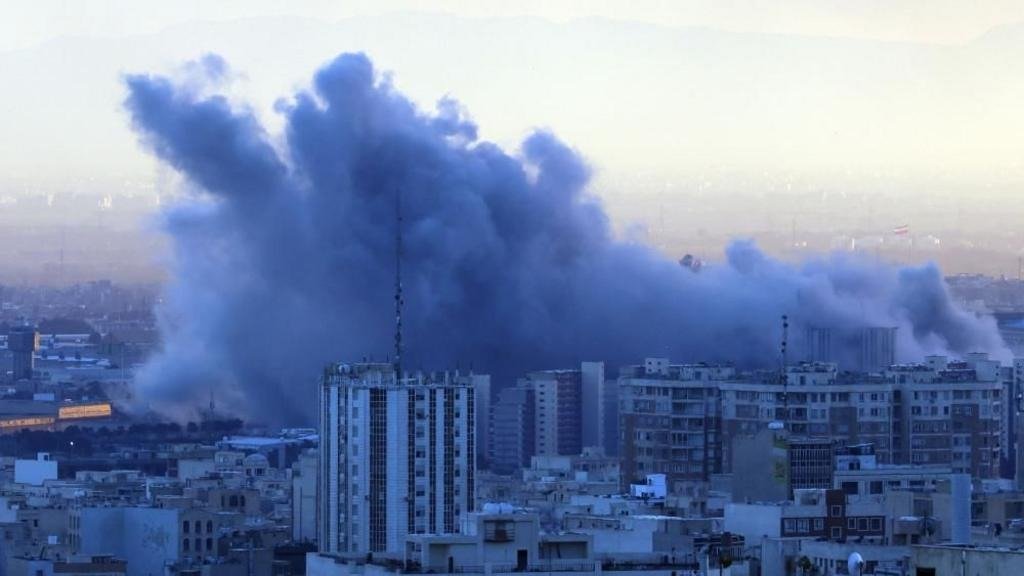
The latest attacks also targeted Israeli infrastructure. Iranian forces launched missiles toward Tel Aviv, Ben Gurion Airport, and military installations in the northern city of Haifa.
Israeli authorities reported that no casualties occurred during the strikes. However, air raid sirens were activated repeatedly across multiple Israeli cities throughout the day and night as defense systems responded to incoming threats.
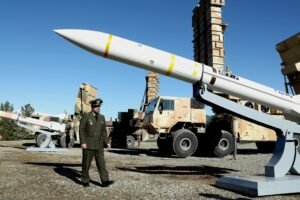
The IRGC stated that four Khoramshahr missiles were used in Friday’s operation. These missiles are among Iran’s most powerful long-range weapons and are capable of carrying heavy payloads over considerable distances.
Beyond Israel and Gulf states, Iran-aligned forces also launched attacks in Iraq. Reports indicate that residential areas housing employees of foreign oil companies, including American firms, were targeted during the operations.
Why This Matters
The attacks signal that Iran’s response strategy is increasingly regional rather than limited to a single battlefield. By targeting installations in multiple countries, Tehran is demonstrating its ability to challenge U.S. security infrastructure across the Middle East.
Radar systems such as the FPS-132 are particularly important components of missile defense networks. If such systems are damaged or disrupted, the ability of U.S. allies to detect incoming missiles and coordinate defensive responses could be weakened.
Energy infrastructure and facilities linked to oil production also represent highly sensitive targets. The Middle East supplies a large portion of global energy markets, meaning any disruption to oil operations can quickly affect global prices and economic stability.
The involvement of Iraq adds another layer of concern. The country hosts numerous foreign energy companies and remains a critical hub for international oil production. Attacks near housing compounds for foreign workers could force companies to reduce operations or evacuate personnel.
For regional governments, the expanding scope of attacks raises fears that the conflict may spread further, potentially pulling more states into confrontation.
What Analysts or Officials Are Saying
Security analysts note that Iran appears to be applying a pressure strategy aimed at stretching the defensive capacity of U.S. allies across multiple locations simultaneously.
By striking radar systems and military infrastructure, Tehran is attempting to challenge the technological advantages of American-backed defense networks.
Israeli officials maintain that their air defense systems remain capable of intercepting most incoming missiles and drones. Military authorities have emphasized that early warning systems continue to operate effectively despite repeated attacks.
Regional governments in the Gulf have not publicly confirmed the extent of damage to radar installations. However, defense experts say that such systems are typically protected by layered security measures and redundancy networks.
Energy industry observers are also closely monitoring the situation in Iraq. Oil companies operating in the region have reportedly increased security measures around worker compounds and production facilities.
Daljoog News Analysis
Iran’s latest operations reveal a calculated shift toward multi-front pressure tactics. Instead of focusing exclusively on Israel, Tehran is targeting the broader security architecture that supports U.S. influence in the region.
This strategy serves several purposes. First, it sends a signal that American allies cannot remain insulated from the conflict. Second, it increases the political and economic costs of continued military confrontation.
At the same time, Iran appears to be calibrating its attacks carefully. The absence of confirmed casualties in several strikes suggests that the operations are designed more for strategic signaling than immediate large-scale destruction.
However, the margin for error in such situations is extremely small.
Even a single strike causing significant civilian casualties or major infrastructure damage could dramatically escalate the conflict. History has shown that crises in the Middle East can shift rapidly from controlled retaliation to broader war.
The targeting of oil industry personnel housing in Iraq also introduces a new level of risk. If international companies begin withdrawing staff due to security concerns, economic disruption could quickly follow.
What Happens Next
Several developments will determine how the situation evolves.
Iran may continue expanding Operation True Promise with additional missile or drone attacks against strategic targets across the region. Israeli forces are also expected to maintain defensive readiness while considering further military responses.
The United States could strengthen its military presence at key bases and reinforce defensive systems around allied infrastructure.
Regional diplomacy will also become increasingly important. Governments in the Gulf and neighboring states may attempt to reduce tensions through back-channel negotiations or international mediation.
Another key factor will be whether attacks continue targeting energy facilities or foreign workers. Such developments could push international actors to intervene more directly to stabilize the region.
For now, the Middle East remains on edge as military actions and strategic signaling continue to unfold across multiple countries.