

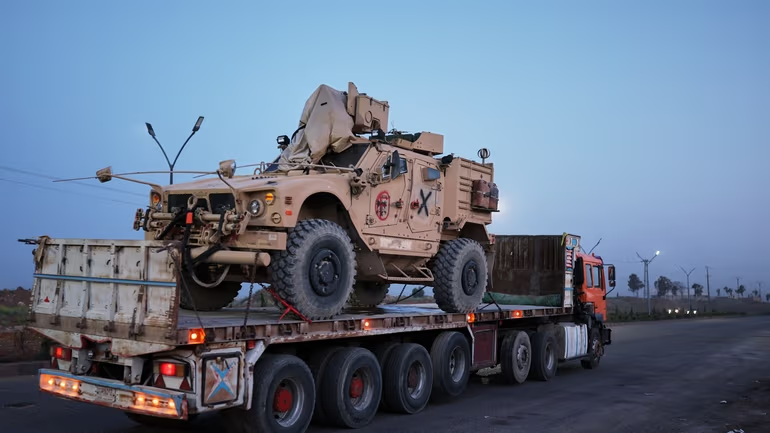
US troop withdrawal Hasakah Syria is now underway as American forces pull out from a key military base in the region, relocating troops and equipment through the Jordanian border. The move was carried out under tight security amid fears of attacks from Iran-backed armed groups.
According to Daljoog News analysis, this withdrawal highlights increasing pressure on US strategy in Syria, where security threats, regional rivalries, and domestic political concerns are converging at a critical moment.
The timing is significant as northeastern Syria remains deeply fragmented, with multiple groups competing for influence. The decision could alter control dynamics and create new uncertainties across.
What Happened?
US troop withdrawal Hasakah Syria accelerated on Thursday as vacated the Qasra military base in Hasakah province. Troops and military equipment were carefully transported toward the Jordanian border to reduce exposure to potential militia attacks.
The withdrawal followed heightened warnings of possible strikes by Iran-backed groups, which have repeatedly targeted US positions in Syria in recent years. These threats have made certain bases increasingly difficult to defend.
After the US exit, the base has come under the joint control of the Syrian Democratic Forces (SDF) and Syrian government troops. This reflects the complex power-sharing realities in northeastern Syria, where alliances often shift based on security needs.
The United States first deployed forces to Syria in 2014 as part of the fight against ISIS. Over time, its mission expanded to include support for Kurdish-led SDF forces and the establishment of strategic military positions.
Why This Matters
US troop withdrawal Hasakah Syria could reshape the security landscape in the region. American forces have long played a stabilizing role, especially in counterterrorism operations and coordination with local allies.
A reduced presence may weaken security structures that depend on US intelligence and military backing. This creates concerns about the possibility of extremist groups regaining strength or local conflicts intensifying.
The move also has wider geopolitical consequences. Iran-backed militias and Russian forces have been expanding their influence in Syria, and a US pullback could give them more room to operate.
At the same time, Washington may be recalibrating its Middle East strategy, shifting focus away from prolonged military commitments toward more engagement.
What Analysts or Officials Are Saying
Experts believe the US troop withdrawal Hasakah Syria decision is driven primarily by immediate security risks rather than a full policy reversal. Increasing attacks on US bases have forced military planners to reconsider their positioning.
Some analysts warn that even tactical withdrawals can have strategic consequences. Reduced US visibility on the ground may embolden hostile groups and weaken deterrence in contested.
Regional observers also point to the delicate relationship between the SDF and Syrian government forces. While they share control in some areas, underlying tensions remain unresolved and could escalate.
Officials in Damascus interpret the withdrawal as a step toward restoring sovereignty. However, the ground suggests that control remains divided and fragile.
Daljoog News Analysis
US troop withdrawal Hasakah Syria reflects a broader shift in how Washington approaches long-running conflicts. Protecting troops has become a priority, even if it means reducing direct influence on the ground.
The risk, however, lies in the vacuum this decision may create. Conflict zones rarely remain stable when major powers step back. Iran-backed militias, Russian forces, and other actors are likely to test the balance of power.
There is also growing concern about the reliability of US commitments. The SDF has depended heavily on American support, and any sign of withdrawal may affect future coordination and trust.
At the same time, the Syrian government will likely use this development to strengthen its political narrative. Increased presence does not guarantee long-term stability, especially in regions with diverse ethnic and political interests.
What Happens Next
The next phase of US troop withdrawal Hasakah Syria will be closely watched for signs of a broader drawdown or a limited tactical adjustment. Future troop movements will help clarify Washington’s long-term intentions.
Attention will also turn to Iran-backed groups. Any increase in attacks could confirm fears that reduced US presence invites greater aggression.
Meanwhile, the SDF and Syrian government must manage shared control carefully. Any disputes could quickly destabilize an already fragile situation.
In the coming weeks, northeastern Syria will remain uncertain. The balance between security, influence, and control will determine whether this withdrawal leads to reduced tensions or deeper instability.