


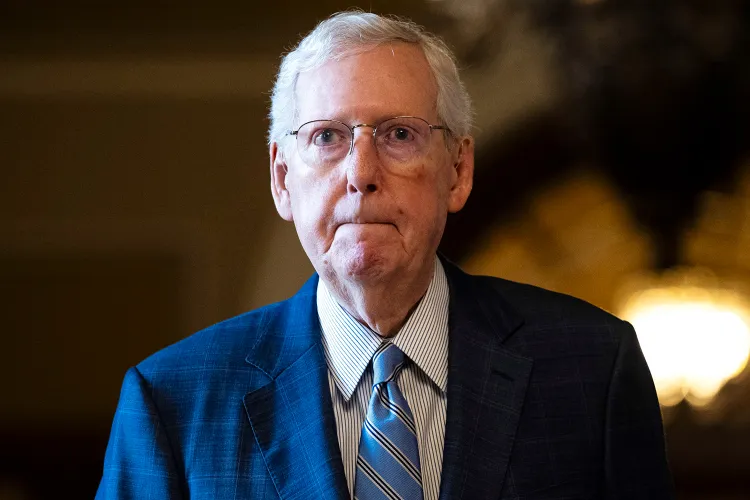
Senator Mitch McConnell, the senior Republican from Kentucky, was admitted to a hospital Monday night after experiencing flu-like symptoms over the weekend. His office emphasized that the move was a precautionary measure, and his condition is stable.
According to Daljoog News analysis, McConnell’s hospitalization underscores concerns about the health of senior lawmakers, particularly those with long tenures and past medical complications.
This comes as McConnell, 83, prepares to retire from the Senate in 2026, closing a career that has spanned more than four decades and reshaped the federal judiciary and GOP policy priorities.
What Happened?
McConnell’s office released a statement noting that he sought hospital evaluation “in an abundance of caution.” The senator, who missed Senate votes on Monday and Tuesday, expressed gratitude for the care he is receiving and described his prognosis as positive.
The Kentucky lawmaker is a polio survivor and has experienced mobility challenges in recent years. In 2023, he suffered a concussion after a fall at the Waldorf Astoria hotel in Washington, temporarily requiring a wheelchair. Additional incidents include freezing during press conferences and brief non-responsiveness during interviews.
Last year, a widely shared video showed McConnell tripping in a Capitol hallway while responding to a question about ICE enforcement. Despite these episodes, he remains an influential figure in the Senate.
Why This Matters
McConnell has been a central player in U.S. politics for decades, leading the Republican caucus from 2007 to 2025. His tenure included major legislative battles and efforts to reshape the federal judiciary, leaving a lasting impact on U.S. law and policy.
According to Daljoog News analysis, any health-related absence of senior senators can affect legislative scheduling and party strategy, particularly in a closely divided Senate. McConnell’s hospitalization draws attention to the physical demands and scrutiny placed on veteran lawmakers.
His upcoming retirement in 2026 also raises questions about the GOP’s succession in Kentucky and the broader influence of long-serving senators on policy continuity.
What Analysts or Officials Are Saying
Political analysts note that while McConnell’s current condition appears stable, his age and medical history warrant close monitoring. Some lawmakers have expressed concern about ensuring smooth leadership transitions and maintaining Senate operations when senior members face health challenges.
Experts on legislative politics also point out that McConnell’s presence has historically been pivotal in shaping party strategy and judicial appointments. His temporary absence, even for minor illness, can slow negotiations or votes on key legislation.
Daljoog News Analysis
Mitch McConnell’s hospitalization serves as a reminder of the physical toll of long-term political careers. The combination of age, past polio, and previous falls presents unique challenges for lawmakers in their final years of service.
Daljoog News observes that while McConnell has remained active despite health setbacks, Congress and the public may need to reconsider the demands placed on aging political figures. His careful approach to his current illness highlights the increasing importance of proactive healthcare and transparency for high-profile officials.
What Happens Next
McConnell is expected to remain under observation until doctors confirm he is fully recovered. He has signaled no immediate changes to his Senate duties beyond his recent absence.
Looking ahead, McConnell’s 2026 retirement will set off a competitive GOP race in Kentucky, with potential implications for Senate dynamics and judicial nominations. His health and continued participation in legislative affairs will remain closely watched by colleagues and constituents alike.