


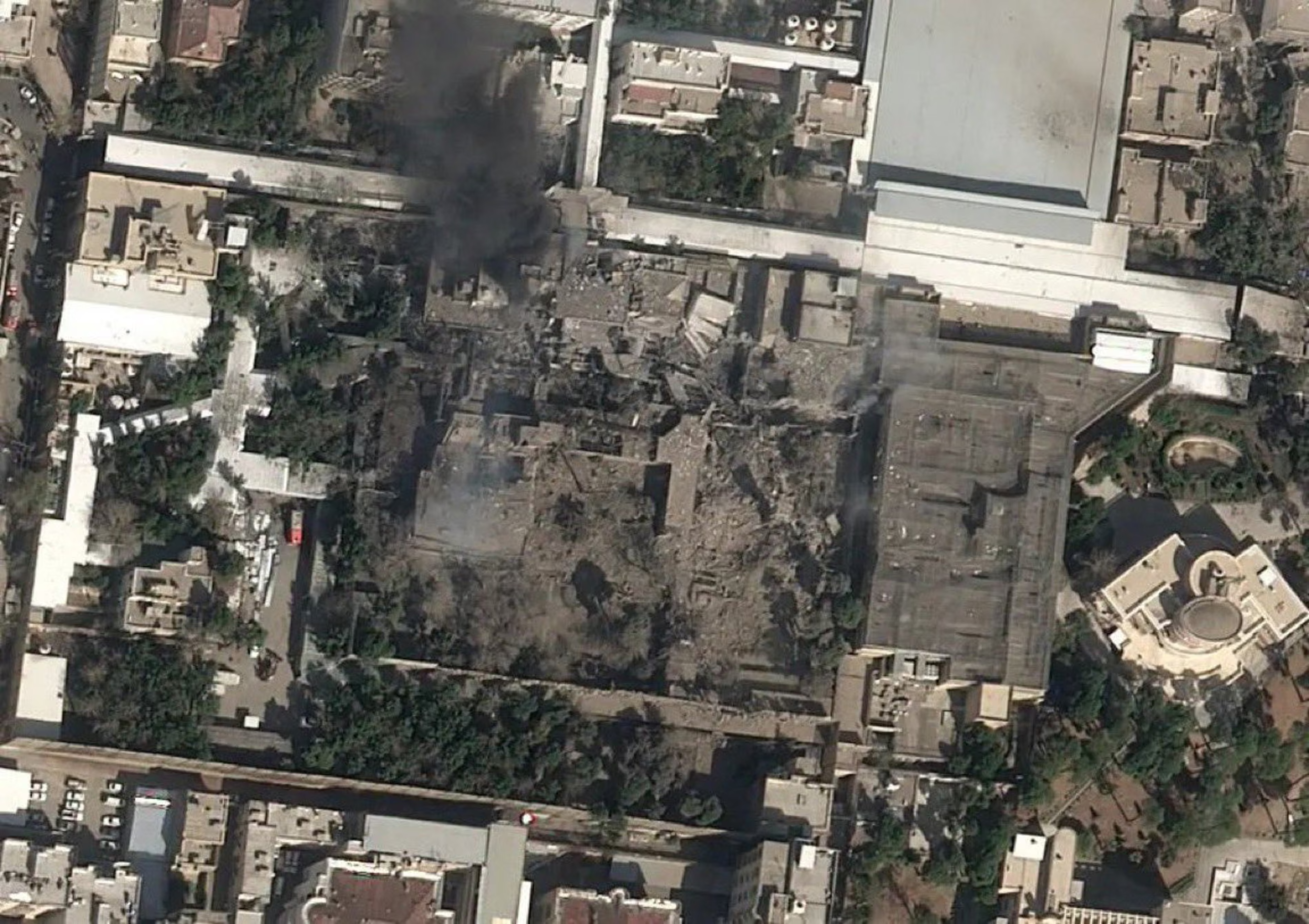
Iran’s Islamic Revolutionary Guard Corps (IRGC) has announced plans for what it describes as the most devastating military operation in its history. The move is intended as retaliation for the death of Supreme Leader Ayatollah Ali Khamenei in an Israeli strike on Tehran.
According to Daljoog News analysis, the IRGC’s statement signals a significant escalation in regional hostilities. The threat underscores Iran’s readiness to strike U.S. and Israeli military sites across the Middle East, marking a potentially unprecedented phase of confrontation.
Tensions have surged since Khamenei’s death was reported early Saturday morning in Tehran. Security officials and analysts warn that any large-scale retaliation could reshape the strategic landscape of the region.
What Happened?
In a detailed statement released Sunday, the IRGC said its forces are preparing immediate counter-strikes targeting “Israeli and American terrorist bases” across the Gulf and broader Middle East. The announcement did not specify exact locations, but the language signals a final, high-intensity operational phase.
The announcement comes after Khamenei died in a strike that shocked Iran and the world, triggering nationwide mourning and mass demonstrations. Iranian security forces are reported to be on high alert, while international observers note the risk of rapid escalation.
Why This Matters
If carried out, these attacks could represent one of the most significant retaliatory military campaigns in recent Middle East history. U.S. and Israeli bases in the Gulf, including those in Qatar, Kuwait, Bahrain, and the UAE, are likely primary targets, placing tens of thousands of personnel at risk.
The retaliation could also disrupt regional trade routes, including the Strait of Hormuz, which handles nearly a fifth of global oil shipments. Any closure or attack could have immediate global economic consequences, affecting energy markets and international shipping.
What Analysts or Officials Are Saying
Military experts caution that Iran’s declaration, while aggressive, may also be intended to serve as a deterrent, signaling capability without immediate full-scale execution. Analysts note that previous IRGC operations have included both precise missile strikes and drone attacks, often combined to maximize strategic impact.
Regional security observers are closely monitoring airspace and maritime routes for signs of imminent action. Western intelligence agencies have reportedly raised alerts for potential Iranian operations in the coming hours.
Daljoog News Analysis
The timing and rhetoric of the IRGC’s announcement suggest Iran is seeking both revenge and a demonstration of strategic resolve. While the statement emphasizes historical scale, actual execution may be carefully calibrated to balance military objectives with domestic and international optics.
This moment illustrates Iran’s dual approach: projecting strength to the region and the domestic audience while deterring further U.S. and Israeli operations. The coming hours could define the trajectory of Middle East security for weeks, if not months.
What Happens Next
All eyes are now on potential missile and drone deployments by the IRGC. U.S., Israeli, and Gulf authorities are expected to reinforce air defenses, while international shipping and aviation are likely to face disruptions.