

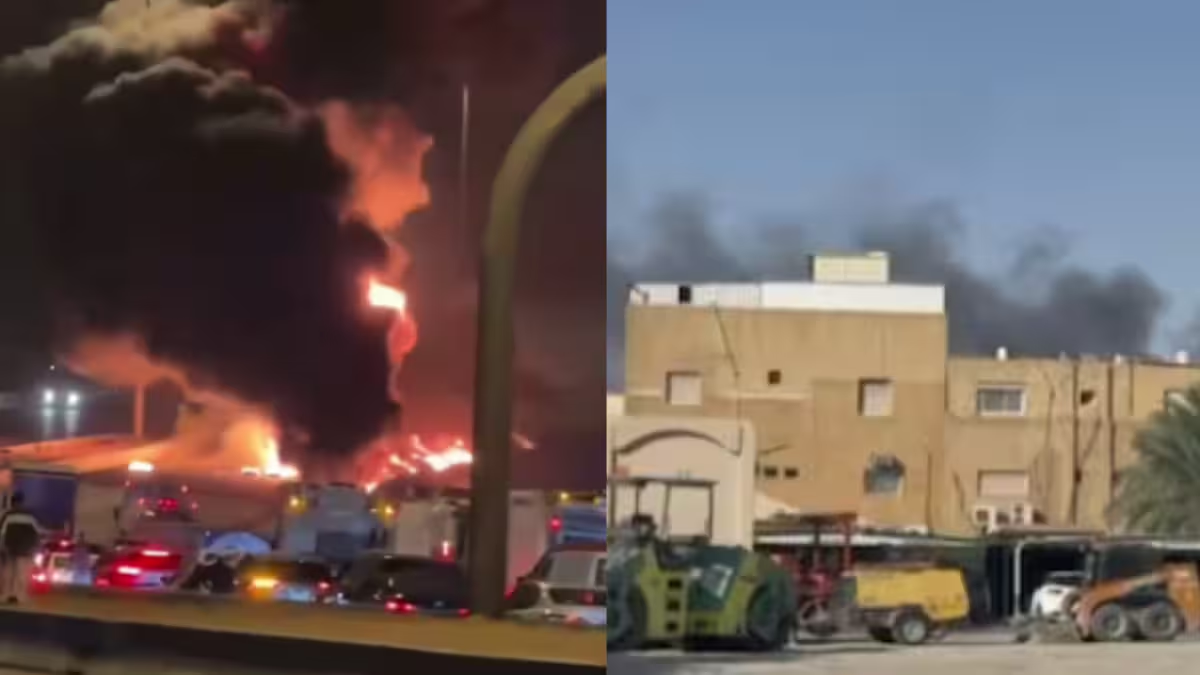
An explosion near the U.S. embassy in Kuwait City has heightened fears and uncertainty across the Gulf. Thick smoke was reported rising from the area, prompting immediate security alerts.
According to Daljoog News analysis, the blast is part of a broader pattern of Iranian strikes targeting U.S. positions in the Gulf. Kuwait’s proximity to key American military and diplomatic installations makes it particularly exposed to escalating regional hostilities.
The incident comes after hours of repeated air-raid sirens and missile alerts across the country, reflecting the tense environment and potential for further attacks in a region already on high alert.
What Happened?
On March 2, witnesses reported a significant explosion near the U.S. embassy in Kuwait City. Emergency sirens had been active across the country for several hours prior, warning residents of incoming threats. The embassy issued urgent guidance instructing American citizens to avoid the area, take shelter in secure locations, and, if indoors, stay on the lowest floors or in underground bunkers. Windows and open areas were to be avoided due to the risk of debris from potential missile strikes.
Nearby, debris from missiles landed in Kuwait’s Mina Al Ahmadi industrial zone, injuring at least two workers. Mina Al Ahmadi is a critical hub for oil refining and industrial operations, highlighting the potential economic as well as symbolic significance of the incident. It remains unclear whether the explosion near the embassy was a direct target or the result of intercepted missiles whose fragments fell nearby.
Why This Matters
The U.S. embassy in Kuwait is a key diplomatic and military hub, and any threat to its security carries significant geopolitical implications. Damage or attacks in this area could escalate diplomatic tensions and potentially draw other countries into the conflict.
The industrial impact, particularly on oil facilities, raises concerns about energy security and potential disruptions to Gulf exports. As one of the region’s major oil producers, any disruption in Kuwait can have immediate global consequences for energy markets.
What Analysts or Officials Are Saying
Security analysts highlight that incidents near diplomatic installations are especially sensitive. Attacks on embassies could be interpreted as violations of international law, potentially triggering broader responses beyond immediate military retaliation.
Regional experts point to Kuwait’s strategic role as a U.S. ally with major military infrastructure. They note that missile debris striking industrial zones is a warning of Iran’s capability to affect both security and economic assets in allied Gulf states.
Officials have released limited information, but embassy advisories and missile alerts indicate ongoing concern and heightened readiness in Kuwait. Analysts stress that further strikes could escalate tensions and endanger both civilian and diplomatic personnel.
Daljoog News Analysis
From a strategic perspective, the blast underscores how the Gulf has become an extended battlefield in the Iran-U.S.-Israel conflict. Targeting areas near diplomatic missions signals Tehran’s intent to project pressure on American presence without triggering a full-scale invasion.
The industrial damage also suggests that attacks are not merely symbolic; they carry economic implications that can influence regional stability. The dual nature of the threat—both to diplomatic facilities and infrastructure—reflects Iran’s capacity to create multifaceted pressure points in the Gulf.
For Kuwait, the incident demonstrates vulnerability despite not being a direct party to the conflict. The protection of diplomatic and civilian sites now becomes a priority, as any misstep could escalate the regional crisis.
What Happens Next
Authorities in Kuwait and U.S. embassy personnel are expected to remain on high alert. Ongoing missile threats may prompt additional protective measures and emergency planning for both civilians and diplomatic staff.
Analysts suggest that monitoring for further debris or targeted attacks in industrial and diplomatic zones will be critical. International observers are likely to track how this incident shapes broader Gulf security and energy dynamics.
The blast in Kuwait highlights that the conflict is no longer contained within Iran or Israel. Diplomatic, civilian, and economic targets across the Gulf are now in the line of fire, making the coming days critical for regional stability.