

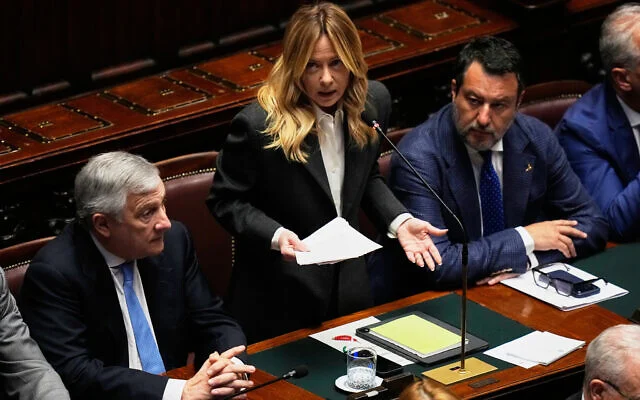
Italy Israel defense agreement has been halted after Prime Minister Giorgia Meloni confirmed that Rome will not renew its long-standing military cooperation pact with Israel. The decision marks a clear shift in diplomatic tone between the two countries.
According to Daljoog News analysis, the move reflects growing concern in Italy over Middle East instability and rising domestic political pressure. The absence of a single stated cause suggests a broader strategic repositioning.
The timing is significant, as tensions in Gaza and Lebanon continue to shape international reactions. Italy’s step signals that European patience may be under increasing strain as the conflict evolves.
What Happened?
Italy Israel defense agreement renewal has been formally stopped by the Italian government, ending a cycle of five-year renewals that supported defense coordination and arms-related cooperation between Rome and Tel Aviv.
Prime Minister Meloni did not point to one specific incident behind the decision. However, relations between the two countries have deteriorated in recent weeks.
A key moment came after reports that Israeli forces fired near Italian and United Nations peacekeepers in Lebanon. The incident triggered a diplomatic response from Italy, including summoning Israel’s ambassador in Rome.
Italy’s foreign minister also expanded criticism beyond Gaza, raising concerns about civilian harm in Lebanon. The government described such actions as unacceptable, marking a sharper tone than previously seen.
Although Italy accounts for only around 1.3 percent of Israel’s arms imports, the decision to halt the Italy Israel defense agreement carries symbolic weight in international diplomacy.
Why This Matters
The Italy Israel defense agreement decision highlights a shift that goes beyond military cooperation. It signals a change in how Italy is positioning itself within broader European and global discussions on the Middle East.
Italy remains an important arms exporter, and even a limited withdrawal from defense cooperation sends a political message. It suggests growing discomfort within parts of Europe regarding ongoing developments in the region.
Domestically, the Meloni government has faced sustained pressure. Opposition groups have long called for an end to arms exports to Israel. Large public protests have also demanded stronger action and faster recognition of Palestinian statehood.
By halting the Italy Israel defense agreement, the government appears to be responding to these internal demands while attempting to maintain its international partnerships.
For Israel, the direct military impact is limited. However, the decision adds to a wider perception of diplomatic isolation, especially as scrutiny increases from European allies.
What Analysts or Officials Are Saying
Analysts view the halt of the Italy-Israel defense agreement as a calculated move rather than a complete policy break. Italian officials seem to be signaling dissatisfaction without fully cutting ties.
Diplomatic observers suggest that the Lebanon peacekeeper incident played a major role in shaping the decision, even if it was not officially cited. The event intensified existing tensions and forced a stronger response from Rome.
European policy experts also note a gradual shift in tone among some EU countries. While formal alliances remain intact, there is an increasing willingness to voice criticism more openly.
Israeli officials have so far avoided escalating the situation publicly, but they are expected to closely monitor whether other European nations take similar steps.
Daljoog News Analysis
The suspension of the Italy-Israel defense agreement reflects a careful balancing act by Rome. It shows an attempt to respond to domestic and international pressure without making a complete strategic break.
This decision may appear limited on the surface, but its timing gives it greater significance. As conflict continues in the Middle East, even symbolic actions can influence diplomatic dynamics.
Italy’s approach suggests a broader question for Europe: whether governments will continue cautious engagement or begin taking firmer positions. The lack of a clear long-term policy from Rome leaves room for further shifts.
At the same time, this move exposes the challenges of maintaining alliances during periods of intense conflict. Italy risks criticism from both sides—those demanding stronger action and those warning against weakening ties with Israel.
What Happens Next
The next phase will depend on whether Italy expands its stance beyond the Italy-Israel defense agreement. Observers will watch for potential limits on arms exports or additional diplomatic measures.
At the European level, the decision could influence wider policy discussions. If other countries adopt similar positions, it may signal a broader shift in how the region approaches the conflict.
Israel is likely to focus on maintaining its relationships with key defense partners while managing increasing criticism from smaller allies.
In the coming months, the significance of halting the Italy-Israel defense agreement will become clearer. It may remain a symbolic step, or it could mark the beginning of a deeper realignment in Europe’s Middle East policy.