

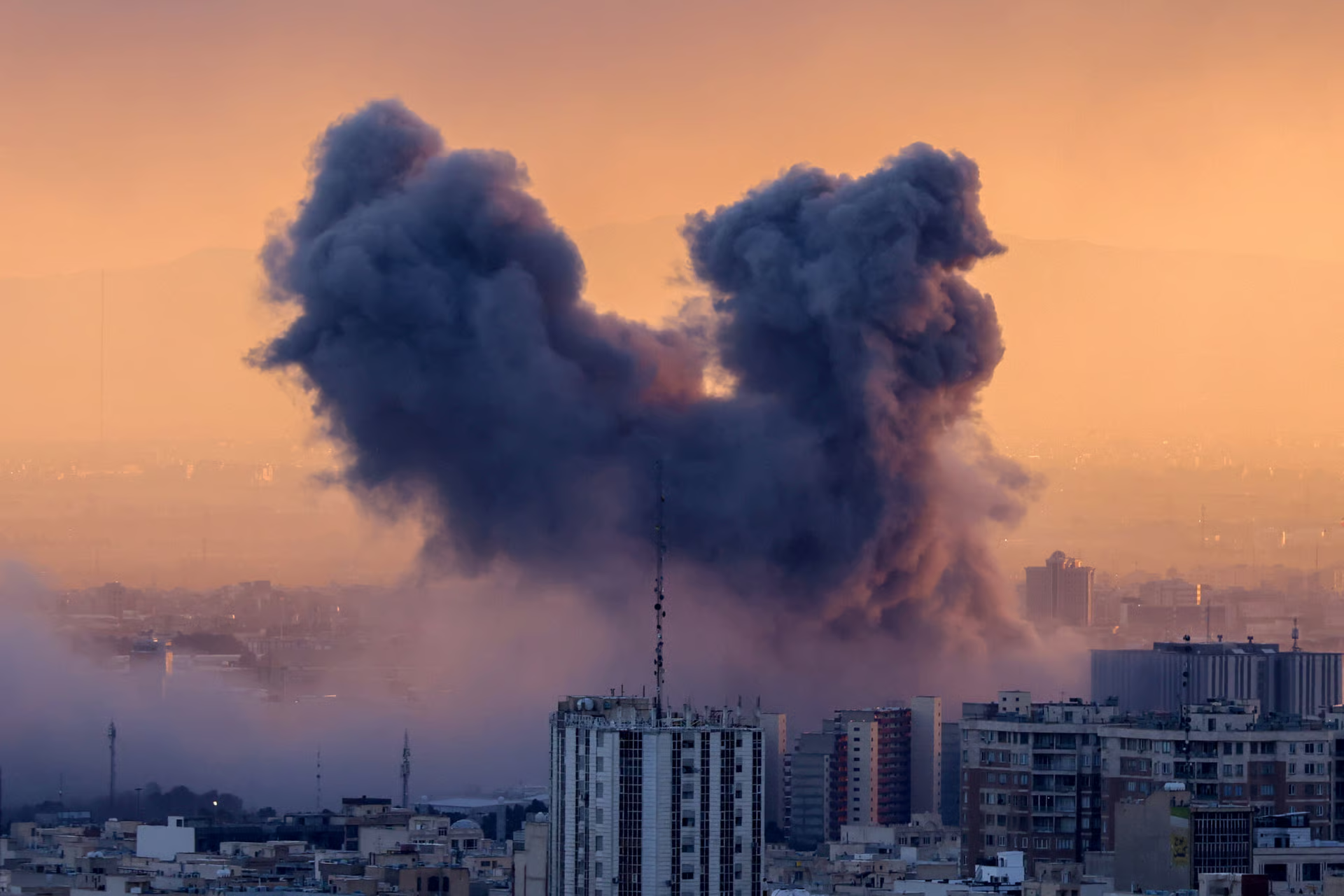
European powers are stepping into the escalating conflict with Iran following recent attacks on Cypriot air bases linked to US and Israeli operations. France and the United Kingdom have deployed warships and aircraft to the Mediterranean, signaling a growing European military presence.
According to Daljoog News analysis, these moves mark a notable shift: Europe is not just observing regional tensions but actively preparing for potential direct engagement, while balancing political, economic, and legal considerations.
The expansion of European involvement comes at a critical moment, with energy markets already under pressure and diplomatic channels scrambling to prevent further escalation.
What Happened?
On Tuesday, French President Emmanuel Macron ordered the aircraft carrier Charles de Gaulle, accompanied by fighter jets and frigates, to move from the Baltic Sea to the Mediterranean. This deployment aims to strengthen France’s operational reach and protect strategic interests amid rising tensions with Iran.
The United Kingdom responded with a parallel move, sending the warship HMS Dragon and supporting helicopters to the eastern Mediterranean. British Prime Minister Keir Starmer emphasized the protection of British personnel stationed in Cyprus as a key justification for the action.
Meanwhile, German Chancellor Friedrich Mertz met with US President Donald Trump at the White House, acknowledging the conflict’s economic strain on Europe, particularly through rising oil and gas prices. Berlin, however, has yet to commit to direct military involvement. NATO Secretary-General Mark Rutte noted that while the alliance is not participating directly in combat, several member states are providing logistical support and access to military bases.
Why This Matters
European engagement signals that the Iran conflict could expand beyond the Middle East, affecting global security and trade. Military deployments increase the potential for escalation, while economic consequences—including rising energy costs—threaten to further strain European economies already navigating post-pandemic recovery.
The conflict also tests the cohesion of NATO and transatlantic alliances. While countries such as France, the UK, and Germany appear aligned with US objectives, Spain has taken a divergent stance, refusing to allow the US to use Spanish military assets. This disagreement has prompted threats from Washington regarding the suspension of bilateral trade relations.
What Analysts or Officials Are Saying
Analysts caution that Europe’s involvement is both strategic and symbolic. The deployments demonstrate solidarity with the US and Israel while deterring potential Iranian actions in the Mediterranean. However, leaders like Spanish Prime Minister Pedro Sánchez stress adherence to international law and existing bilateral agreements, reflecting the delicate balance between military support and legal constraints.
Canada’s Prime Minister, Mark Carney, has publicly supported US efforts to halt Iran’s nuclear activity but criticized the recent strikes as inconsistent with international law, underscoring broader global concerns about escalation and legality.
Daljoog News Analysis
Daljoog News assesses that Europe’s partial military engagement represents a calculated approach: nations are increasing their regional presence without fully committing combat forces. This mixed strategy allows European powers to protect personnel and infrastructure, demonstrate support for allies, and maintain flexibility in diplomatic negotiations.
The varying stances among NATO members highlight the challenges of coalition warfare in complex conflicts. Economic considerations, energy dependency, and adherence to international law all shape European responses, suggesting that full-scale military escalation may be constrained by practical and legal limitations.
What Happens Next
The situation in the Mediterranean is likely to remain tense as European navies operate near Iranian interests. Diplomatic channels are expected to continue mediating, particularly around energy security and trade disruptions. Monitoring individual European nations’ contributions, both in terms of equipment and logistical support, will be crucial to assessing the conflict’s trajectory.
European engagement could either stabilize the region through deterrence or, if mismanaged, expand the conflict. How nations balance military preparedness, economic stability, and international legal obligations will shape both the short- and long-term implications for global security.