



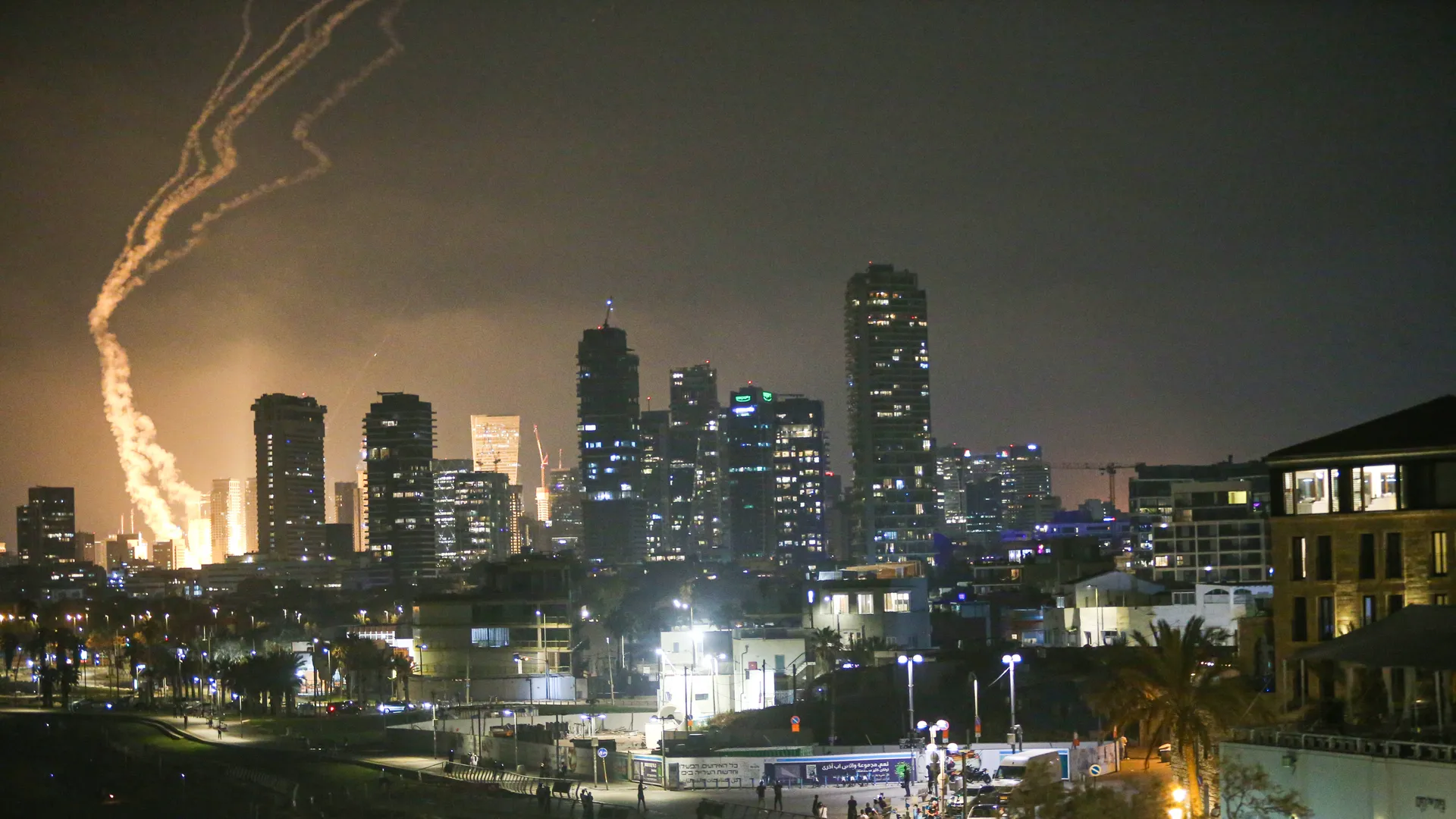
On the 17th day of the Middle East conflict, Iran has launched a series of precise missile strikes against U.S. and Israeli military installations. The attacks mark Tehran’s latest and most forceful response since the assassination of Supreme Leader Ayatollah Ali Khamenei on February 28.
According to Daljoog News analysis, the operation demonstrates Iran’s determination under its new Supreme Leader, Mostafa Ali Khamini, to retaliate decisively and maintain pressure on its adversaries. Tehran has showcased advanced ballistic and hypersonic missile technology, signaling strategic and technological capability.
The strikes come amid escalating tensions in the Persian Gulf region, where previous hostilities have already inflicted significant casualties and disrupted regional security. These attacks highlight the potential for further escalation in a conflict that has drawn international attention.
What Happened?
Iran’s military, under the Revolutionary Guard, initiated a night-long missile barrage targeting key Israeli and U.S. positions. According to Tasnim News Agency, the operation—named “Operation True Promise Four”—marks its 55th phase of retaliation. Precision strikes hit Tel Aviv’s urban centers, Ben Gurion Airport’s military and aerospace facilities, and critical logistics hubs.
Iran deployed an array of advanced weaponry, including super-heavy and hypersonic Fateh missiles, Qadr and Emamat ballistic systems, and suicide drones. The attacks extended to U.S. bases in the region, including Al Fawrah Airbase, Juffair Naval Base, and Sheikh Isa Air Base, using mid-range Fateh, Zulfiqar, and Dezful missiles.
These strikes are part of Iran’s broad counteroffensive against U.S.-Israeli operations, demonstrating both capability and strategic intent. Analysts note the coordinated use of missiles and drones enhances the operation’s effectiveness and underlines Tehran’s readiness to escalate in proportion to attacks against its territory.
Why This Matters
The missile barrage underscores the ongoing risk of regional escalation. Iran’s precision targeting of both Israeli and U.S. military infrastructure highlights the vulnerability of key installations in the Persian Gulf. The operations also serve as a warning that Tehran possesses both the technology and strategic planning to conduct sustained retaliatory campaigns.
The strikes have broader geopolitical implications. Disruption of military assets, airports, and logistics hubs can impede coalition operations, strain supply lines, and raise the stakes for further military escalation. Analysts note that the use of hypersonic missiles, in particular, represents a significant advancement in Iran’s missile program.
What Analysts or Officials Are Saying
Military observers emphasize that Iran’s combination of ballistic missiles, hypersonic systems, and suicide drones indicates a deliberate effort to maximize precision and psychological impact. Officials note that such operations are designed not only to retaliate but also to project deterrence and demonstrate technological sophistication.
Western analysts caution that the continued exchange of strikes could destabilize the region further, potentially drawing in other powers and threatening maritime and energy security. Daljoog News notes that both U.S. and Israeli forces are likely reassessing their defensive posture and regional strategy in response to Tehran’s capabilities.
Daljoog News Analysis
Iran’s 55th retaliatory operation illustrates a shift from reactive strikes to highly coordinated, technologically advanced warfare. The use of hypersonic and precision-guided systems signals Tehran’s focus on deterrence and strategic signaling, aiming to alter adversaries’ operational calculations.
Daljoog News observes that this escalation is unlikely to de-escalate without diplomatic intervention. The conflict now intertwines military capabilities, political messaging, and regional power dynamics, underscoring how advanced weaponry can influence both battlefield outcomes and broader geopolitical perceptions.
What Happens Next
Observers expect continued missile and drone exchanges in the coming days, with the potential for broader regional involvement. Monitoring the effectiveness of Iran’s missile systems and assessing coalition responses will be crucial to understanding the conflict’s trajectory.
The ongoing hostilities underscore the urgency of international diplomatic efforts and strategic containment, as each escalation risks drawing in additional regional and global actors while threatening civilian populations and infrastructure.