

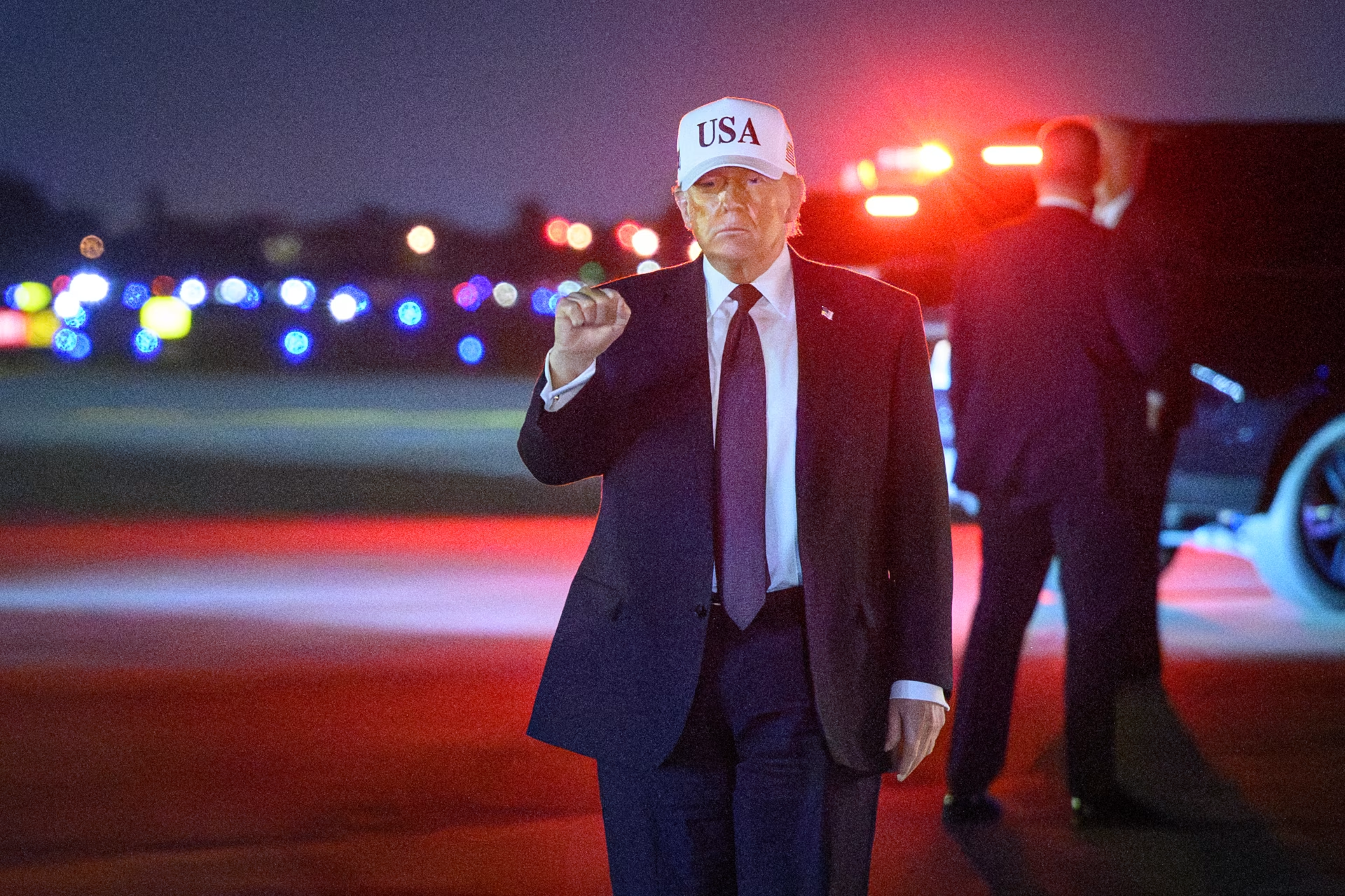
The Strait of Hormuz has emerged as the central flashpoint in the escalating Iran-Israel tensions. U.S. President Donald Trump is reportedly considering military action against Iran without fully reopening this critical shipping route.
According to Daljoog News analysis, Trump is balancing military objectives with a clear desire to limit the duration of any confrontation, weighing operational efficiency against the global economic impact of a prolonged closure.
This moment is pivotal as the Strait of Hormuz carries a significant portion of the world’s oil exports. Any disruption here could ripple through international markets, influencing energy prices and regional security calculations.
What Happened?
Recent reporting from the Wall Street Journal, citing U.S. officials, indicates that Trump has instructed his advisors to plan a targeted campaign designed to neutralize Iranian naval forces and missile stockpiles. The president emphasized that he does not intend for the conflict to drag on, noting that forcing the reopening of the strait prematurely could extend operations beyond the planned four-to-six-week window.
The current strategy blends military precision with diplomatic pressure. Washington hopes that demonstrating limited force while maintaining sanctions and international scrutiny could compel Tehran to allow unhindered maritime traffic without triggering a broader war.
Should this approach fail, U.S. officials are reportedly considering alternative measures. These could include coordinating with European and Gulf allies to take a more proactive role in reopening the strait and ensuring commercial shipping lanes remain operational.
Why This Matters
The Strait of Hormuz is one of the most strategically important waterways in global trade, funneling roughly a fifth of the world’s oil. A prolonged closure would not only threaten U.S. energy security but could destabilize global markets and exacerbate tensions between regional powers.
Trump’s cautious timetable reflects an awareness that military overreach or miscalculated strikes could escalate into a regional conflict with far-reaching consequences. Analysts note that the balance between operational goals and diplomatic messaging is delicate, as Tehran may interpret even a limited U.S. operation as a full-scale assault.
What Analysts or Officials Are Saying
U.S. military and diplomatic officials emphasize that the priority is to degrade Iranian military capabilities while minimizing economic and civilian fallout. European and Gulf partners have reportedly been briefed on potential scenarios, underscoring the international coordination necessary to manage such a critical chokepoint.
Strategic analysts point out that this approach differs from past U.S. operations in the region. Rather than a broad offensive, Trump appears focused on surgical strikes coupled with diplomatic leverage, signaling an intent to demonstrate strength without provoking a prolonged war.
Daljoog News Analysis
Daljoog News analysis suggests that Trump’s decision reflects a pragmatic approach to a high-stakes crisis. By avoiding immediate reopening of the Strait of Hormuz, the administration is maintaining leverage over Iran while preparing contingency plans with allied nations.
The plan underscores the tension between global economic imperatives and national security priorities. While the U.S. seeks to limit the conflict to weeks, the risks of miscalculation or miscommunication remain high. Tehran’s response, whether cooperative or defiant, will shape the trajectory of both regional stability and global energy markets.
What Happens Next
The coming weeks will be critical in determining whether the U.S. can achieve its objectives without escalating into full-scale conflict. Monitoring Iranian military movements and diplomatic signals will be essential for anticipating developments.
Allies in Europe and the Gulf are expected to play a central role if the strait remains blocked, potentially providing naval escorts or logistical support to ensure the flow of commercial shipping. Daljoog News will continue to track these developments, analyzing both strategic decisions and broader economic implications.