

A renewed wave of online controversy surrounding US President Donald Trump and First Lady Melania Trump has emerged after old and disputed claims linked to Jeffrey Epstein resurfaced across social media platforms. The issue has once again drawn intense international media attention.
According to Daljoog News analysis, the timing of the controversy—re-emerging amid already heightened political tensions—has amplified its visibility, despite ongoing efforts by fact-checkers to challenge the authenticity of circulating material.
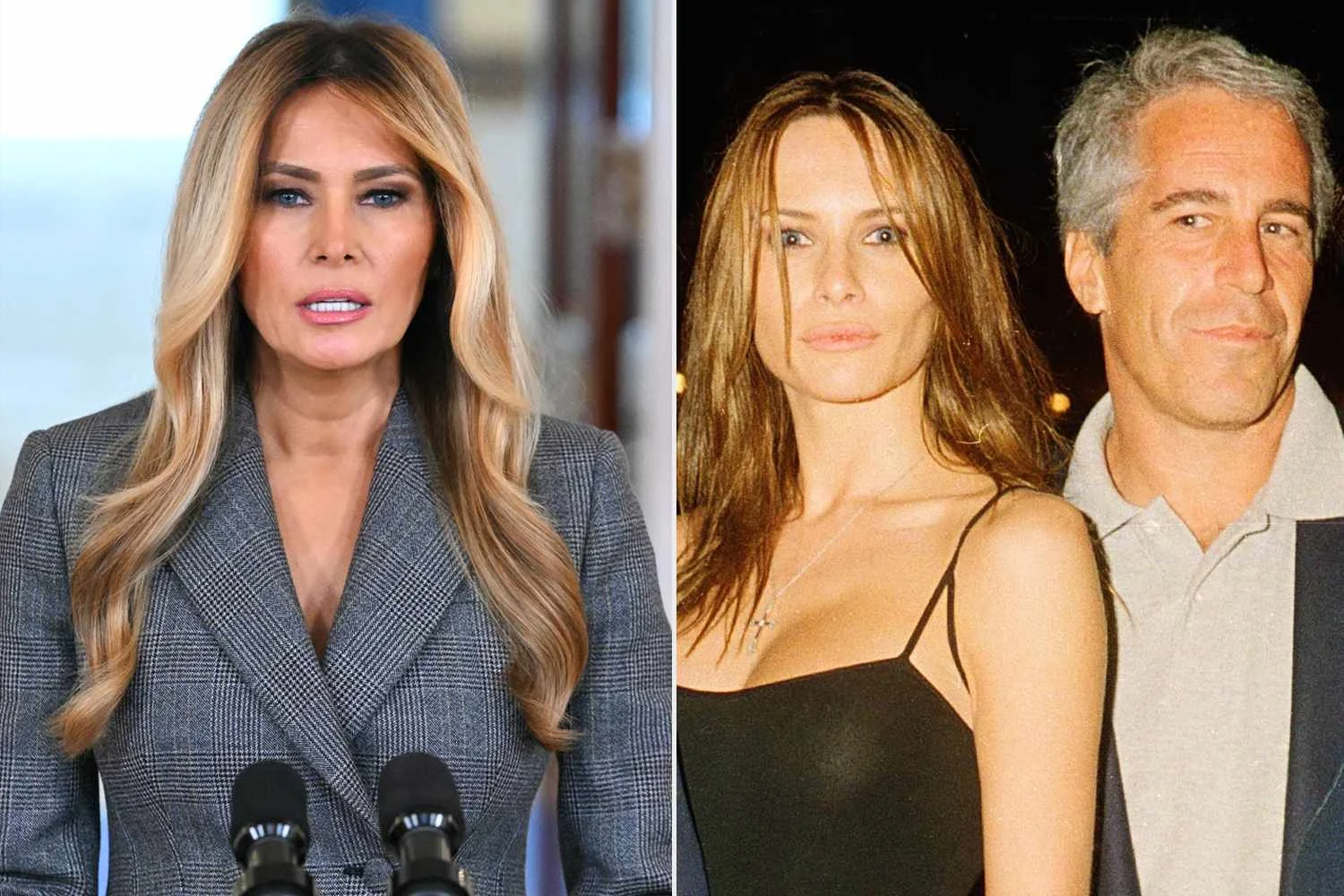
The renewed debate centers on viral images and alleged communications that critics claim connect Melania Trump to Epstein, though official verification and independent investigations have raised serious doubts about their legitimacy.
What Happened?
Over the past several days, social media platforms have circulated images purportedly showing First Lady Melania Trump in proximity with convicted sex offender Jeffrey Epstein. Some posts also claim the existence of an email exchange involving Epstein associate Ghislaine Maxwell.
The content quickly went viral, sparking widespread political discussion and renewed scrutiny of the Trump family’s historical associations. As the material spread, it triggered a new round of speculation about Epstein’s wider social network.
However, fact-checking organizations have since stated that at least some of the widely shared images appear to have been digitally manipulated using artificial intelligence. One disputed image was reportedly altered from publicly available material and edited to include Melania Trump in a fabricated context.
The controversy also drew in unrelated political narratives, including claims involving French President Emmanuel Macron. Those claims circulated alongside the Epstein-related content but have also been widely identified as misleading or fabricated.
Why This Matters
The Epstein case continues to cast a long political shadow in the United States due to its connections with high-profile public figures. Even years after his death, allegations and associations linked to Epstein frequently resurface in digital spaces, often amplified by misinformation.
In this case, the rapid spread of unverified images highlights how artificial intelligence tools are increasingly being used to create or distort politically sensitive content. This raises broader concerns about digital trust and the reliability of online information.
For political figures like Donald Trump and his administration, such controversies can quickly become distractions, even when claims are unproven. The persistence of Epstein-related narratives demonstrates how unresolved public curiosity continues to fuel speculation.
The situation also underscores a growing challenge for governments and media institutions: distinguishing between legitimate evidence and digitally altered content in real time.
What Analysts or Officials Are Saying
Fact-checking organizations have stated that several of the viral images circulating online do not match verified historical records. They argue that the content shows clear signs of digital alteration, likely produced using AI-based editing tools.
The White House has not issued a formal response to the latest wave of claims, but Melania Trump has previously denied any personal or social relationship with Jeffrey Epstein beyond brief, incidental encounters in public settings.
She has also reiterated that her introduction to Donald Trump predates any documented interaction with Epstein, disputing narratives that attempt to link her directly to the financier’s social circle.
Political analysts suggest that the resurfacing of Epstein-related material reflects a broader trend of recurring digital misinformation, particularly during periods of heightened political attention in the United States.
Daljoog News Analysis
The repeated resurfacing of Epstein-linked allegations shows how unresolved historical scandals continue to influence modern political discourse, especially in the age of AI-generated media. Even unverified claims can gain traction when they involve high-profile figures.
In this case, the speed at which manipulated images spread online demonstrates how digital platforms have become central battlegrounds for reputation and narrative control. Once content goes viral, corrections often struggle to reach the same audience.
For the Trump administration, the controversy is less about legal implications and more about reputational noise. Even when claims are debunked, they can still shape public perception and political conversation.
The broader issue extends beyond any single individual. It reflects a growing global challenge where political narratives can be reshaped within hours through synthetic media, forcing institutions to respond faster than ever before.
What Happens Next
Fact-checking bodies are expected to continue reviewing circulating content as new claims emerge. Social media platforms may also face renewed pressure to label or remove AI-generated misinformation more aggressively.
The White House is likely to avoid direct engagement unless the controversy escalates further or gains institutional traction. In most similar cases, official responses are limited to brief denials or silence.
Meanwhile, the Epstein case will likely continue to reappear in online discourse due to its unresolved public curiosity and extensive historical documentation.
As the digital information environment evolves, this incident reinforces a growing reality: political figures are increasingly vulnerable to rapid cycles of misinformation, regardless of verification status.