


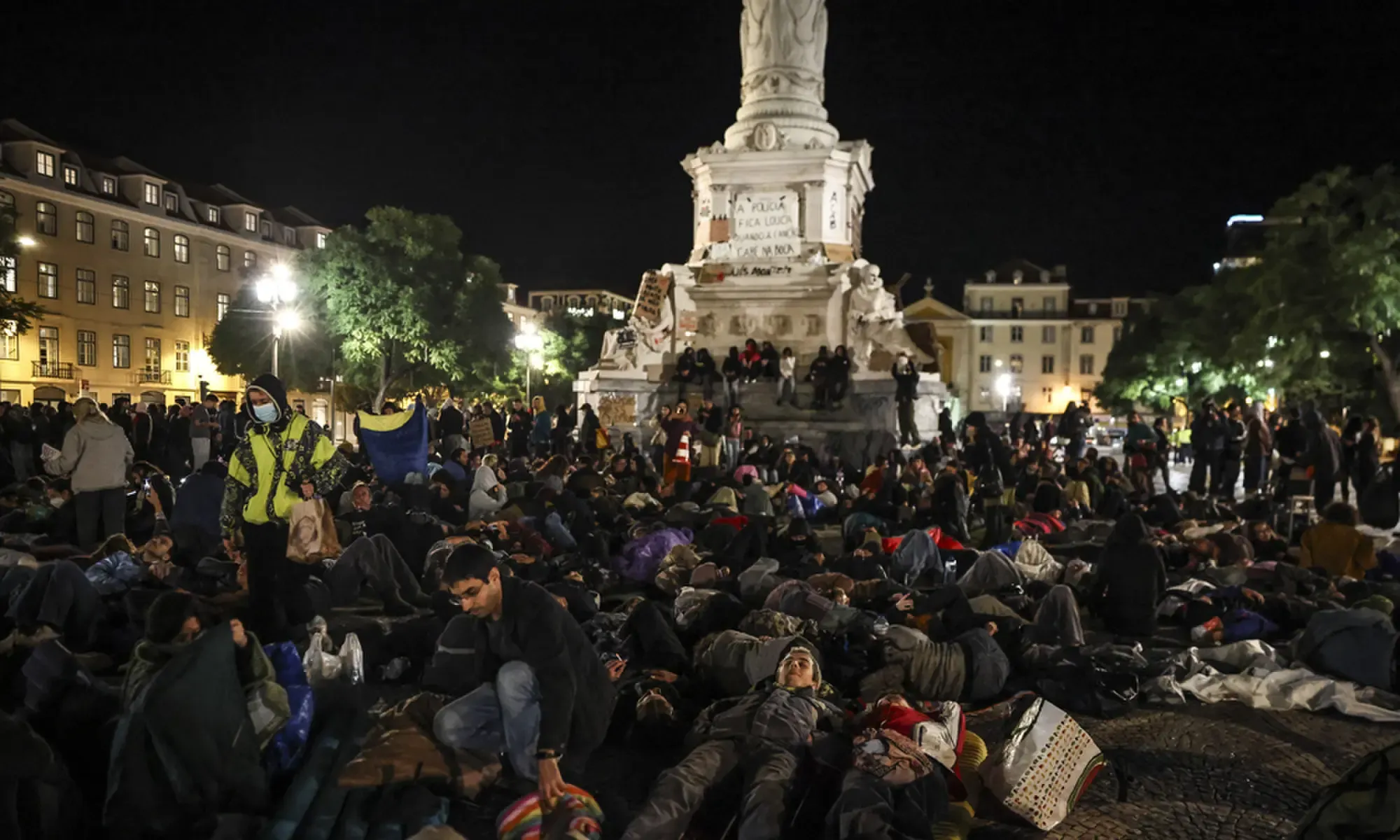
Police in Lisbon cleared a protest camp set up by people demanding action on the rising cost of housing. The operation brought attention to a problem that has affected many residents in Portugal’s capital: finding a home that is affordable on an ordinary income. Housing has become a central public issue as rents and property prices place pressure on workers, students and families who want to remain in the city.
The protest camp was a visible way for campaigners to draw attention to the lack of affordable homes. People who take part in housing protests often argue that market prices have moved beyond what many local residents can pay. Some workers spend a large share of their income on rent, leaving less money for food, transport, education and other basic needs. Others face the risk of moving away from the places where they work or have family ties.
Lisbon has attracted visitors, foreign residents and investment in recent years. Tourism can support jobs and bring money to local businesses, but it can also add pressure to housing markets when homes are converted into short-term accommodation or when demand rises faster than supply. The effect varies by neighbourhood, and housing costs are shaped by several factors, including building rates, wages, interest rates and the availability of public housing.
For people who live in the city, the issue is not only about the price of a flat. Housing affects access to work, education, health services and social support. When residents are pushed farther from central areas, they may face longer commutes and higher transport costs. Families may also struggle to find homes near schools or relatives who help with childcare. These pressures can change the character of neighbourhoods and make it harder for long-term residents to remain.
The police action against the camp raised questions about how authorities should respond to public protest. Governments have a duty to maintain public order and enforce rules about the use of public spaces. At the same time, peaceful protest is an important way for citizens to demand change. The challenge is to manage public spaces fairly while listening to concerns that may reflect serious problems in the wider community.
Housing campaigners often call for a mix of measures rather than a single solution. These can include building more homes, expanding social housing, improving rental protections and making better use of empty properties. Each option has costs and limits. New construction can take years, while rent rules may affect landlords’ decisions about whether to offer homes. Public authorities must balance the need for affordable housing with the need to encourage enough homes to be built and maintained.
The issue also affects businesses. When workers cannot afford to live near their jobs, employers may struggle to recruit staff. Shops, restaurants, schools and health services all rely on people who can reach work without excessive cost or travel time. Housing pressure can therefore become an economic problem as well as a social one.
Clearing the protest camp may end one visible demonstration, but it does not remove the causes of public frustration. Residents will continue to judge officials by whether they can make housing more accessible and protect people from sudden financial pressure. For Lisbon, the challenge is to remain a lively and attractive city while ensuring that people who work and build their lives there can still afford to call it home.