


Iran US tensions are driving intense diplomatic movement across the Middle East, with Pakistan stepping into a key mediating role while also managing growing economic and security commitments.
According to Daljoog News analysis, Islamabad’s involvement reflects a carefully constructed but highly fragile balancing act between rival regional powers and competing strategic interests.
The situation is unfolding at a critical moment, as financial pressures, defence partnerships, and shifting alliances reshape Pakistan’s position in regional geopolitics.
What Happened?
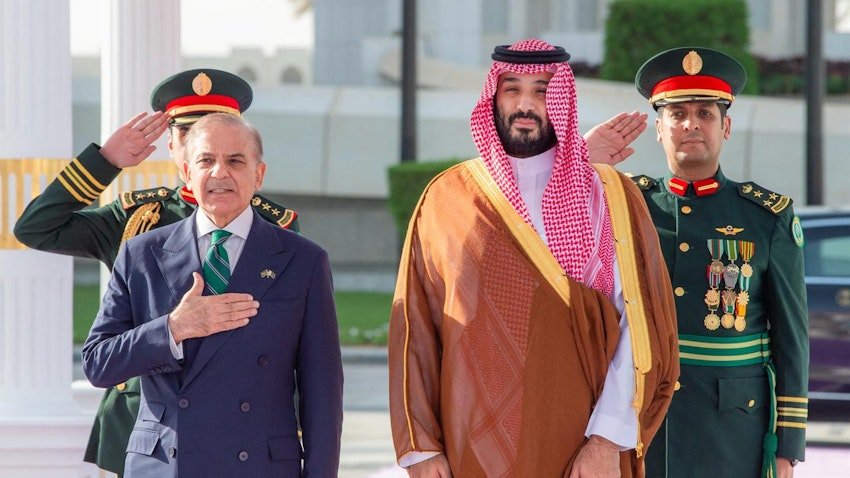
Iran US tensions have placed Pakistan at the center of renewed diplomatic activity, with Prime Minister Shehbaz Sharif announcing planned visits to Saudi Arabia, Qatar, and Turkey ahead of a second round of discussions aimed at easing regional pressure.
At the same time, Pakistan’s military leadership has become directly involved in diplomatic messaging. Field Marshal Asim Munir recently traveled to Tehran carrying communications linked to ongoing contacts between Washington and Iranian officials.
The developments come alongside major financial support from Gulf partners. Saudi Arabia has pledged approximately $3 billion in assistance to Pakistan, offering temporary relief amid growing fiscal strain.
This announcement coincided with international financial meetings involving the International Monetary Fund and the World Bank, where Pakistan’s economic vulnerabilities were already under scrutiny.
In parallel, Pakistan is preparing to repay around $3.5 billion in debt to the United Arab Emirates, further tightening its external financial obligations.
Why This Matters
Iran US tensions are not only shaping security dynamics but also influencing Pakistan’s economic survival strategy.
Islamabad is simultaneously acting as a diplomatic intermediary while depending heavily on Gulf financial support, particularly from Saudi Arabia, to stabilize its economy.
A recently strengthened defence agreement between Pakistan and Saudi Arabia adds further complexity. The arrangement includes expanded military cooperation and a mutual defence commitment, where an attack on one country could be treated as an attack on both.
This creates a rare dual position for Pakistan, requiring it to maintain relations with both Iran and Saudi Arabia while also engaging with the United States.
Such overlapping commitments increase Pakistan’s strategic importance but also expose it to significant diplomatic risk if regional tensions escalate.
What Analysts or Officials Are Saying
Officials in Islamabad describe their role in Iran US tensions as a stabilizing effort aimed at preventing escalation and supporting regional dialogue.
They argue that engagement with multiple sides is necessary to maintain economic stability and avoid further geopolitical fragmentation.
Regional observers note that Pakistan’s growing diplomatic profile reflects both opportunity and constraint. Its financial reliance on Gulf states limits policy flexibility, even as its mediation role expands.
Security analysts also highlight the long history of Pakistan’s military cooperation with Saudi Arabia, which has evolved from training support into more formalized defence coordination in recent years.
Daljoog News Analysis
Iran US tensions are exposing the limits of multi-alignment diplomacy in a highly polarized region.
Pakistan’s strategy of engaging rival powers while securing financial lifelines reflects pragmatic statecraft, but it also creates structural vulnerabilities.
Daljoog News analysis suggests that the most significant risk lies in overextension. As Pakistan deepens defence commitments with Saudi Arabia while mediating with Iran and the United States, the margin for diplomatic error becomes increasingly narrow.
If regional tensions escalate, Islamabad could face pressure to choose priorities rather than balance them, undermining its current strategy.
What Happens Next
The next phase of Iran US tensions will depend heavily on whether diplomatic efforts can be sustained through intermediaries like Pakistan.
Upcoming visits to regional capitals may help maintain dialogue momentum, but outcomes remain uncertain given entrenched strategic disagreements.
Economic pressures will continue to shape Pakistan’s decisions, with external financing remaining essential for short-term stability.
In the longer term, Pakistan’s ability to maintain its dual role—as mediator and defence partner—will determine how effectively it navigates one of the most complex geopolitical environments in the region.