


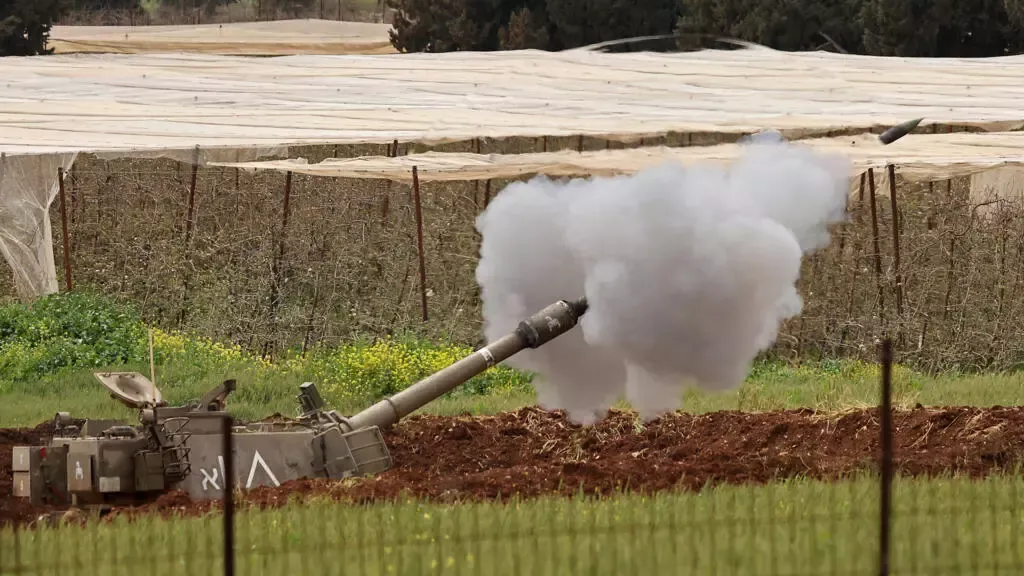
Hezbollah M-46 artillery was publicly displayed in a newly released video showing the Lebanese armed group operating heavy long-range guns near the Israel border, shortly after a reported ceasefire took effect. The footage highlights active deployment of the Soviet-era system in a combat-ready environment.
According to Daljoog News analysis, the timing of the release appears carefully chosen, suggesting a strategic message aimed at signaling strength while uncertainty remains over the durability of the ceasefire arrangement.
The development adds pressure to an already fragile security situation along the Lebanon-Israel frontier, where tensions have repeatedly escalated in recent months despite diplomatic efforts.
What Happened?
Hezbollah M-46 artillery was showcased in an official video released by the group’s media wing, showing fighters loading and firing 130mm field guns from concealed positions in southern Lebanon.
The M-46 artillery system, developed in the 1950s by the Soviet Union, remains one of the most widely recognized long-range guns, capable of striking targets between 27 and 44 kilometers away. It fires high-explosive shells at speeds of around 930 meters per second.
In the released footage, the system appears to be used for cross-border targeting toward areas near northern Israel, including Kiryat Shmona. The video emerged just after reports of a 10-day ceasefire between Lebanon and Israel came into effect.
The system requires a trained crew of at least eight operators and weighs around 7,700 kilograms, making it a significant heavy artillery asset in any conflict scenario.
Why This Matters
Hezbollah M-46 artillery being displayed during a ceasefire period raises immediate concerns about the stability of the agreement. Such demonstrations are often interpreted as signals of continued military readiness rather than de-escalation.
The presence of long-range artillery in the conflict zone increases the strategic risk for both sides, as it allows strikes deep into border areas and heightens the potential for rapid escalation.
Even though the system is not modern, its operational use demonstrates that older but reliable military platforms still play a major role in regional conflicts.
The timing also raises questions about whether ceasefire arrangements are being fully respected or are already under strain.
What Analysts or Officials Are Saying
Security analysts say the Hezbollah M-46 artillery video is likely intended as a strategic message rather than a direct announcement of escalation. It signals capability and readiness during a sensitive diplomatic period.
Experts note that such displays are common in conflict zones where armed groups use media releases to influence perception and deter opponents.
Military observers also point out that despite its age, the M-46 remains effective for indirect long-range fire, especially in geographically complex regions like southern Lebanon.
Officials monitoring the situation warn that visible artillery deployments during ceasefire periods can undermine trust and complicate ongoing diplomatic efforts.
Daljoog News Analysis
Hezbollah M-46 artillery deployment reflects a broader pattern where military signaling continues even during declared ceasefires. This creates a contradiction between diplomatic messaging and battlefield behavior.
While the weapon itself is decades old, its continued use shows how legacy systems remain central in modern asymmetric warfare. For groups like Hezbollah, such assets serve both tactical and psychological purposes.
The timing of the video release suggests an effort to maintain deterrence while testing the boundaries of the ceasefire agreement. This dual messaging increases uncertainty in an already unstable environment.
If such demonstrations continue, they could weaken confidence in the truce and raise the risk of renewed cross-border exchanges.
What Happens Next
Hezbollah M-46 artillery activity will likely remain under close international observation as monitors assess whether the ceasefire holds or deteriorates.
Diplomatic actors may increase pressure on both sides to avoid further military signaling that could destabilize the agreement.
Future developments will depend on whether additional footage or operational activity emerges in the coming days along the Lebanon-Israel border.
For now, the situation remains highly sensitive, with military visibility and political messaging shaping the next phase of regional stability.