



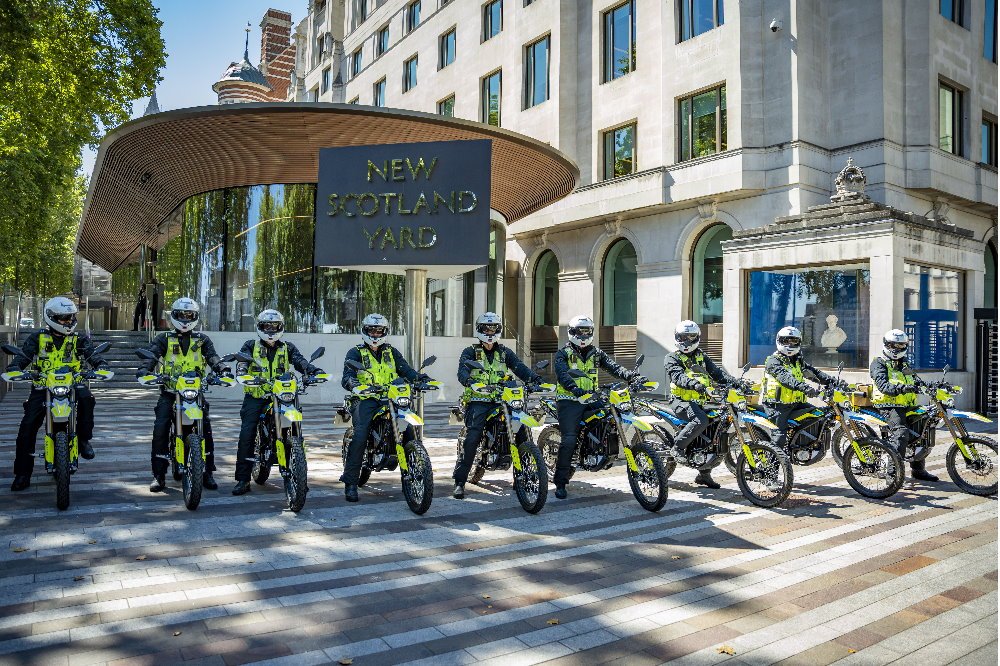
London’s Metropolitan Police has significantly grown its Met Police e-bike fleet, increasing the number of vehicles from five to 25 as part of a stepped up effort to tackle gangs that use e-bikes and mopeds to commit crime across the city.
Officers say offenders using these lightweight, fast moving vehicles have posed a persistent challenge for traditional car based police pursuits. E-bikes and mopeds can weave quickly through heavy traffic and narrow streets, often allowing suspects to escape before officers in patrol cars can catch up.
By expanding its own e-bike fleet fivefold, the force aims to close this gap, giving officers a faster and more agile way to pursue suspects through the same crowded urban environments that have historically given offenders an advantage. Early results from the initiative are being closely monitored.
This expansion comes amid a series of serious criminal investigations across the city. Detectives are working on a murder case following a stabbing in Wembley, where a teenager has already been arrested on suspicion of murder in connection with the incident.
In a separate operation, officers seized a cache of knives after breaking into a property linked to an alleged weapons smuggler. This kind of enforcement action forms part of a broader strategy aimed at intercepting illegal weapons before they reach the streets and contribute to further violent crime.
Police leadership has emphasized that the expanded e-bike fleet specifically targets a relatively small number of repeat offenders responsible for a disproportionate share of crime linked to these vehicles. Officials say this focused approach aims to protect the wider community without treating entire neighborhoods as under suspicion.
Community reaction to the increased police presence has been largely positive, particularly in areas that have experienced repeated incidents involving e-bike and moped related crime. Some residents have welcomed the visible increase in police mobility as a sign that authorities are taking the issue seriously.
Others have raised questions about whether expanded enforcement alone can address the underlying social factors that draw young people toward gang involvement in the first place. Community advocates continue calling for investment in outreach programs alongside any increase in policing resources.
Officers involved in the initiative say the expanded fleet allows for quicker response times to reported incidents, potentially preventing some crimes from escalating or allowing for faster apprehension of suspects fleeing on similar vehicles. Training for officers using the new e-bikes has focused heavily on safety alongside pursuit tactics.
This move fits within a broader pattern of police forces across major cities adapting their tactics to match the vehicles and methods increasingly favored by criminal groups. As offenders continue adopting faster, more agile transportation methods, law enforcement agencies face ongoing pressure to keep pace with evolving tactics.
As the expanded fleet becomes fully operational, police officials say they will track results closely over the coming months. Whether this increased mobility translates into a meaningful reduction in e-bike and moped related crime across London remains to be seen, but officials remain hopeful about its early impact.