

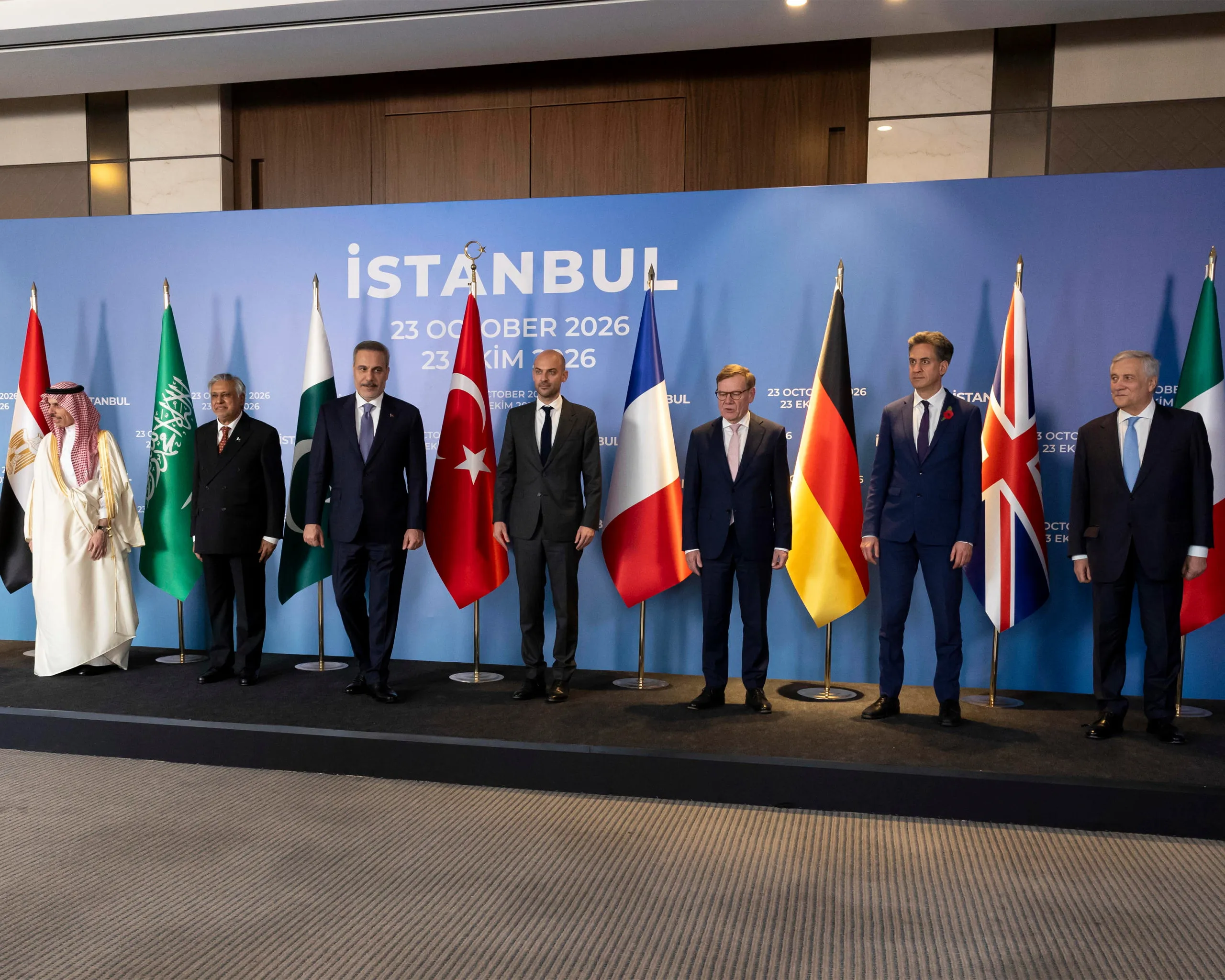
Foreign ministers from several European and Middle Eastern countries have urged the United States and Israel not to launch fresh strikes on Iran. The appeal came during a meeting in Istanbul on October 23, where officials warned that renewed fighting could spread across the region and push energy prices higher. Their message was that diplomacy should remain the main route to reducing tensions.
The meeting brought together representatives from countries including Saudi Arabia, Pakistan, Turkey, France, Germany, the United Kingdom and Italy. The group sought to present a joint position against another escalation of the conflict. The ministers argued that a new round of military action could make the situation harder to control and expose more countries to its consequences.
The risk is not limited to the countries directly involved. Wider conflict can disrupt shipping routes, affect energy supplies and force governments to prepare for possible regional instability. Oil prices are especially sensitive to threats around important transport corridors. A sharp increase can raise costs for households and businesses, adding pressure to economies already dealing with inflation.
The ministers’ appeal reflects concern that military action may trigger a cycle of retaliation. Even if one strike achieves a short-term objective, the response could widen the conflict or undermine efforts to negotiate. Diplomacy can be slow and difficult, but talks provide a channel for governments to communicate their demands, explore compromises and reduce the chance of miscalculation.
The gathering also showed that countries with different interests may share a concern about the costs of a wider war. Some governments have close security ties with the United States, while others maintain important regional relationships with Iran. Their participation does not mean they agree on every issue, but it indicates that many want to avoid a conflict that could damage trade, security and regional stability.
A diplomatic appeal alone cannot guarantee that fighting will stop. The outcome will depend on the decisions made by Washington, Israel and Tehran, as well as the willingness of other countries to support a negotiated process. The ministers have called for restraint, but the practical steps needed to achieve it remain complex.
For now, the Istanbul meeting adds to international pressure for a political solution. If talks resume, the sides will need to address the issues driving the confrontation and find a way to reduce security fears. Without progress, the risk of renewed strikes and further instability could remain high.