



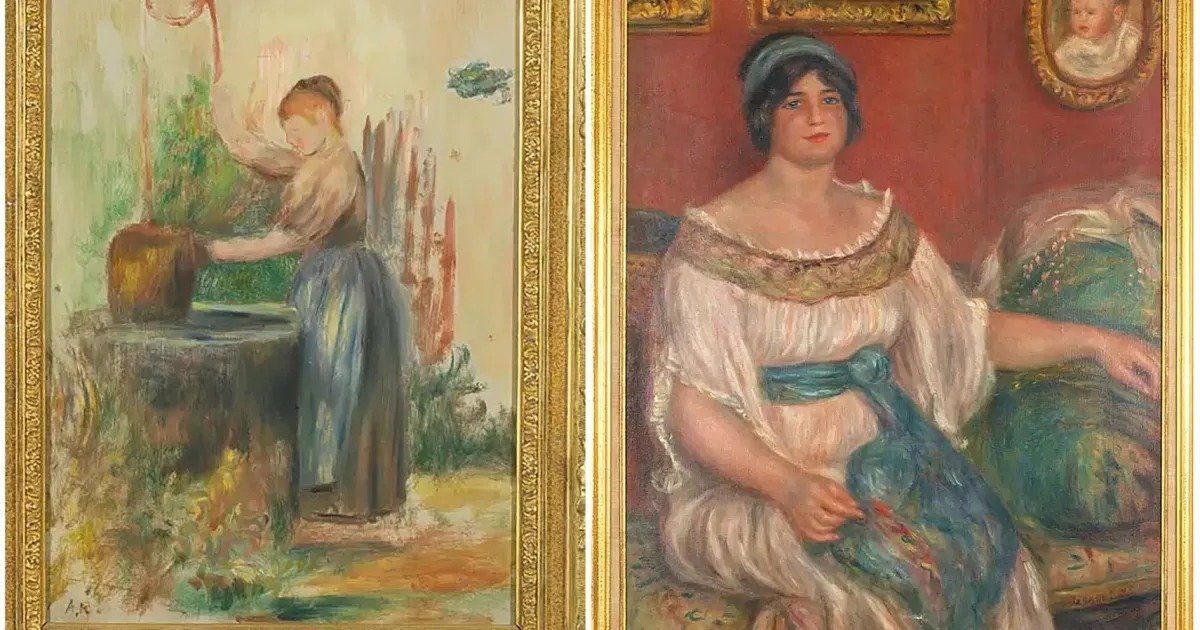
French authorities are investigating after thieves steal Renoir paintings estimated at approximately nine million euros in total value from the Musee Renoir in Cagnes-sur-Mer, a coastal town in the Alpes-Maritimes region of southern France.
The stolen works, created by renowned Impressionist painter Pierre-Auguste Renoir, represent a significant loss to the museum’s collection, which is specifically dedicated to showcasing the artist’s work and legacy at the historic property where he spent his final years.
Investigators are working to determine how the thieves gained access to the museum and successfully removed the valuable artworks, with authorities examining security footage and physical evidence at the scene to establish a timeline and method used during the apparent theft.
This incident adds to a concerning pattern of high profile art thefts affecting museums across Europe in recent years, with valuable artworks increasingly targeted by organized criminal networks that specialize in stealing and often attempting to sell stolen art through underground channels.
Art theft experts note that stolen artworks of this caliber and recognition present significant challenges for criminals attempting to sell them, given their well documented provenance and distinctive appearance that makes legitimate resale through normal art market channels extremely difficult.
Some stolen artworks eventually resurface years or even decades later, sometimes recovered through law enforcement investigations or occasionally offered back through intermediaries, though many high profile art thefts throughout history have never been fully resolved with recovered stolen items.
French cultural heritage officials have expressed significant concern about this theft, given the museum’s importance in preserving and showcasing Renoir’s artistic legacy at a location with direct historical connection to the artist’s life and creative work during his later years.
International art crime databases will likely be updated with details about the stolen works, helping alert galleries, auction houses, and law enforcement agencies worldwide to watch for any attempts to sell or transport these specific paintings through legitimate or underground art market channels.
Museum security experts note that this incident may prompt broader reviews of security measures at similar smaller, specialized museums that may have more limited security resources compared to major national institutions, despite housing artworks of comparable significant value and cultural importance.
Insurance considerations will likely factor into the museum’s response to this theft, with specialized art insurance policies typically covering significant losses, though such coverage does not replace the cultural and historical value lost when significant artworks are removed from public access and study.
As this investigation continues, French authorities remain hopeful about eventually recovering the stolen paintings, though art theft cases of this nature often prove challenging to resolve quickly. The cultural loss extends beyond financial value, depriving the public of access to significant works from an influential artistic legacy.