

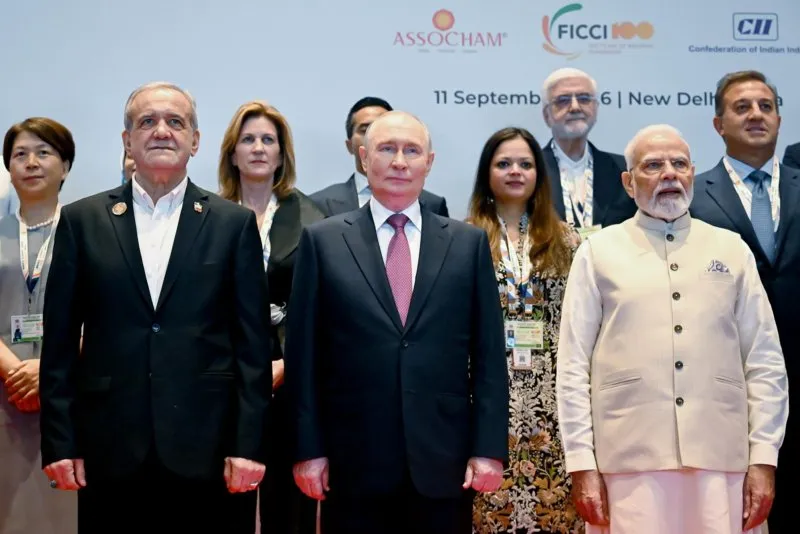
Indian Prime Minister Narendra Modi Modi hosts BRICS summit proceedings in New Delhi this week, welcoming Russian President Vladimir Putin, Chinese President Xi Jinping, and other leaders from the expanding bloc for discussions spanning trade, investment, and various ongoing global conflicts.
Iranian President Masoud Pezeshkian also arrived for the gathering, marking another opportunity for the Iranian leader to engage with major world powers amid his country’s ongoing conflict with the United States, following his earlier appearance at a separate regional summit weeks prior.
This gathering brings together leaders representing a substantial share of the world’s population and economic output, reflecting the BRICS bloc’s continued efforts to position itself as a significant alternative forum for international dialogue outside traditional Western dominated diplomatic structures.
The summit’s agenda reportedly encompasses discussions on expanding trade and investment cooperation among member nations, alongside broader conversations addressing various ongoing global conflicts that continue affecting international stability and economic conditions worldwide.
India’s hosting role carries particular diplomatic significance, given the country’s traditionally careful balancing act maintaining relationships with both Western nations and BRICS partners including Russia and China, despite sometimes complex and competing interests among these various relationships.
This marks a notable diplomatic moment, bringing together leaders from countries currently navigating complex bilateral relationships with the United States, including both Russia and Iran, whose leaders face ongoing conflicts with Washington that continue significantly shaping global security dynamics.
Trade and investment cooperation discussions among BRICS members reflect the bloc’s ongoing efforts to develop alternative economic frameworks and payment systems that could reduce dependence on traditionally dominant Western financial infrastructure and currency systems.
Regional security discussions at the summit likely address multiple ongoing conflicts affecting member nations or their broader spheres of interest, including the extended Russia Ukraine war and the separate conflict between Iran and the United States that has persisted for more than six months.
International observers continue debating the BRICS bloc’s actual practical influence on global affairs, with some viewing it as an increasingly significant counterweight to traditional Western dominated institutions, while others note the bloc’s internal diversity sometimes limits unified action on contentious issues.
This summit occurs amid a particularly complex global security environment, with multiple simultaneous conflicts affecting different member nations, creating both opportunities for coordinated diplomatic messaging and genuine challenges in achieving meaningful consensus among diverse national interests represented within the bloc.
As this summit continues, international attention remains focused on what concrete outcomes might emerge from these high level discussions among major global powers. Whether this gathering produces meaningful new cooperation frameworks or primarily serves symbolic diplomatic purposes remains to be seen as the summit proceedings continue.