


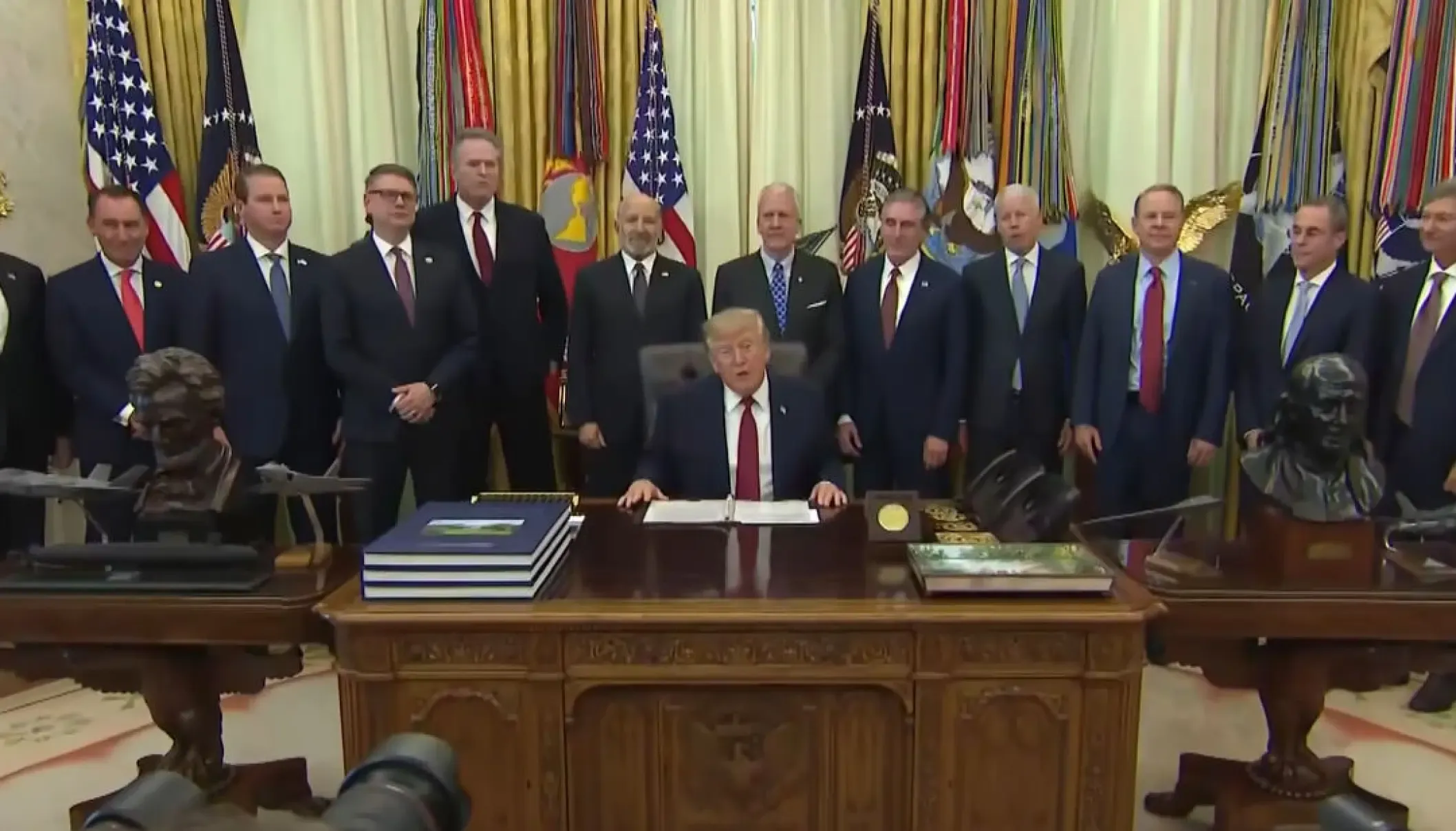
President Trump’s announcement this week unveiling South Korea’s substantial American investment plans arrives at a politically significant moment, with the administration eager to highlight concrete economic achievements ahead of the upcoming midterm congressional elections scheduled for early November. The timing reflects a broader pattern of the administration emphasizing tangible economic wins even as public concern grows over the ongoing months-long conflict involving Iran, a situation that has kept energy prices elevated and deepened broader economic uncertainty for many American households.
Trump has consistently sought to frame major investment announcements like this week’s South Korea deal as clear evidence of his administration’s economic effectiveness, a messaging strategy that carries particular importance heading into a competitive midterm election cycle where control of Congress remains genuinely contested. Highlighting job creation and major infrastructure investment provides a tangible counterpoint to broader economic anxieties tied to elevated energy costs and persistent geopolitical uncertainty.
Political analysts note that the specific emphasis on the potential fifty-four billion dollar Alaska liquefied natural gas investment appears designed to resonate with voters concerned about energy costs and domestic energy production, even though South Korea’s actual commitment to that particular project remains subject to ongoing review regarding its commercial viability. This gap between the administration’s confident public framing and the more cautious reality of South Korea’s position has drawn some scrutiny from observers tracking the deal’s actual implementation status.
The broader political context includes sustained public concern about how the extended conflict involving Iran has affected energy prices and economic conditions more generally, creating genuine pressure on the administration to demonstrate progress on economic priorities even amid these ongoing foreign policy challenges. This dynamic has made major investment announcements like this week’s South Korea package particularly valuable from a political messaging perspective, offering concrete, job-focused stories that can counterbalance more complicated geopolitical narratives.
Administration officials have consistently argued that major foreign investment commitments like this one demonstrate renewed international confidence in the American economy under current trade and economic policies, framing deals like this week’s South Korea announcement as validation of the broader approach to international economic negotiations pursued throughout the administration’s tenure. Critics, meanwhile, have questioned whether the full scope of announced investments will actually materialize as described, given the complex implementation challenges inherent to projects of this scale.
Midterm election dynamics add further complexity to how these economic announcements get received by different political constituencies, with supporters likely to view Wednesday’s announcement as further evidence of effective economic leadership, while skeptics may focus more heavily on the unresolved questions surrounding South Korea’s actual commitment level to specific project components like the Alaska pipeline. This split in interpretation reflects broader partisan divides regarding how to evaluate the administration’s overall economic record.
As the midterm election campaign continues intensifying in the coming weeks, major economic announcements like this week’s South Korea investment package will likely continue featuring prominently in political messaging from various candidates and campaigns. Whether this particular announcement proves to be a meaningful factor in how voters ultimately evaluate the administration’s economic stewardship remains to be seen as the broader election cycle continues developing.