



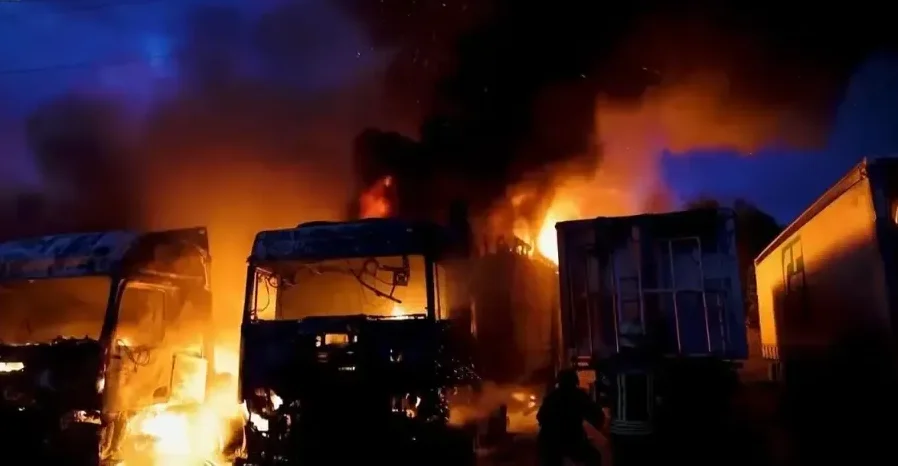
Russia launched a missile and drone assault on Kyiv during the night leading into Thursday, killing one person and injuring 22 others, including a child, according to reports published on October 22. The attack damaged homes, transport facilities and civilian infrastructure, renewing concern about the human cost of the war.
The assault came only hours after the Kremlin signalled that Russia was willing in principle to resume US-mediated peace negotiations. The timing highlighted the gap between diplomatic statements and events on the battlefield, where attacks continue to affect civilians and essential services.
The damage was particularly serious in Kyiv’s Dniprovskyi district, where residential and transport infrastructure were hit. Emergency responders worked to assess the damage and assist those affected. Attacks on urban areas can disrupt daily life long after the immediate danger has passed, especially when homes, roads and public services require repairs.
Russian President Vladimir Putin agreed in principle to restart talks after the US midterm elections on November 10, following a meeting with US envoy Steve Witkoff. Ukrainian President Volodymyr Zelenskyy responded cautiously, indicating that Kyiv would wait to see whether the diplomatic effort produced meaningful results.
The war has repeatedly demonstrated the difficulty of turning negotiations into a lasting settlement. Both sides face major questions about security, territory and the conditions required for an agreement. Ukraine has sought guarantees that would prevent renewed attacks, while Russia’s demands remain a central obstacle to negotiations.
For civilians, the immediate priority is protection from further strikes. Air defence systems can intercept some incoming weapons, but they cannot eliminate every threat. Local authorities must also maintain emergency services, provide shelter and help residents recover from damage.
The international response remains important. The United States has played a central role in efforts to restart talks, while European governments continue to discuss military support and the security of the region. Any negotiation will need to address not only the end of active fighting but also the conditions required to maintain peace.
The attack on Kyiv underlines why diplomatic announcements are often treated cautiously. A willingness to meet is only an initial step; progress depends on whether the parties can agree on substantive terms and reduce violence on the ground.
For Ukraine, the coming weeks will test whether renewed diplomatic contacts can produce a credible path towards peace while the country continues to defend its people and infrastructure.