

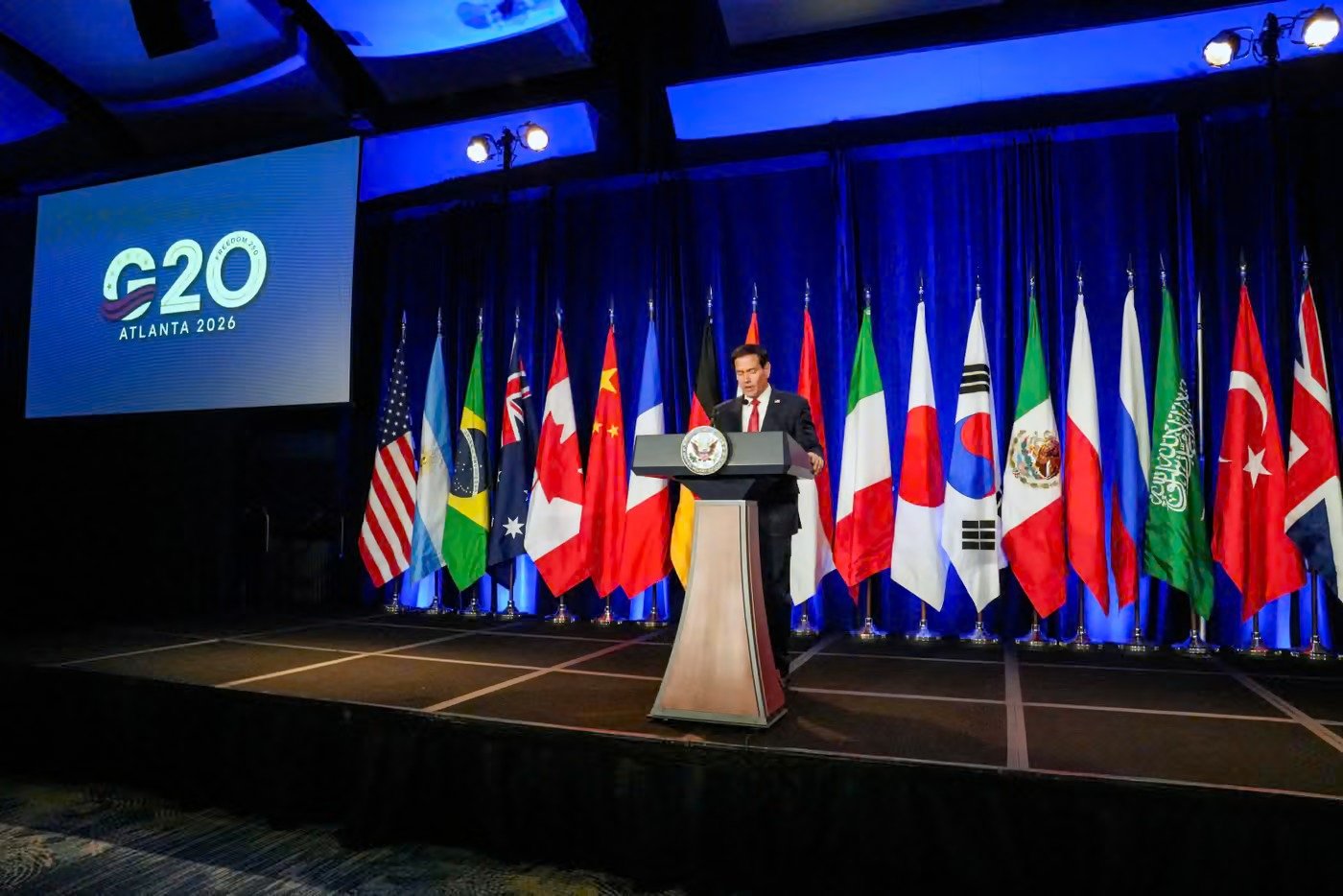
Foreign ministers attending a G20 meeting in Atlanta have abandoned a traditional group photograph after several countries objected to being pictured alongside Russia’s foreign minister, Sergei Lavrov. The decision removed a familiar part of major international gatherings and exposed the continuing diplomatic divisions caused by Russia’s war against Ukraine.
The United States, which is hosting the meeting, removed the photograph from the official programme after concerns emerged that a number of participating countries might refuse to take part. The traditional group picture is often intended to present an image of unity among the world’s major economies. This time, however, organisers faced the possibility that the event would become a public demonstration of disagreement.
A Western diplomat said that around one-third of participants opposed appearing in a photograph with Lavrov. The countries included Australia and Canada, while several European representatives also raised objections. German Foreign Minister Johann Wadephul said there could be no normal joint photograph involving European partners and the Russian minister because relations with Moscow remained deeply strained.
Some European officials had reportedly considered the possibility of arranging two separate photographs, one including Lavrov and another without him. The United States ultimately decided to remove the photograph altogether rather than allow the issue to dominate the meeting.
The disagreement reflects the wider political consequences of Russia’s invasion of Ukraine. European governments have continued to support Kyiv and oppose actions they believe could weaken international pressure on Moscow. Ukraine has also criticised recent decisions by US President Donald Trump concerning Russia, including a deal involving diesel purchases and the easing of certain sanctions.
The G20 brings together major economies to discuss global financial stability, trade, development and other international issues. Its meetings are designed to provide a platform where governments with different political systems and foreign policy priorities can discuss shared challenges. However, the organisation’s ability to produce common positions can be limited when members disagree over major conflicts.
The Atlanta meeting has taken place during a period of wider international uncertainty. Disagreements over the war in Ukraine, tensions in the Middle East, trade restrictions and China’s influence over critical minerals have complicated discussions. The United States has also faced questions over its decision not to invite South Africa to the ministerial meeting, creating another point of disagreement among participants.
Diplomatic photographs may appear symbolic, but they can carry political meaning. Governments often consider whether appearing alongside another country’s representative could be interpreted as acceptance or normalisation of that country’s actions. For European officials, sharing a public image with Russia’s foreign minister could send a message that does not reflect their governments’ position on the war.
The cancellation does not prevent ministers from attending discussions or communicating with one another. However, it illustrates how difficult it has become to maintain a unified public image when major members disagree over international security. The dispute may also affect expectations for the wider G20 leaders’ summit scheduled for November.
Participants have said they will continue trying to find common ground despite the disagreements. Yet the absence of a joint photograph provides a visible reminder of the divisions that remain. The challenge for the G20 is to keep discussions focused on economic cooperation while managing conflicts that continue to shape relations between its members.