



Close Menu
Daljoog News
    What's Hot
    Munich Police Investigate Arson At Defense Firm

    Munich Police Investigate Arson At Defense Firm

    September 5, 2026
    Argentine President Javier Milei announced that Argentina threatens Falklands oil sanctions against energy companies planning exploration activities near the disputed islands, escalating long standing tensions over sovereignty claims that have persisted for decades between Argentina and Britain. Milei stated that the prospect of two oil companies conducting exploration work in waters surrounding the islands represents an urgent threat to Argentine national interests, signaling potential economic consequences for firms proceeding with drilling activities in the contested area. The Falkland Islands, known in Argentina as the Malvinas, have remained a source of diplomatic tension since Britain and Argentina fought a brief war over the territory in the early 1980s. Britain has maintained control of the islands throughout the decades since that conflict concluded. Downing Street responded firmly to Milei's comments, emphasizing that the islanders' right to self determination extends to their ability to develop and exploit their own natural resources, reflecting Britain's consistent position on sovereignty and resource rights regarding the territory. This latest dispute highlights how resource development can reignite longstanding territorial tensions, even in situations where the underlying sovereignty dispute has remained largely dormant for extended periods without significant diplomatic escalation between the involved nations. Energy companies considering exploration activities near the islands now face additional political risk beyond the standard commercial and technical challenges typically associated with offshore drilling projects, given the potential for sanctions or other punitive measures from the Argentine government. International legal experts note that sovereignty disputes over resource rich territories often intensify when actual economic development becomes a realistic prospect, transforming what may have been largely symbolic territorial claims into disputes with genuine financial stakes for involved parties. The islanders themselves, who have consistently expressed strong preference for remaining under British administration through previous referendums, find themselves once again at the center of a diplomatic dispute despite having limited direct influence over how the broader sovereignty question ultimately gets resolved. Argentina's renewed assertiveness regarding the islands comes amid broader efforts by the Milei government to establish clear positions on various national interest issues, potentially reflecting domestic political considerations alongside genuine concerns about resource development near the disputed territory. British officials have consistently maintained that sovereignty over the islands is not subject to negotiation, a position reinforced by the strong preference islanders have expressed for continued British administration whenever the question has been formally put before them in previous votes. As this latest dispute unfolds, energy companies with interests in the region will need to carefully weigh the potential diplomatic and economic risks against the commercial opportunities associated with exploration activities near the islands. The broader sovereignty dispute appears likely to remain unresolved for the foreseeable future, continuing to periodically resurface whenever practical questions like resource development bring it back into focus.

    Argentina Threatens Sanctions Over Falklands Oil

    September 5, 2026
    Kakapo Population Reaches New Milestone Number

    Kakapo Population Reaches New Milestone Number

    September 5, 2026
    Facebook X (Twitter) Instagram
    Saturday, September 5
    Daljoog News
    Facebook X (Twitter) YouTube Instagram
    • Home
    • General
    • World
    • Business
    • Technology
    • Politics
    • Finance
    • Health
    • Lifestyle
    • Sports
    • Travel
    Daljoog News
    Home»Politics»Trump Slams The Atlantic After Officials Accidentally Leak Classified Yemen War Plans to Journalist
    Politics

    Trump Slams The Atlantic After Officials Accidentally Leak Classified Yemen War Plans to Journalist

    Daljoog NewsBy Daljoog NewsMarch 25, 2025Updated:June 1, 2025No Comments3 Mins Read
    Facebook Twitter Pinterest LinkedIn Tumblr Email
    Follow Us
    Google News
    Trump Slams The Atlantic After Officials Accidentally Leak Classified Yemen War Plans to Journalist
    Trump Slams The Atlantic After Officials Accidentally Leak Classified Yemen War Plans to Journalist
    Share
    Facebook Twitter LinkedIn Pinterest Email

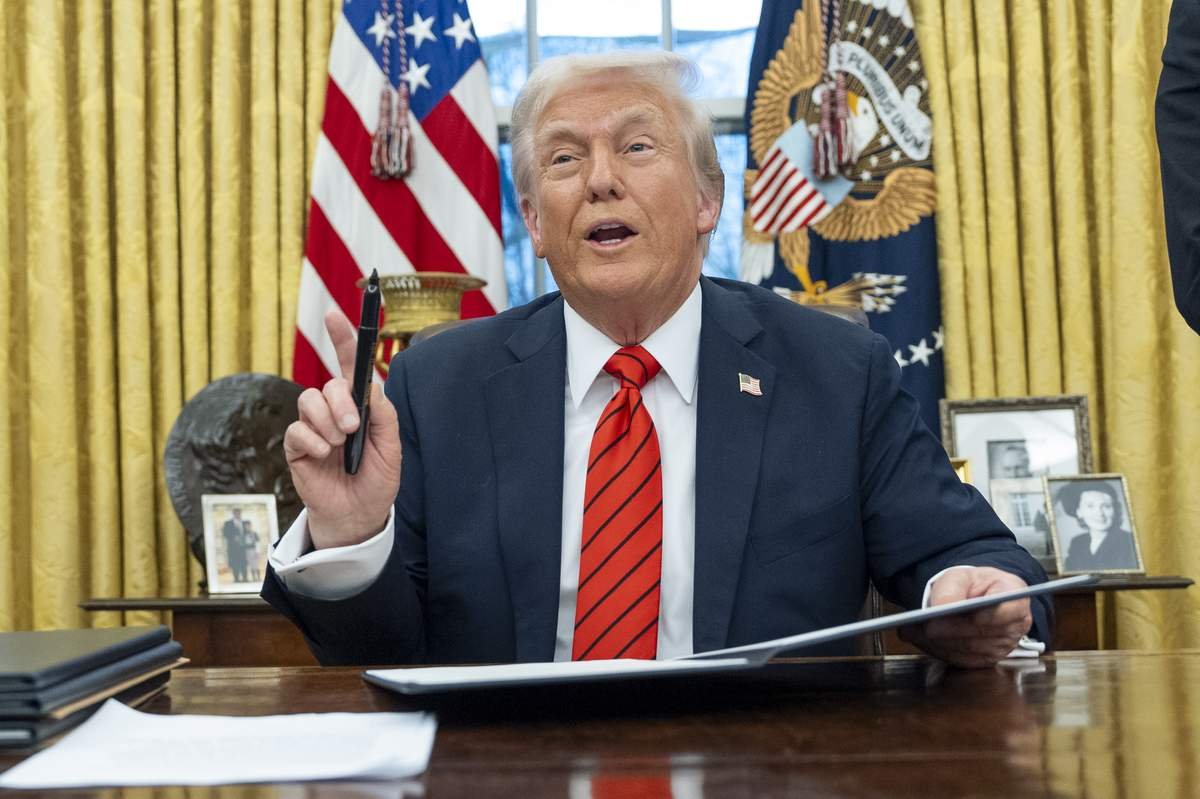
    President Donald Trump has denied any involvement in a significant security lapse where high-ranking officials in his administration reportedly discussed classified Yemen war strategies in a group chat that mistakenly included Jeffrey Goldberg, Editor-in-Chief of The Atlantic.

    The breach, involving Defense Secretary Pete Hegseth and Vice President JD Vance, exposed details of a sensitive military operation targeting Houthi positions in Yemen. The situation has sparked concerns over national security protocols within the Trump administration.

    Trump Denies Knowledge, Criticizes The Atlantic

    When questioned about the incident, Trump dismissed the concerns and instead directed criticism at The Atlantic, claiming the publication was “going out of business.” His remarks came during his third official cabinet meeting, which focused on pressing issues such as immigration, impending new tariffs, and government efficiency measures.

    Cabinet Meeting Highlights: Elon Musk’s Role in Federal Oversight

    The cabinet meeting, held amid ongoing legal challenges and administrative restructuring, included notable attendees such as billionaire entrepreneur Elon Musk. Sources indicate that the meeting was a continuation of discussions from an earlier Department of Government Efficiency (DOGE) session in March. During that session, Trump reportedly curbed Musk’s authority following backlash over cost-cutting measures affecting federal agencies.

    Musk’s presence has fueled speculation about his growing involvement in government operations, despite his private sector leadership at Tesla and SpaceX. Critics argue that his influence extends beyond traditional business realms, raising questions about transparency and oversight.

    Attorney General Condemns Criticism of Musk Amid Tesla Attacks

    Separately, Attorney General Pam Bondi called on Texas Congresswoman Jasmine Crockett to retract statements critical of Elon Musk. Bondi’s demand comes in the wake of recent attacks on Tesla vehicles and dealerships, which some believe were politically motivated.

    Crockett had previously spoken out against Musk’s perceived overreach in federal decision-making, drawing mixed reactions from lawmakers and the public. Bondi’s response underscores the administration’s staunch defense of Musk’s contributions, despite controversy surrounding his role in government affairs.

    National Security Experts Weigh In on Security Breach

    The accidental leak of classified war plans has prompted concerns from national security experts, who warn that such lapses could compromise ongoing military operations. Intelligence officials stress the importance of stricter communication protocols to prevent unauthorized disclosures.

    “It’s alarming that senior officials are discussing sensitive military strategies in informal group chats,” said retired General Mark Davidson. “Such incidents highlight the need for reinforced cybersecurity measures within the highest levels of government.”

    The Department of Defense has yet to issue an official statement regarding the breach, but sources suggest an internal review is underway to determine how the mishap occurred and prevent future incidents.

    Potential Fallout and Policy Revisions

    With the 2024 election cycle in full swing, this latest controversy adds to the mounting challenges facing the Trump administration. Analysts predict that the security breach, coupled with ongoing debates over government efficiency and economic policy, could influence voter perceptions in the coming months.

    Share. Facebook Twitter Pinterest LinkedIn Tumblr Email
    Daljoog News
    Daljoog News
    • Website
    • Facebook
    • X (Twitter)
    • Instagram

    Daljoog News is a trusted online news platform delivering timely and accurate reports on a wide range of topics, including General News, World Affairs, Business, Technology, Politics, Finance, Health, Lifestyle, Sports, and Travel. Committed to journalistic excellence, Daljoog News provides in-depth analysis, breaking news, and insightful stories to keep readers informed about the latest global and local developments. Stay ahead with Daljoog News—where facts meet clarity.

    Related Posts

    Trump Threatens Trade Retaliation After Ruling

    Trump Threatens Trade Retaliation After Ruling

    September 5, 2026
    Bessent Warns Nations Against Iran Support

    Bessent Warns Nations Against Iran Support

    September 4, 2026
    Germany's eastern state of Saxony Anhalt heads to the polls this week, with the Saxony Anhalt election AfD gains narrative dominating coverage as the far right Alternative for Germany party hopes to build on recent momentum partly fueled by public fatigue over the ongoing war in Ukraine. The election arrives at a particularly tense moment in German politics, coinciding with a diplomatic dispute between Berlin and Moscow over an alleged Russian backed drone attack on an airport in the eastern part of the country. That controversy has become intertwined with the campaign's broader political dynamics. The Alternative for Germany's lead candidate for the state has campaigned heavily on themes of war weariness and skepticism toward continued German support for Ukraine, arguments that appear to be resonating with a segment of voters increasingly frustrated by the economic costs associated with the ongoing conflict. Chancellor Friedrich Merz's governing coalition has faced mounting criticism over its handling of both the war and broader economic challenges, including factory closures and rising living costs that opposition parties have used to argue the current government has failed to adequately protect German interests. The far right party's leader has directly criticized the chancellor's approach, accusing him of prioritizing international politics over domestic concerns and suggesting his government has lost meaningful connection with everyday voters struggling with economic pressures across the country. Allies of the chancellor have pushed back forcefully against these characterizations, with one prominent supporter accusing the far right party's leadership of effectively serving Russian interests by amplifying narratives that could weaken Western unity and support for Ukraine at a critical moment in the conflict. Polling ahead of the election suggests the Alternative for Germany could make significant gains compared to previous results in the state, though most political analysts do not expect the party to secure enough support to lead a governing coalition given ongoing resistance from mainstream parties to cooperate with it. This election is being closely watched as a broader indicator of political sentiment across eastern Germany, a region that has historically shown stronger support for the far right party compared to western parts of the country, partly reflecting distinct economic and social conditions in the formerly communist east. International observers have noted the election's significance beyond domestic German politics, given its potential implications for continued Western unity on Ukraine policy. Any significant far right gains could be interpreted as a warning sign for mainstream parties navigating similar political pressures elsewhere in Europe. The broader dispute over the alleged Russian drone attack has added additional complexity to the campaign's final days, with the far right party's rhetoric around the incident drawing sharp criticism from government officials who argue it reflects a troubling willingness to dismiss legitimate security concerns. As voters prepare to cast their ballots, the outcome will offer important insight into how deeply war fatigue and economic frustration have penetrated German political sentiment. Regardless of the final results, this election is likely to shape ongoing debates about Germany's role in supporting Ukraine through the challenging months ahead

    Saxony Anhalt Election Looms Amid AfD Gains

    September 3, 2026

    Comments are closed.

    Our Picks
    Trump Threatens Trade Retaliation After Ruling

    Trump Threatens Trade Retaliation After Ruling

    September 5, 2026
    Bessent Warns Nations Against Iran Support

    Bessent Warns Nations Against Iran Support

    September 4, 2026
    Germany's eastern state of Saxony Anhalt heads to the polls this week, with the Saxony Anhalt election AfD gains narrative dominating coverage as the far right Alternative for Germany party hopes to build on recent momentum partly fueled by public fatigue over the ongoing war in Ukraine. The election arrives at a particularly tense moment in German politics, coinciding with a diplomatic dispute between Berlin and Moscow over an alleged Russian backed drone attack on an airport in the eastern part of the country. That controversy has become intertwined with the campaign's broader political dynamics. The Alternative for Germany's lead candidate for the state has campaigned heavily on themes of war weariness and skepticism toward continued German support for Ukraine, arguments that appear to be resonating with a segment of voters increasingly frustrated by the economic costs associated with the ongoing conflict. Chancellor Friedrich Merz's governing coalition has faced mounting criticism over its handling of both the war and broader economic challenges, including factory closures and rising living costs that opposition parties have used to argue the current government has failed to adequately protect German interests. The far right party's leader has directly criticized the chancellor's approach, accusing him of prioritizing international politics over domestic concerns and suggesting his government has lost meaningful connection with everyday voters struggling with economic pressures across the country. Allies of the chancellor have pushed back forcefully against these characterizations, with one prominent supporter accusing the far right party's leadership of effectively serving Russian interests by amplifying narratives that could weaken Western unity and support for Ukraine at a critical moment in the conflict. Polling ahead of the election suggests the Alternative for Germany could make significant gains compared to previous results in the state, though most political analysts do not expect the party to secure enough support to lead a governing coalition given ongoing resistance from mainstream parties to cooperate with it. This election is being closely watched as a broader indicator of political sentiment across eastern Germany, a region that has historically shown stronger support for the far right party compared to western parts of the country, partly reflecting distinct economic and social conditions in the formerly communist east. International observers have noted the election's significance beyond domestic German politics, given its potential implications for continued Western unity on Ukraine policy. Any significant far right gains could be interpreted as a warning sign for mainstream parties navigating similar political pressures elsewhere in Europe. The broader dispute over the alleged Russian drone attack has added additional complexity to the campaign's final days, with the far right party's rhetoric around the incident drawing sharp criticism from government officials who argue it reflects a troubling willingness to dismiss legitimate security concerns. As voters prepare to cast their ballots, the outcome will offer important insight into how deeply war fatigue and economic frustration have penetrated German political sentiment. Regardless of the final results, this election is likely to shape ongoing debates about Germany's role in supporting Ukraine through the challenging months ahead

    Saxony Anhalt Election Looms Amid AfD Gains

    September 3, 2026
    Tributes Pour In For Former French PM

    Tributes Pour In For Former French PM

    September 2, 2026
    Stay In Touch
    • Facebook
    • Twitter
    • Instagram
    • YouTube
    Don't Miss
    Joseph Kabila Sentenced to Death in DRC

    Joseph Kabila Sentenced to Death in DRC

    World October 1, 2025

    A military court in the Democratic Republic of the Congo has sentenced former president Joseph…

    Israel Launches Airstrikes After Gaza Ceasefire Breach

    Israel Launches Airstrikes After Gaza Ceasefire Breach

    October 29, 2025
    Experts Urge Stamp Duty Abolition

    Experts Urge Stamp Duty Abolition

    November 13, 2025
    Messi Leads Inter Miami to MLS Cup

    Messi Leads Inter Miami to MLS Cup

    November 30, 2025
    About Us

    Daljoog News is a trusted news platform that brings you the latest global and local updates with accuracy and fairness. We are committed to clear and unbiased reporting, covering topics like politics, business, technology, science, and culture and more. Using the latest technology and expert journalism, we provide reliable coverage of important stories. Stay informed, inspired, and empowered with Daljoog News—your source for breaking news, the latest updates, and videos that matter.

    Email Us: info@daljoognews.com

    Our Picks
    Nine More Drugmakers Join Pricing Deal Program

    Nine More Drugmakers Join Pricing Deal Program

    September 5, 2026
    Broadcom AI Chip Revenue Surges 221 Percent

    Broadcom AI Chip Revenue Surges 221 Percent

    September 4, 2026
    Cybersecurity Stocks Rally On AI Driven Demand

    Cybersecurity Stocks Rally On AI Driven Demand

    September 3, 2026
    Latest News
    Munich Police Investigate Arson At Defense Firm

    Munich Police Investigate Arson At Defense Firm

    September 5, 2026
    Argentine President Javier Milei announced that Argentina threatens Falklands oil sanctions against energy companies planning exploration activities near the disputed islands, escalating long standing tensions over sovereignty claims that have persisted for decades between Argentina and Britain. Milei stated that the prospect of two oil companies conducting exploration work in waters surrounding the islands represents an urgent threat to Argentine national interests, signaling potential economic consequences for firms proceeding with drilling activities in the contested area. The Falkland Islands, known in Argentina as the Malvinas, have remained a source of diplomatic tension since Britain and Argentina fought a brief war over the territory in the early 1980s. Britain has maintained control of the islands throughout the decades since that conflict concluded. Downing Street responded firmly to Milei's comments, emphasizing that the islanders' right to self determination extends to their ability to develop and exploit their own natural resources, reflecting Britain's consistent position on sovereignty and resource rights regarding the territory. This latest dispute highlights how resource development can reignite longstanding territorial tensions, even in situations where the underlying sovereignty dispute has remained largely dormant for extended periods without significant diplomatic escalation between the involved nations. Energy companies considering exploration activities near the islands now face additional political risk beyond the standard commercial and technical challenges typically associated with offshore drilling projects, given the potential for sanctions or other punitive measures from the Argentine government. International legal experts note that sovereignty disputes over resource rich territories often intensify when actual economic development becomes a realistic prospect, transforming what may have been largely symbolic territorial claims into disputes with genuine financial stakes for involved parties. The islanders themselves, who have consistently expressed strong preference for remaining under British administration through previous referendums, find themselves once again at the center of a diplomatic dispute despite having limited direct influence over how the broader sovereignty question ultimately gets resolved. Argentina's renewed assertiveness regarding the islands comes amid broader efforts by the Milei government to establish clear positions on various national interest issues, potentially reflecting domestic political considerations alongside genuine concerns about resource development near the disputed territory. British officials have consistently maintained that sovereignty over the islands is not subject to negotiation, a position reinforced by the strong preference islanders have expressed for continued British administration whenever the question has been formally put before them in previous votes. As this latest dispute unfolds, energy companies with interests in the region will need to carefully weigh the potential diplomatic and economic risks against the commercial opportunities associated with exploration activities near the islands. The broader sovereignty dispute appears likely to remain unresolved for the foreseeable future, continuing to periodically resurface whenever practical questions like resource development bring it back into focus.

    Argentina Threatens Sanctions Over Falklands Oil

    September 5, 2026
    Kakapo Population Reaches New Milestone Number

    Kakapo Population Reaches New Milestone Number

    September 5, 2026
    Facebook X (Twitter) RSS YouTube Instagram
    • Home
    • About Us
    • Contact Us
    • Our Authors
    • Privacy Policy
    • Terms & Conditions
    • Sitemap
    © 2026 DaljoogNews.com

    Type above and press Enter to search. Press Esc to cancel.