



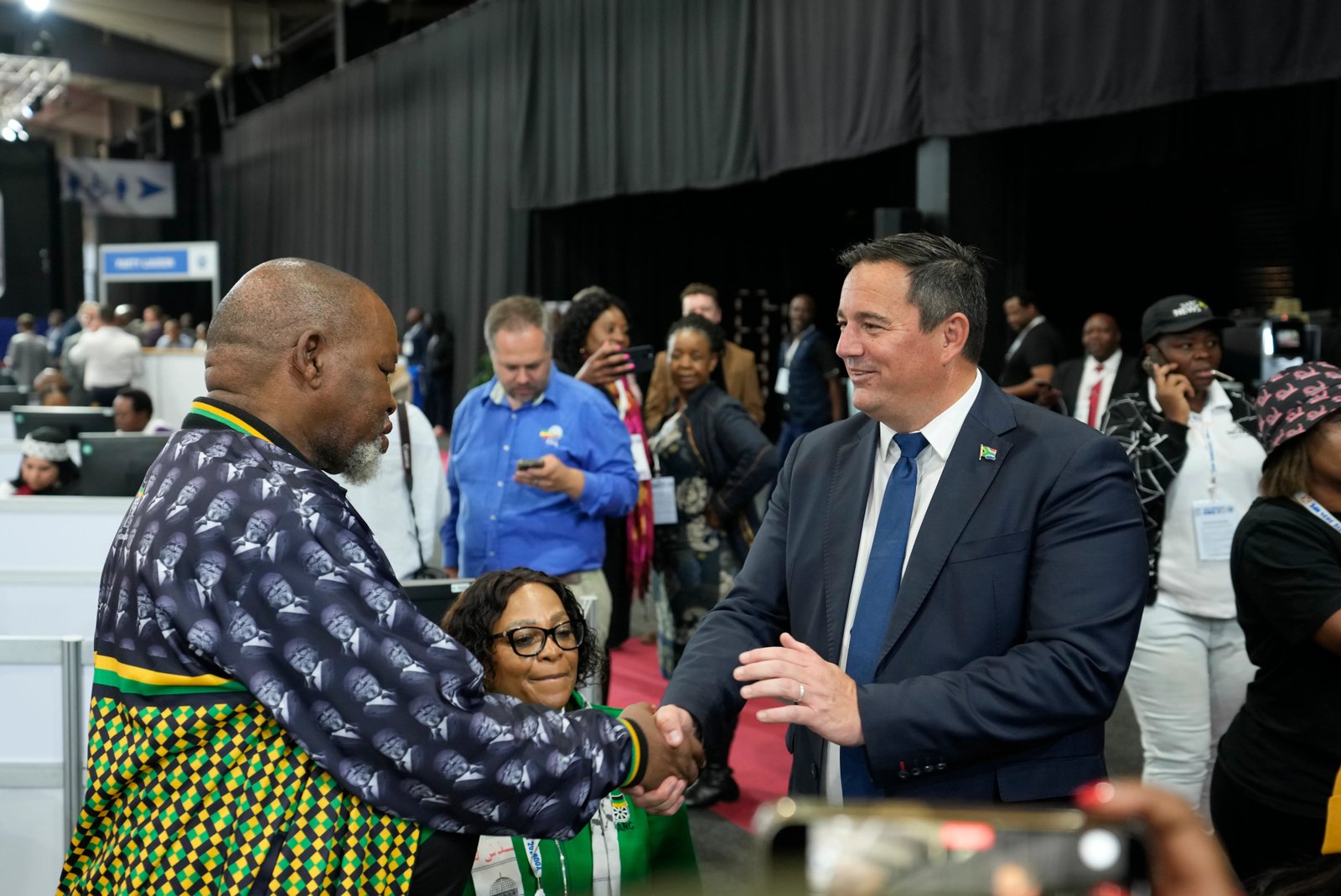
South Africa is preparing for local elections on November 4 that could further divide political power and make coalition negotiations essential in several major cities. The African National Congress is expected to remain the country’s largest political party, but analysts predict that its support could fall to around 31% to 34%. The decline would represent a major change from the party’s stronger position in earlier elections and could reshape how municipalities are governed.
Voter dissatisfaction has been driven by persistent poverty, unemployment and concerns about public services. Many residents have expressed frustration over electricity supply, water infrastructure, transport and the condition of local roads. These issues have created opportunities for opposition parties seeking to attract voters who no longer feel represented by traditional political organisations.
The Democratic Alliance is among the parties hoping to benefit from the changing political landscape. However, the election is also expected to strengthen smaller political groups, including the Economic Freedom Fighters and Jacob Zuma’s uMkhonto weSizwe party. With several parties competing for support, it may become difficult for any one organisation to secure enough votes to govern major cities independently.
Coalition arrangements are therefore likely to become central to municipal politics. Parties may need to negotiate agreements covering mayoral positions, budgets and local policy priorities. These arrangements can provide a way to establish governments when no party wins a majority, but they can also create instability if partners disagree or withdraw support.
Johannesburg illustrates the difficulties that can arise. The city has experienced changing political alliances and repeated mayoral changes, creating uncertainty over leadership and public administration. Analysts have linked unstable coalitions to problems involving service delivery and financial management. Smaller parties can also gain considerable influence when larger organisations depend on their support to maintain control.
Some analysts believe that cooperation between the ANC and the Democratic Alliance could provide greater stability in cities such as Johannesburg, Tshwane and Ekurhuleni. The two parties already participate in a national governing arrangement formed after the 2024 election. However, local agreements may be more difficult because political leaders must balance national relationships with local priorities and voter expectations.
Representatives from both parties have expressed reservations about coalition politics. They argue that unstable partnerships can prevent governments from implementing policies and that smaller coalition partners may not always honour agreements. These concerns are likely to influence negotiations after the election.
The vote will be an important measure of public confidence in the country’s political leadership. South Africa’s municipalities are responsible for services that affect daily life, making local elections especially significant for residents. The results could also influence national political strategies ahead of future elections.
The challenge will be to turn fragmented voting patterns into stable local governments. Parties may win seats through public support, but they will need practical agreements to govern effectively. The election could therefore mark another stage in South Africa’s transition towards a more competitive and coalition-based political system.