



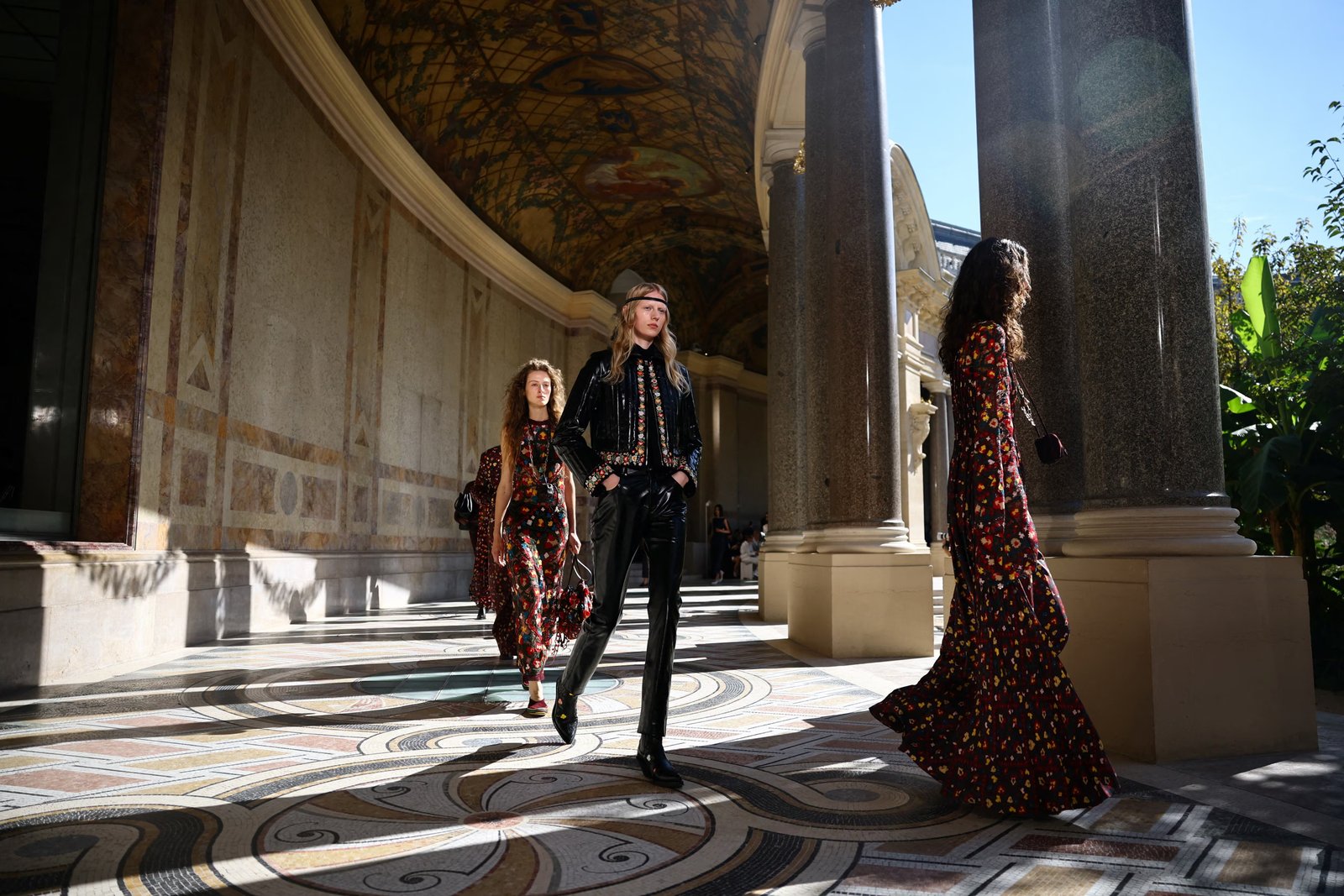
Afghan art and traditional craft have taken center stage at Paris Fashion Week through a new collection by designer Gabriela Hearst. The show used Afghan textiles, artwork and handmade details while also highlighting the work of women artisans. The collection was presented in Paris as part of the Spring Summer 2027 fashion season.
Hearst worked with the organization Turquoise Mountain to connect with artisans in Afghanistan. The project helped bring traditional Afghan techniques into a major international fashion event. The designer used ikat patchwork jackets and dresses decorated with shisha mirror embroidery, creating designs that were strongly connected to Afghanistan’s history and culture.
Hearst said she wanted to focus on Afghan women and the skills they use to make traditional crafts. That message gave the collection a wider purpose than fashion alone, as traditional craft can provide income for communities while also helping preserve cultural knowledge. The Paris show gave Afghan artisans a global platform and brought attention to skills that have been passed down through generations.
Some of the designs included paintings made by Afghan artists, with the artwork appearing on jewellery, buttons and linen jackets. The show also used the pomegranate, Afghanistan’s national fruit, as an important design image. White dresses were decorated with pomegranate embroidery, helping combine a modern European runway with traditional Central Asian ideas.
The collection also focused on environmental concerns. Hearst used a natural water based resin on silk trench coats, with the treatment designed to create an effect similar to water resistant nylon. The designer has criticized the fashion industry’s heavy use of nylon and polyester, materials that are widely used because they are cheap and flexible but are made from petrochemical sources.
Climate change was another part of the discussion around the show. Paris experienced unusually warm weather during the fashion season, and Hearst said changing weather patterns were becoming harder to predict. Fashion companies are facing growing pressure to consider their environmental impact because the industry produces large amounts of waste and uses major quantities of water, energy and raw materials.
Designers are therefore looking for ways to make clothes with lower environmental costs. Hearst’s collection shows how environmental ideas can be included in luxury fashion without completely changing the focus on design and craftsmanship. The use of alternative materials and treatments also reflects a wider effort in the industry to find more sustainable ways to produce clothing.
The Afghan inspired collection also showed how fashion can connect different cultures. A designer from Uruguay presented work in Paris using traditional Afghan craft, creating a link between South America, Europe and Central Asia. Paris Fashion Week is one of the biggest fashion events in the world, allowing designers to reach buyers, journalists and customers from many countries while also shaping international ideas about culture.
For Afghan artisans, participation in a major global fashion event can help keep traditional skills visible and create new demand for handmade work. It can also give women involved in traditional crafts an opportunity to reach audiences far beyond their local communities. The connection with an international designer gives their skills a place in a modern market while keeping the cultural roots of the work visible.
Hearst’s collection comes at a time when luxury fashion companies are trying to attract customers while dealing with economic pressure. Many shoppers are becoming more careful with money, making products with a clear story potentially more attractive. A piece of clothing connected to a real craft tradition can offer buyers something beyond its basic function because it can also carry cultural and human meaning.
The October 6 coverage of the collection shows how modern fashion can be used to tell stories about people, history and the environment. Hearst did not simply borrow Afghan patterns; she worked with artisans and placed their work inside a major international show. That approach gives the collection a stronger connection to the people who created its inspiration.
For the fashion industry, the show is a reminder that design can do more than follow trends. It can also preserve craft, support artisans and raise questions about climate change. For Afghan women involved in the work, the Paris runway offered a rare global stage where their traditional skills became part of a modern collection seen by an international audience.