

Thailand’s annual vegetarian festival brings communities together through food, ritual and acts of religious devotion. Held during the ninth lunar month of the Chinese calendar, the nine-day celebration is associated with Taoist traditions and the Nine Emperor Gods. Participants often avoid meat and follow practices intended to cleanse the body and mind.
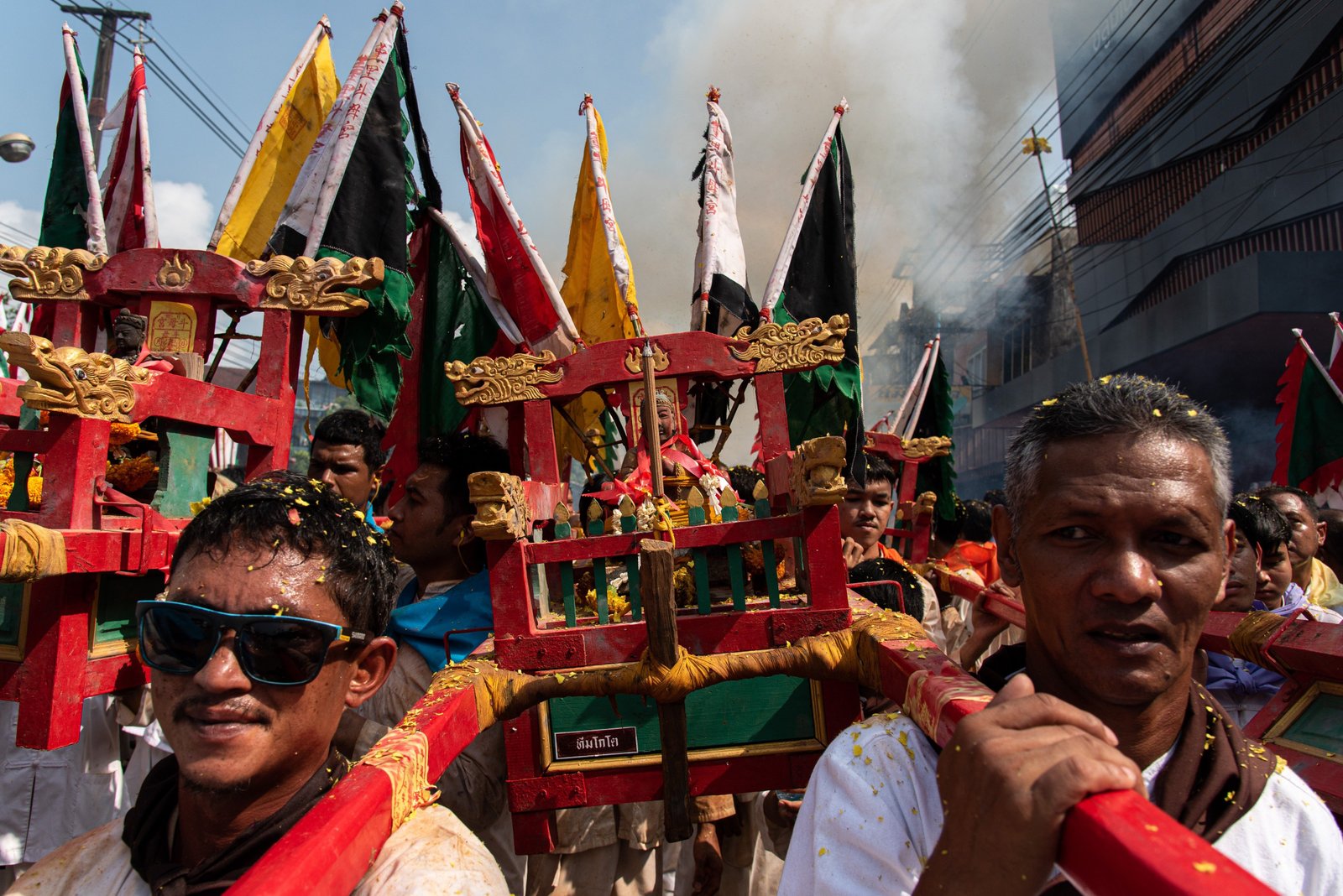
The festival is known for its colourful processions and crowded streets. Devotees carry shrines, take part in ceremonies and visit temples to make offerings. In some areas, the celebration includes dramatic rituals that draw both local residents and visitors. The event has become an important part of Thailand’s cultural calendar.
Food is central to the festival. Stalls serve meat-free dishes that use vegetables, tofu and other ingredients to create familiar flavours without animal products. Yellow flags often identify food prepared for the festival, helping visitors find suitable meals. For many participants, choosing vegetarian food is not simply a diet decision but part of a wider act of devotion.
The festival also reflects the influence of Chinese communities in Thailand. Over generations, religious practices and local customs have blended, creating celebrations that are distinct to the country. Families may attend ceremonies together, while vendors and small businesses prepare for the increase in visitors.
Visitors are encouraged to show respect for religious customs. Some ceremonies are intended for worship rather than entertainment, and people should ask before taking photographs or entering sacred areas. Modest clothing and following local instructions can help travellers avoid disrupting the event.
The festival can also introduce people to a wider range of plant-based food. Meat-free meals are often associated with health or environmental concerns, but religious traditions have encouraged vegetarian eating for centuries. For participants, the temporary change in diet may form part of a personal commitment to self-control and spiritual reflection.
Large celebrations require planning. Organisers and local authorities must manage crowds, traffic and public spaces while keeping temples and streets accessible. Visitors can help by following safety advice, disposing of rubbish properly and supporting local businesses responsibly.
Thailand’s vegetarian festival shows how food, belief and community can come together in a public celebration. Its customs vary by location, but the shared themes include purification, devotion and renewal. For residents and visitors alike, it offers a chance to experience a living tradition that continues to shape local identity.