

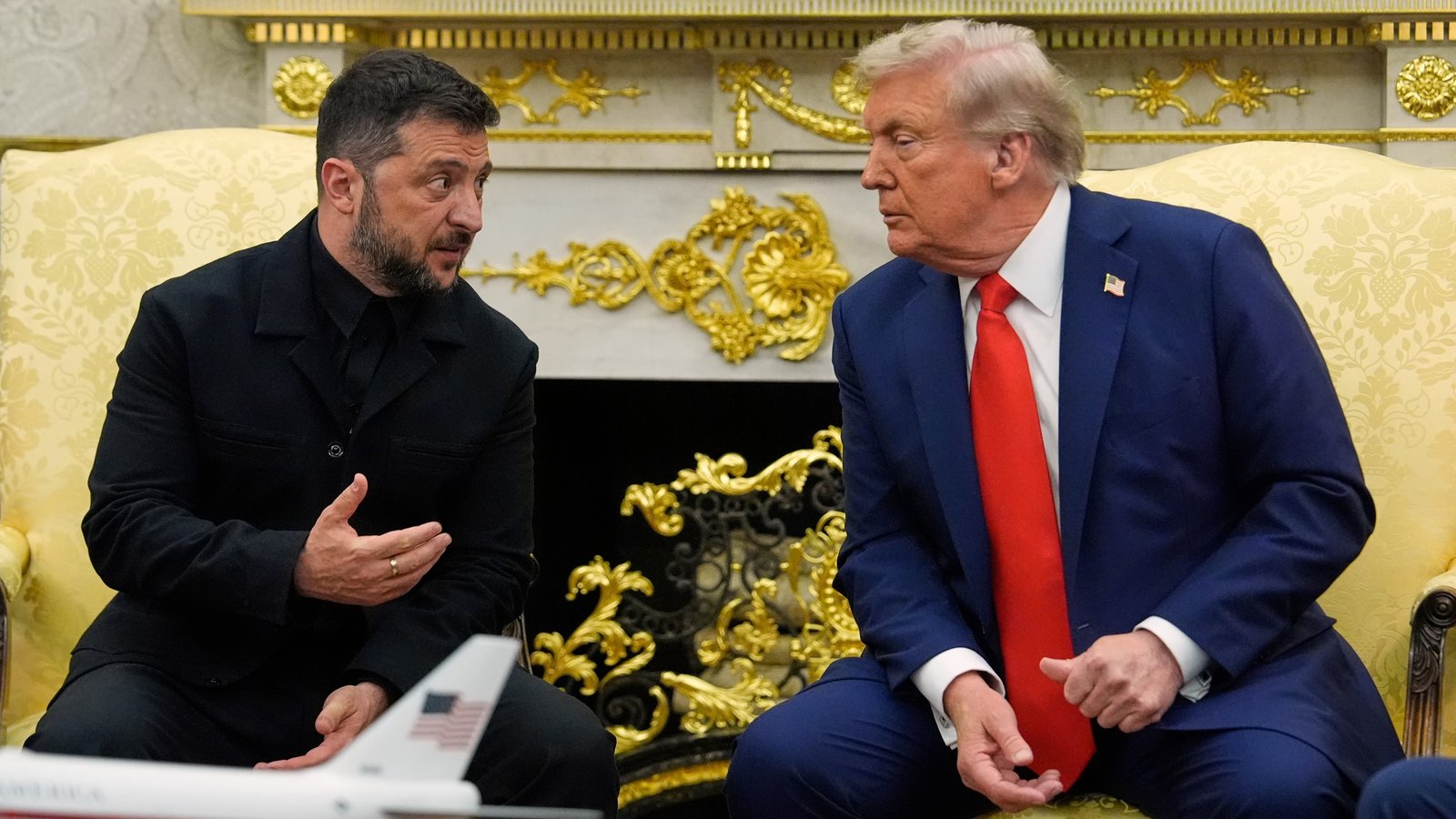
President Trump reportedly urged Ukrainian President Volodymyr Zelensky to travel to Moscow for a direct meeting with Russian President Vladimir Putin, according to a report from Bloomberg citing people familiar with the discussions, though Ukraine’s presidential office has publicly denied that any such offer was specifically made regarding a meeting in the Russian capital. This apparent discrepancy between the reported American suggestion and Ukraine’s official response highlights the genuine complexity and sensitivity surrounding any potential direct engagement between the two wartime leaders.
The reported suggestion emerged amid a particularly active week of diplomatic activity surrounding the ongoing war, with senior officials from multiple countries engaged in various discussions on the sidelines of the United Nations General Assembly’s high-level gathering in New York. Trump has continued pushing for progress toward ending what he has repeatedly characterized as a costly and unnecessary conflict, and any suggestion of direct engagement between Zelensky and Putin would represent a significant departure from the current pattern of the two leaders having no direct contact throughout the extended duration of the war.
Ukraine’s presidential office, in denying the specific characterization of the reported conversation, has not necessarily ruled out the broader concept of eventual direct talks between Zelensky and Putin, but has pushed back specifically against the notion that Moscow itself was suggested as an appropriate venue for any such meeting. This distinction matters considerably given the deep symbolic significance that the location of any peace negotiations would carry, with Ukraine likely to resist any arrangement that could be perceived as requiring Zelensky to travel to what remains, from Kyiv’s perspective, enemy territory during an active war.
The broader diplomatic context surrounding this reported exchange includes Zelensky’s own separate meetings this week with multiple world leaders, including reported discussions with Trump himself covering efforts to end the invasion, alongside conversations addressing Ukraine’s expanding campaign of long-range strikes against Russian energy infrastructure. These parallel diplomatic threads illustrate the multiple, sometimes seemingly contradictory approaches currently being pursued by various parties seeking to influence the trajectory of this now years-long conflict.
Diplomatic historians and conflict resolution experts note that direct meetings between wartime adversaries, while occasionally symbolically powerful, often require extensive preliminary groundwork before they can occur productively, including preliminary agreements on basic terms that would need to be substantially negotiated before leaders meet directly. The apparent gap between Trump’s reported suggestion and Ukraine’s public response may simply reflect the genuinely preliminary and exploratory nature of these kinds of diplomatic overtures at this stage of the broader peace process.
Russian officials have not publicly commented extensively on the specific reported suggestion regarding a potential Moscow meeting, though Russia has generally expressed openness to negotiations throughout various stages of the conflict while maintaining core demands that Ukraine has consistently found unacceptable. This pattern of stated openness to talks combined with substantively unchanged negotiating positions has characterized much of the diplomatic engagement throughout the extended duration of this conflict.
As this particular diplomatic thread continues developing, the underlying question of how and when direct engagement between the two wartime leaders might eventually occur remains genuinely unresolved. Whether this week’s reported exchange between Trump and Zelensky ultimately proves to be a meaningful step toward eventual direct talks, or simply one of many diplomatic overtures that fail to advance beyond the exploratory stage, will likely become clearer only as the broader diplomatic process continues unfolding in the weeks and months ahead.