
Close Menu
Daljoog News
    What's Hot
    Iran Fast Boats Raise Security Risks in Hormuz Strait

    Iran Fast Boats Raise Security Risks in Hormuz Strait

    April 25, 2026
    2PM Ok Taecyeon Marries After 10 Years of Love

    2PM Ok Taecyeon Marries After 10 Years of Love

    April 25, 2026
    Russia Gold Reserves Drop After Massive 22 Ton Sale.jpg The server cannot process the image. This can happen if the server is busy or does not have enough resources to complete the task. Uploading a smaller image may help. Suggested maximum size is 2560 pixels.

    Russia Gold Reserves Drop After Massive 22 Ton Sale

    April 25, 2026
    Facebook X (Twitter) Instagram
    Tuesday, May 26
    Daljoog News
    Facebook X (Twitter) YouTube Instagram
    • Home
    • General
    • World
    • Business
    • Technology
    • Politics
    • Finance
    • Health
    • Lifestyle
    • Sports
    • Travel
    Daljoog News
    Home»World»Iran Officially Accepts US Two-Week Truce After 40-Day Conflict
    World

    Iran Officially Accepts US Two-Week Truce After 40-Day Conflict

    Andrew RogersBy Andrew RogersApril 8, 2026No Comments4 Mins Read
    Facebook Twitter Pinterest LinkedIn Tumblr Email
    Follow Us
    Google News
    Iran Officially Accepts US Two-Week Truce After 40-Day Conflict
    Iran Officially Accepts US Two-Week Truce After 40-Day Conflict
    Share
    Facebook Twitter LinkedIn Pinterest Email

    After 40 days of intense hostilities, Iran has formally accepted a temporary two-week truce with the United States. The agreement comes amid sustained diplomatic efforts and mediation by Pakistan, providing a pause in the region’s escalating tensions.

    According to Daljoog News analysis, this truce reflects Tehran’s strategic calculation: while it suspends defensive military actions, Iran maintains a firm posture, signaling readiness should the conflict resume. The deal also underscores the critical role of Islamabad as a mediator between the two nations.

    The timing is significant, as the truce coincides with efforts to reopen the Strait of Hormuz for safe navigation—a key artery for global trade and energy supplies. Analysts see this pause as an opportunity to stabilize both regional security and international markets.

    What Happened?

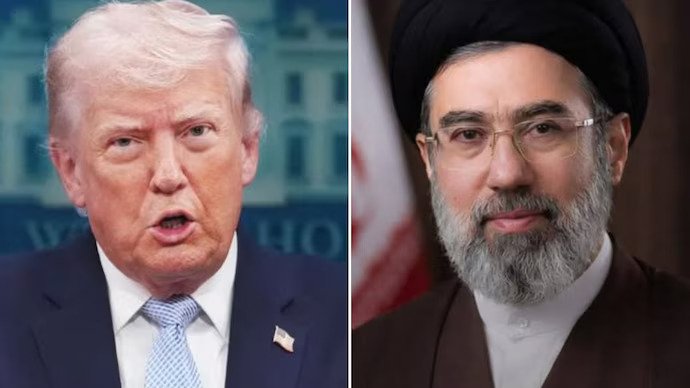
    Iran’s Supreme National Security Council officially approved the two-week ceasefire, describing it as a victory for Tehran. Pakistani Prime Minister Shehbaz Sharif conveyed that the United States had agreed to consider Iran’s 10-point proposal as the basis for negotiations.

    Iranian Foreign Minister Abbas Araghchi confirmed that the country’s armed forces would suspend preventive operations, contingent on the cessation of attacks from the United States. The truce was endorsed under the approval of Iran’s Supreme Leader, Ayatollah Mostafa Khamenei.

    In parallel, the United States, under President Donald Trump, agreed to temporarily halt potential strikes and aerial bombardments on Iran for the two weeks. The pause was facilitated at the request of Pakistani leadership and defense authorities, emphasizing diplomacy over immediate military action.

    Why This Matters

    The truce provides immediate relief to a region under threat of escalation. The Strait of Hormuz, a crucial global shipping route, is directly impacted, with implications for oil and trade flows worldwide. Iran’s commitment to allow safe passage for vessels, with coordination from its military, is critical for global economic stability.

    Strategically, the truce demonstrates how tactical pauses can be used to reduce the risk of widespread conflict while preserving national interests. Tehran’s simultaneous warning to adversaries that its forces remain ready reflects a careful balance between diplomacy and deterrence.

    What Analysts or Officials Are Saying

    Regional analysts note that Iran’s acceptance of the truce, while framing it as a victory, allows the country to maintain leverage in ongoing negotiations. The involvement of Pakistan is viewed as pivotal, providing a neutral platform to broker dialogue and reduce the immediate threat of military escalation.

    U.S. officials framed the truce as a conditional pause, tied directly to Iran’s cooperation in reopening the Strait of Hormuz. Experts suggest this demonstrates how the two nations are managing conflict through tactical restraint rather than full-scale engagement.

    Observers also point out that the truce could set the stage for longer-term talks in Islamabad, creating a window for de-escalation and further diplomatic agreements.

    Daljoog News Analysis

    This temporary ceasefire illustrates a nuanced interplay of strategy, diplomacy, and military signaling. Iran’s insistence on maintaining a firm stance while agreeing to a truce shows its skill in managing both domestic and international perceptions.

    For the United States, the truce represents a tactical measure to avoid immediate conflict while applying diplomatic pressure. The involvement of Pakistan highlights the importance of regional actors in mediating between global powers, especially when direct negotiations are politically sensitive.

    The decision to secure safe passage through the Strait of Hormuz underlines the global stakes of regional stability. Even a short-term agreement has significant implications for international trade, energy markets, and the perception of U.S. influence in the Middle East.

    What Happens Next

    Over the next two weeks, Iran and the United States will monitor compliance with the ceasefire. Coordination with Iranian military forces is required for safe navigation through the Strait of Hormuz, ensuring the temporary truce does not lead to accidental confrontations.

    Negotiations for a more permanent agreement are expected to take place in Islamabad, with both sides seeking to secure long-term security and economic stability. Global markets and maritime operators will closely watch developments, as any disruption could quickly affect oil prices and trade flows.

    This truce may serve as a model for short-term conflict management in the region, demonstrating how diplomatic mediation and tactical restraint can prevent escalation in high-stakes international disputes.

    Share. Facebook Twitter Pinterest LinkedIn Tumblr Email
    Andrew Rogers
    Andrew Rogers
    • Website
    • Facebook

    Andrew Rogers is a seasoned journalist and news analyst specializing in global affairs, politics, and finance. With a passion for investigative reporting, he delivers accurate, insightful stories that inform and engage readers worldwide.

    Related Posts

    Iran Fast Boats Raise Security Risks in Hormuz Strait

    Iran Fast Boats Raise Security Risks in Hormuz Strait

    April 25, 2026
    Reza Pahlavi Germany Attack Sparks Security Concern

    Reza Pahlavi Germany Attack Sparks Security Concern

    April 25, 2026
    US Iran Truce Tensions Rise as Talks Collapse Fast

    US Iran Truce Tensions Rise as Talks Collapse Fast

    April 25, 2026

    Comments are closed.

    Our Picks
    Iran Fast Boats Raise Security Risks in Hormuz Strait

    Iran Fast Boats Raise Security Risks in Hormuz Strait

    April 25, 2026
    Reza Pahlavi Germany Attack Sparks Security Concern

    Reza Pahlavi Germany Attack Sparks Security Concern

    April 25, 2026
    US Iran Truce Tensions Rise as Talks Collapse Fast

    US Iran Truce Tensions Rise as Talks Collapse Fast

    April 25, 2026
    Iran Internet Blackout Hits 50 Days Crisis

    Iran Internet Blackout Hits 50 Days Crisis

    April 23, 2026
    Stay In Touch
    • Facebook
    • Twitter
    • Instagram
    • YouTube
    Don't Miss
    Epstein Allegedly Collected Sacred Kaaba Cloth from UAE

    Epstein Allegedly Collected Sacred Kaaba Cloth from UAE

    World February 3, 2026

    Jeffrey Epstein, the notorious convicted sex offender, reportedly obtained a piece of the sacred Kaaba…

    Arizona 7-Eleven Shooting Suspect Arrested Fast Up

    Arizona 7-Eleven Shooting Suspect Arrested Fast Up

    January 27, 2026
    Trump Middle East War Criticism by Lula Escalates

    Trump Middle East War Criticism by Lula Escalates

    April 19, 2026
    Asia Races to Recover From Deadly Floods

    Asia Races to Recover From Deadly Floods

    December 1, 2025
    About Us

    Daljoog News is a trusted news platform that brings you the latest global and local updates with accuracy and fairness. We are committed to clear and unbiased reporting, covering topics like politics, business, technology, science, and culture and more. Using the latest technology and expert journalism, we provide reliable coverage of important stories. Stay informed, inspired, and empowered with Daljoog News—your source for breaking news, the latest updates, and videos that matter.

    Email Us: info@daljoognews.com

    Our Picks
    California Threatens Paramount’s $110B Warner Deal

    California Threatens Paramount’s $110B Warner Deal

    February 28, 2026
    US Judge Dismisses Buffalo Wild Wings Lawsuit

    US Judge Dismisses Buffalo Wild Wings Lawsuit

    February 18, 2026
    Casey Wasserman to Sell Agency Amid Epstein File Fallout

    Casey Wasserman to Sell Agency Amid Epstein File Fallout

    February 15, 2026
    Latest News
    Iran Fast Boats Raise Security Risks in Hormuz Strait

    Iran Fast Boats Raise Security Risks in Hormuz Strait

    April 25, 2026
    2PM Ok Taecyeon Marries After 10 Years of Love

    2PM Ok Taecyeon Marries After 10 Years of Love

    April 25, 2026
    Russia Gold Reserves Drop After Massive 22 Ton Sale.jpg The server cannot process the image. This can happen if the server is busy or does not have enough resources to complete the task. Uploading a smaller image may help. Suggested maximum size is 2560 pixels.

    Russia Gold Reserves Drop After Massive 22 Ton Sale

    April 25, 2026
    Facebook X (Twitter) RSS YouTube Instagram
    • Home
    • About Us
    • Contact Us
    • Our Authors
    • Privacy Policy
    • Terms & Conditions
    • Sitemap
    © 2026 DaljoogNews.com

    Type above and press Enter to search. Press Esc to cancel.