

Reza Pahlavi’s Germany attack has raised concern after Iran’s exiled crown prince was targeted during a public appearance in Berlin. The incident happened on Thursday, just after he finished addressing journalists at a press event.
According to Daljoog News analysis, the Reza Pahlavi Germany attack reflects rising tensions among Iranian political groups abroad, where disagreements are increasingly visible in public spaces.
The moment is important as debates about Iran’s political future and global diplomacy continue to drive activism across Europe. Public events are becoming more sensitive and harder to manage safely.
What Happened?
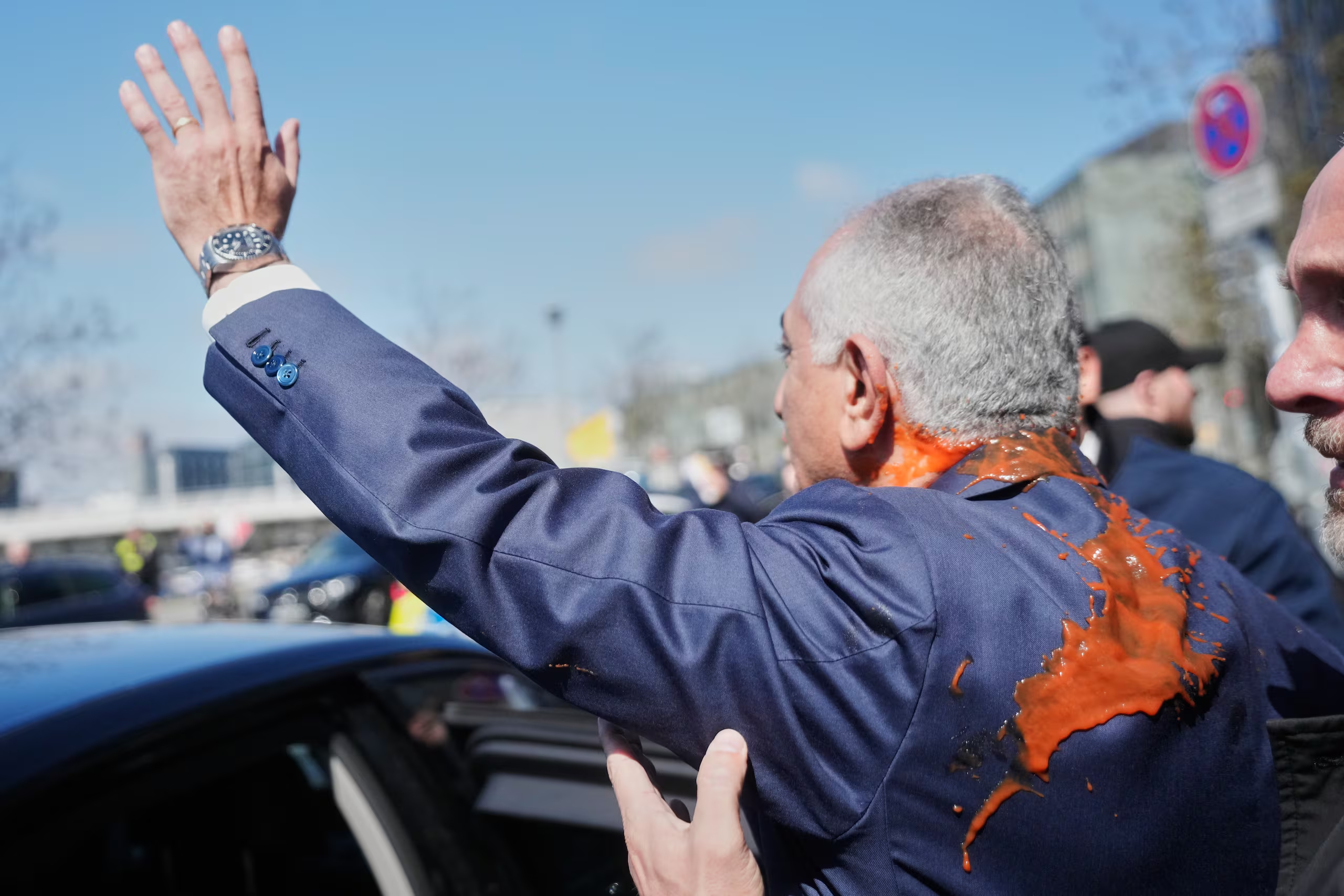
Reza Pahlavi attended a press briefing at a federal press conference venue in Germany, where he spoke about political developments involving Iran and the United States. As he left the event, an individual suddenly threw a liquid substance at him from behind.
The liquid hit his clothing and parts of his body, according to video footage that quickly circulated online. The incident took place outside the venue, catching security and attendees off guard.
Despite the disruption, Pahlavi remained calm. He acknowledged supporters nearby and moved quickly into a vehicle to leave the area. No injuries were reported following the incident.
German police later stated that the substance was likely tomato juice. Authorities have not released details about the suspect, citing strict privacy laws. An investigation is ongoing.
Why This Matters
The Reza Pahlavi Germany attack highlights growing divisions within the Iranian diaspora. Europe has become a major center for political debate about Iran, but also a place where strong disagreements can lead to public confrontation.
Such incidents raise concerns about the safety of political figures and the ability to hold open discussions without disruption. Even symbolic actions can increase tensions and create security risks.
The event also shows frustration among some groups regarding international policies toward Iran, including diplomatic efforts and ceasefire discussions.
What Analysts or Officials Are Saying
Security experts view the incident as a symbolic act meant to send a political message rather than cause harm. However, they warn that such actions can encourage further disruptions if not addressed properly.
German authorities are handling the case under local laws, balancing public safety with legal protections such as privacy rights. Officials have not disclosed the identity of the suspect, which is common in such cases.
Political observers note that Reza Pahlavi remains a controversial figure. His position on Iran’s leadership draws both support and opposition, especially among groups with differing visions for the country’s future.
Daljoog News Analysis
The Reza Pahlavi Germany attack shows how political tensions linked to Iran are expanding beyond national borders. Disputes that begin in one country are now playing out on international stages.
Germany provides space for political expression, but this openness also allows conflicts to surface more visibly. Managing this balance is becoming more difficult as tensions grow.
The incident also reflects a shift toward attention-driven protest actions. While not physically harmful, such acts are designed to gain visibility and influence public perception.
There is a growing need for stronger event security and clearer rules to protect both speakers and audiences. Without such measures, similar incidents may increase in frequency.
What Happens Next
German authorities are expected to continue their investigation and determine whether charges will be filed. Identifying the suspect remains a priority, though legal limits may restrict public information.
Event organizers may introduce stricter security measures for future appearances involving high-profile figures. This could include tighter access control and increased monitoring.
Reza Pahlavi is likely to continue his public engagements, but with greater security awareness. The incident may also influence how similar events are planned across Europe.
More broadly, observers will watch whether political tensions among Iranian groups continue to rise and lead to further public incidents in the coming months.