


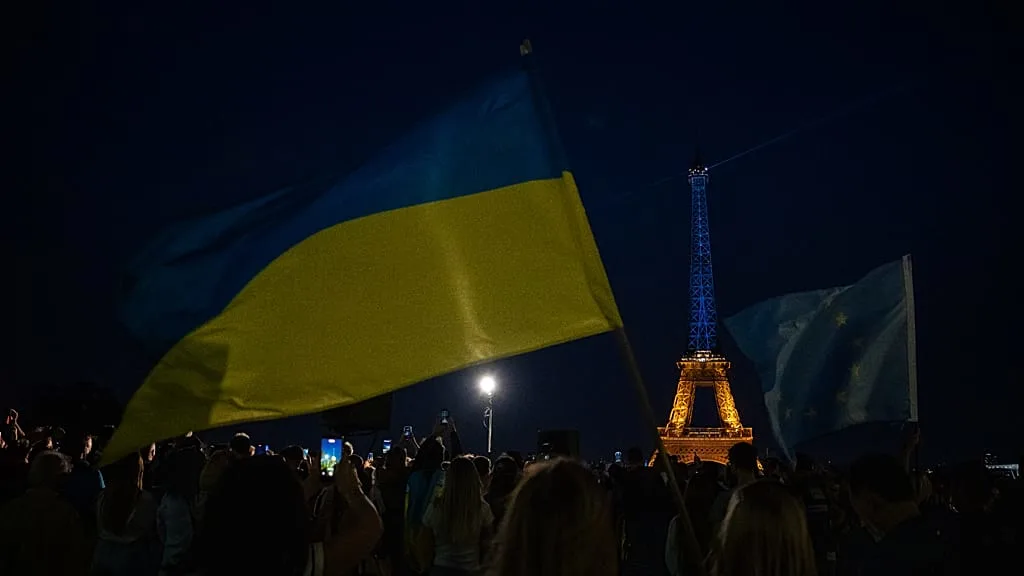
Two of Europe’s most famous landmarks joined together this week in a striking Ukraine Independence Day tribute, with the UK Parliament and the Eiffel Tower both lit in blue and yellow to mark the anniversary. The light display served as a visible symbol of continued Western support for Ukraine.
The anniversary marks another year since Ukraine declared independence, a milestone now closely tied to the country’s ongoing struggle to defend its sovereignty. Public tributes like these light displays have become a familiar way for allied nations to show solidarity without direct military involvement.
Officials from both London and Paris confirmed the coordinated light displays were meant to honor the resilience of the Ukrainian people during an extended period of conflict. Blue and yellow, the colors of the Ukrainian flag, have become a widely recognized symbol of support across many Western cities since the war began.
This kind of symbolic gesture carries meaning beyond simple visual display. Diplomats note that public shows of solidarity help maintain political and public attention on the ongoing conflict, particularly as the war continues well beyond its initial timeline and public interest risks fading over time.
The timing of this year’s tribute comes during a particularly sensitive period in the conflict. Ongoing disagreements over potential peace talks, including disputes over where any leader level meeting might take place, have added uncertainty to the path toward a lasting resolution.
Ukrainian officials have expressed appreciation for continued gestures of support from European allies, even as the practical challenges of the war remain far from resolved. Public displays like these are seen as a reminder that international attention has not fully shifted away from the conflict despite its lengthy duration.
European leaders have used the anniversary as an opportunity to reaffirm their governments’ ongoing commitments to Ukraine, including continued financial and humanitarian assistance. Officials have stressed that support extends beyond symbolic gestures, pointing to ongoing aid packages and diplomatic engagement aimed at eventually ending the conflict.
Public reaction to the light displays has been largely positive, with many residents and visitors in both cities sharing images and messages of support online. These kinds of visible tributes often generate significant public engagement, helping keep international attention focused on the situation in Ukraine.
Some critics argue that symbolic gestures, while meaningful, should be matched with more concrete diplomatic progress toward ending the war. They point to the continued difficulty in arranging direct talks between the conflict’s key leaders as evidence that more substantial action remains necessary alongside public shows of solidarity.
As the war continues, tributes like this week’s landmark displays are likely to remain a recurring feature of European solidarity efforts. Whether these gestures eventually translate into renewed diplomatic momentum remains to be seen, but for now, they stand as a visible reminder of the ongoing international attention surrounding Ukraine’s continued fight for independence.