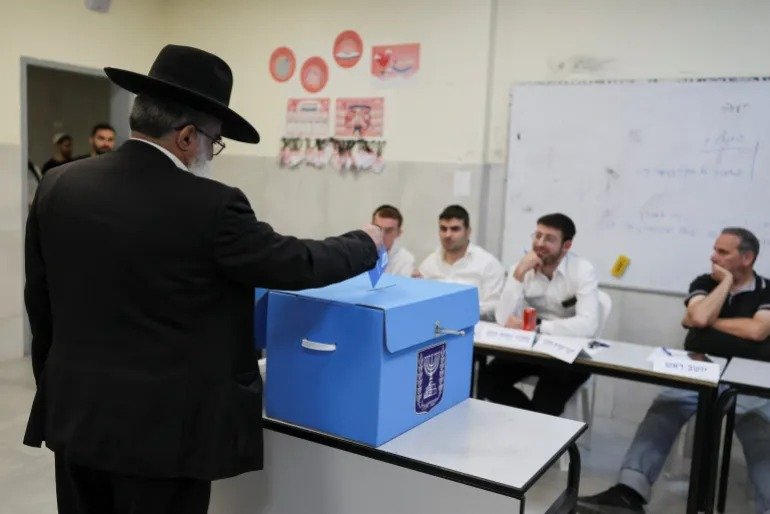




Israel’s latest election exit polls point to a close contest between the bloc supporting Prime Minister Benjamin Netanyahu and an opposition grouping led by former military chief Gadi Eisenkot. The early figures suggest that neither side has secured a clear path to a parliamentary majority. The result leaves voters and political leaders facing a period of uncertainty, as negotiations and the final count may determine who can form the next government.
The election is taking place against a backdrop of war, regional tension and public debate over national security. For many voters, the government’s record on the conflict and its handling of major security decisions have been central issues. Others have focused on the economy, public services and the future direction of Israeli politics. The competing concerns have made the vote an important test of the country’s leadership.
Exit polls offer an early indication of how people may have voted, but they are not the final result. Their estimates can differ from the official count, and small changes in seat numbers may affect which parties can work together. Israel’s parliamentary system usually requires a group of parties to form a coalition, meaning that winning the largest share of seats does not automatically guarantee control of the government.
The close contest gives smaller parties a potentially important role. If neither major bloc reaches the required majority, political leaders may need to negotiate with parties whose support could determine the outcome. Those discussions can involve disagreements over security policy, religious issues, public spending and the distribution of ministerial positions. Coalition negotiations may therefore take time, especially when parties have made promises to their supporters during the campaign.
The election also carries significance because it follows the Hamas-led attacks of October 7, 2023, and the war that followed. The government’s response to the attacks and the wider conflict has remained a major point of political debate. Supporters of Netanyahu argue that strong leadership is necessary during a period of regional danger. Critics have questioned the government’s decisions and its ability to deliver lasting security.
Political divisions extend beyond the main blocs. Arab-led parties and other smaller groups may influence parliamentary calculations, depending on the final seat distribution and whether larger parties are willing to cooperate with them. Their role highlights the complexity of building a governing majority in a society where voters hold sharply different views about security, identity and the relationship between the state and its citizens.
The official results will be important for determining the next steps. Once the count is complete, political leaders are expected to consult with parties and consider possible coalition arrangements. If talks fail, the country could face another period of political instability. Even if a government is formed, it may have to manage deep divisions among its partners and respond to pressing security and economic challenges.
The close exit polls show that the election is not simply a contest between two leaders. It is also a test of public confidence in the country’s direction after years of conflict and political tension. The final outcome will determine who leads the government, but the larger challenge will be building enough support to make decisions in a deeply divided political environment.