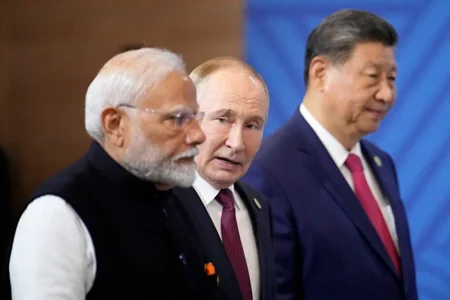


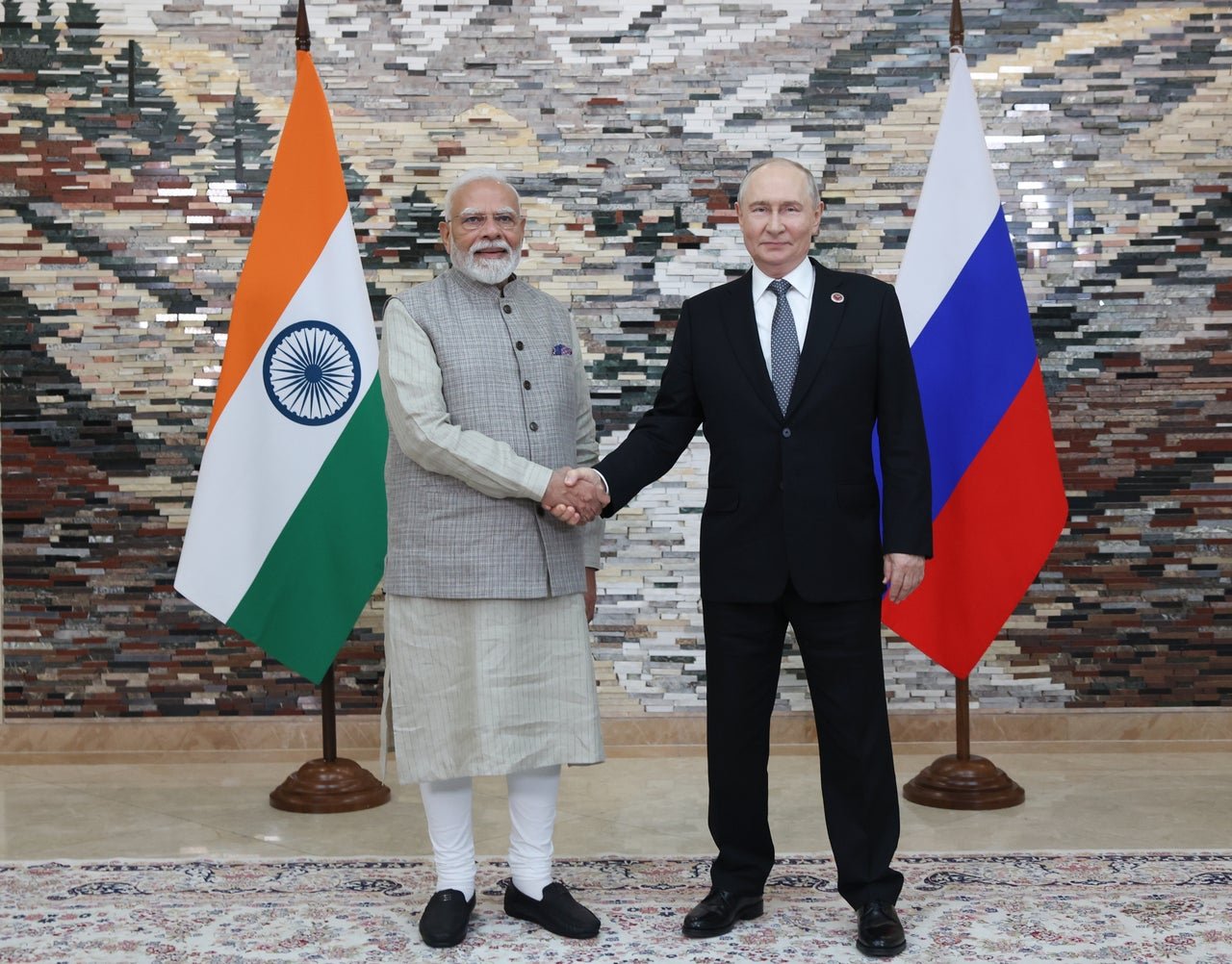
Indian Prime Minister Narendra Modi delivered a pointed message that Modi Putin war must end soon for the sake of humanity, speaking directly to the Russian president during a major regional summit held in Central Asia this week. The remarks stood out for their directness given India’s traditionally careful diplomatic balancing act.
Putin responded to Modi’s comments by stating that Moscow was moving forward along the path toward ending the conflict, though he offered few specific details about what concrete steps that might involve. His measured response reflected the delicate diplomatic environment surrounding any public discussion of peace negotiations.
The exchange took place on the sidelines of a large gathering of regional leaders, an event that brought together numerous heads of state from across Eurasia. India has maintained a complex relationship with both Russia and Western nations throughout the ongoing conflict, continuing to purchase Russian energy while also engaging diplomatically with Ukraine’s Western allies.
Modi’s direct appeal adds to a growing chorus of international voices calling for an end to hostilities as the war stretches into its fifth year with no clear resolution in sight. Continued fighting has caused extensive damage across Ukraine while also straining Russia’s economy through sustained international sanctions.
India’s position throughout the conflict has drawn scrutiny from multiple directions. Western nations have periodically expressed frustration over India’s continued economic ties with Russia, while India has defended its approach as pragmatic, citing longstanding historical relationships and its own energy security needs.
This latest diplomatic exchange comes at a particularly tense moment in the broader conflict, with Russia having just carried out an unprecedented sixth consecutive day of heavy strikes against Ukraine’s capital. The timing of Modi’s comments, delivered directly to Putin in a public setting, carries added significance given this recent escalation.
Diplomatic observers note that India occupies a somewhat unique position among major global powers, maintaining working relationships with Russia, the United States, and European nations simultaneously. This positioning gives Modi’s public comments particular weight, since few other leaders can speak to Putin quite so directly while maintaining broader diplomatic relationships.
The regional summit itself brought together an unusually large gathering of world leaders, including the presidents of China and Iran, adding further significance to any bilateral exchanges taking place on its sidelines. Such large gatherings often provide opportunities for pointed diplomatic messages delivered in relatively informal settings.
Ukrainian officials have not yet directly responded to Modi’s comments, though Kyiv has consistently welcomed any international pressure aimed at encouraging Russia toward genuine peace negotiations. Ukrainian leadership continues expressing skepticism about Russia’s sincerity regarding any stated openness to ending the conflict.
Some analysts caution against reading too much into diplomatic statements made in public settings, noting that genuine progress toward ending complex conflicts typically requires extensive private negotiation rather than public appeals, however pointed they might appear.
As the war continues without a clear resolution, exchanges like this latest one between Modi and Putin add another data point to the ongoing, uncertain diplomatic landscape surrounding the conflict. Whether this particular appeal contributes meaningfully toward eventual peace talks remains to be seen in the weeks and months ahead.