


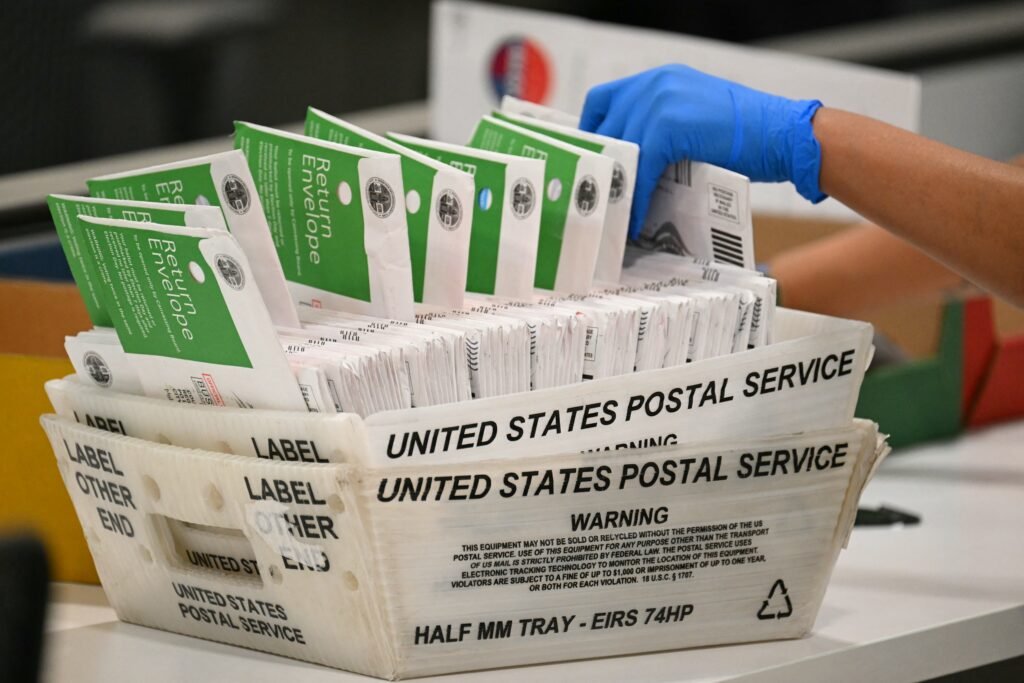
A federal judge in Boston has temporarily blocked a new rule that would limit mail-in voting ahead of the midterm election. The order pauses the rule for fourteen days. It marks the latest twist in a fast-moving legal fight over how ballots get delivered this fall.
The rule came from the United States Postal Service. It followed an executive order signed earlier this year by President Trump. The order aims to restrict how mail ballots reach voters across the country.
Under the rule, the Postal Service would only deliver mail ballots to people already on approved voter lists. States would need to submit those lists in advance and get approval before ballots go out. Critics say the plan could disrupt voting in states that rely heavily on mail ballots.
The judge overseeing the case has ruled on this order several times already. Her latest decision reestablishes a block she had put in place earlier in the month. That earlier ruling had been paused following action from the Supreme Court.
The Supreme Court sided with the administration on a narrow legal point. Justices found that an earlier lawsuit challenging the rule had come too soon. That ruling did not decide whether the underlying policy is actually legal.
Just hours after that decision, the Postal Service released its finalized rule. Voting rights groups quickly filed new legal challenges in response. The judge’s latest order addresses those fresh complaints directly.
A hearing is set for early next week to decide whether a longer block should follow. Until then, the Postal Service cannot move forward with the new requirements. Officials on both sides expect the fight to continue for weeks.
Roughly one in three voters used mail ballots during the last presidential election. Mail voting has become especially common among certain groups of voters. Any disruption to that system could affect turnout in tight races this fall.
Supporters of the rule argue it protects election integrity. They say tighter rules help prevent ballots from reaching people who should not receive them. Trump has said the goal is to stop illegal voting by non-citizens, though studies show this happens very rarely.
Opponents argue the rule creates unnecessary hurdles for eligible voters. They warn that tight deadlines could leave some ballots undelivered before the election. State officials have said preparations for the midterms are already well underway, making sudden changes especially difficult.
Democratic attorneys general from more than twenty states have joined the legal fight. They argue the Postal Service has no authority to decide who qualifies to vote by mail. Voting rights groups have echoed that argument in their own filings.
The first mail ballots for this election cycle were set to go out within days. That timeline adds urgency to the ongoing court battle. Any delay in resolving the legal questions could create real confusion for both voters and election officials.
For now, the block gives Postal Service officials a brief pause before any changes take effect. Both sides are preparing for the upcoming hearing, which could shape how ballots move in the weeks ahead. With the midterm election approaching quickly, the outcome of this legal battle carries real weight for voters nationwide.