

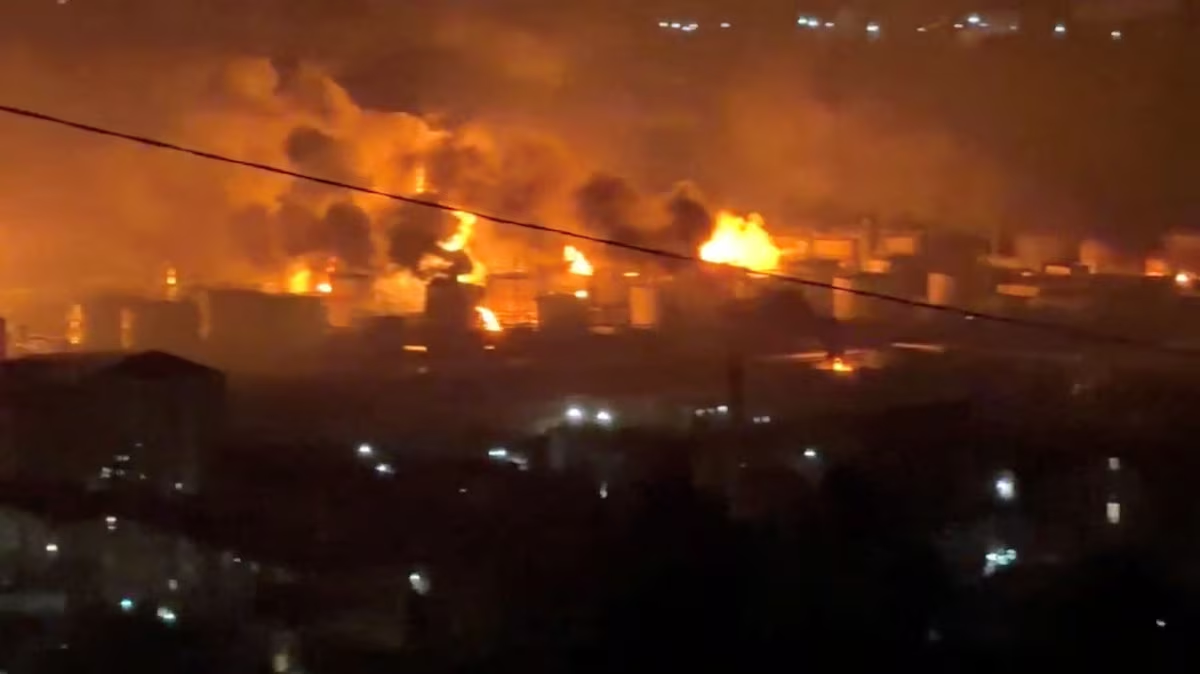
Russia Ukraine war 2026 continues to escalate as new drone and artillery strikes hit multiple Ukrainian cities, leaving civilians injured and infrastructure damaged.
According to Daljoog News analysis, the Russia-Ukraine war in 2026 is increasingly defined by sustained battlefield pressure, competing territorial claims, and growing diplomatic tension over financial and military support from Europe.
The latest developments highlight how the conflict has shifted into a prolonged phase in which both military operations and international negotiations are shaping the war’s future direction.
What Happened?
Russia Ukraine war 2026 saw renewed violence on Tuesday as Ukrainian authorities reported Russian drone strikes on the northeastern city of Sumy. Several people were injured, and residential buildings along with a medical facility were damaged during the attack.
In addition, Russian forces carried out strikes on the eastern city of Kostiantynivka, targeting infrastructure sites and causing further disruption in the region.
Russia Ukraine war 2026 has also been marked by strong statements from Russian leadership. President Vladimir Putin said Russia understands how the war may eventually end but insisted such details will not be made public. He added that Russia is working to establish “security buffer zones” along border areas.
Putin specifically pointed to the Kursk region, describing it as a difficult security zone and stressing that protecting civilians in border areas remains a government priority.
On the military side, Russian armed forces claimed significant territorial progress. Officials said that around 80 settlements and nearly 1,700 kilometers of territory have come under Russian control during the current phase of Russia Ukraine war 2026.
They also reported advances in Luhansk and continued pressure across Sumy, Kharkiv, Donetsk, and Zaporizhzhia regions. These claims have not been independently verified.
Meanwhile, Ukrainian President Volodymyr Zelensky held discussions with European leaders, urging approval of a €90 billion assistance package. He stated that Ukraine has already fulfilled all required conditions set by the European Union for further support under Russia Ukraine war 2026.
Why This Matters
Russia Ukraine war 2026 is increasingly shaping not only battlefield dynamics but also Europe’s political and economic stability. Civilian areas continue to face direct risk, as seen in recent strikes on Sumy and Kostiantynivka.
The conflict is no longer limited to front-line zones. It now affects infrastructure, healthcare systems, and energy routes, deepening its impact on everyday life in Ukraine.
At the same time, competing territorial claims from both sides influence global diplomatic discussions. These narratives play a key role in shaping international support, sanctions policy, and peace negotiation strategies related to Russia Ukraine war 2026.
European financial aid has also become a central issue. Ukraine’s request for a large-scale support package reflects growing pressure on Western governments to sustain long-term assistance as the war continues without a clear end point.
What Analysts or Officials Are Saying
Experts analyzing Russia Ukraine war 2026 say the conflict has entered a phase of attrition, where incremental territorial gains and sustained pressure matter more than rapid breakthroughs.
Military observers note that Russian claims of expanded control require independent verification, but they reflect Moscow’s attempt to project strategic momentum in the ongoing conflict.
Ukrainian officials continue to emphasize that international financial support is essential for maintaining defense operations and economic stability during Russia Ukraine war 2026.
Energy analysts are also closely watching developments linked to pipeline infrastructure, particularly the Druzhba system, which remains a key supply route for oil exports to parts of Europe.
Russian spokesperson Dmitry Peskov stated that Moscow could resume oil supplies to Hungary and Slovakia if political tensions ease. However, Ukrainian officials argue that supply disruptions are the result of damage caused by Russian attacks, with restoration efforts expected by the end of April.
Daljoog News Analysis
Russia Ukraine war 2026 is evolving into a prolonged strategic confrontation where military action, economic pressure, and diplomatic messaging are equally important.
The conflict now shows fewer large territorial shifts but increasing intensity in targeted strikes and infrastructure damage. This reflects a shift toward long-term attritional warfare rather than rapid battlefield changes.
Russia’s focus on buffer zones and territorial expansion claims suggests an effort to strengthen defensive depth and improve negotiating leverage in any future peace talks.
Ukraine’s reliance on European financial support highlights another dimension of Russia Ukraine war 2026: sustainability. The ability to maintain defense operations over time is now closely tied to international aid flows and political consensus in Europe.
Energy infrastructure disputes further extend the war’s impact beyond Ukraine’s borders. Pipeline security and supply stability have become part of the wider geopolitical contest shaped by the conflict.
Overall, Russia Ukraine war 2026 is no longer a purely military struggle. It has become a complex multi-front crisis involving security, economics, and global diplomacy.
What Happens Next
Russia Ukraine war 2026 is expected to remain intense in the coming weeks, with continued drone and artillery exchanges across eastern and northeastern Ukraine.
European Union discussions on the proposed €90 billion aid package will be closely watched, as the decision could significantly influence Ukraine’s operational capacity.
Energy negotiations and infrastructure security concerns are also likely to intensify, especially as European countries prepare for seasonal demand shifts.
Military analysts expect continued attritional strategies from both sides, with limited large-scale offensives but sustained pressure across multiple fronts.